
Bituminous Work

DBM & BC

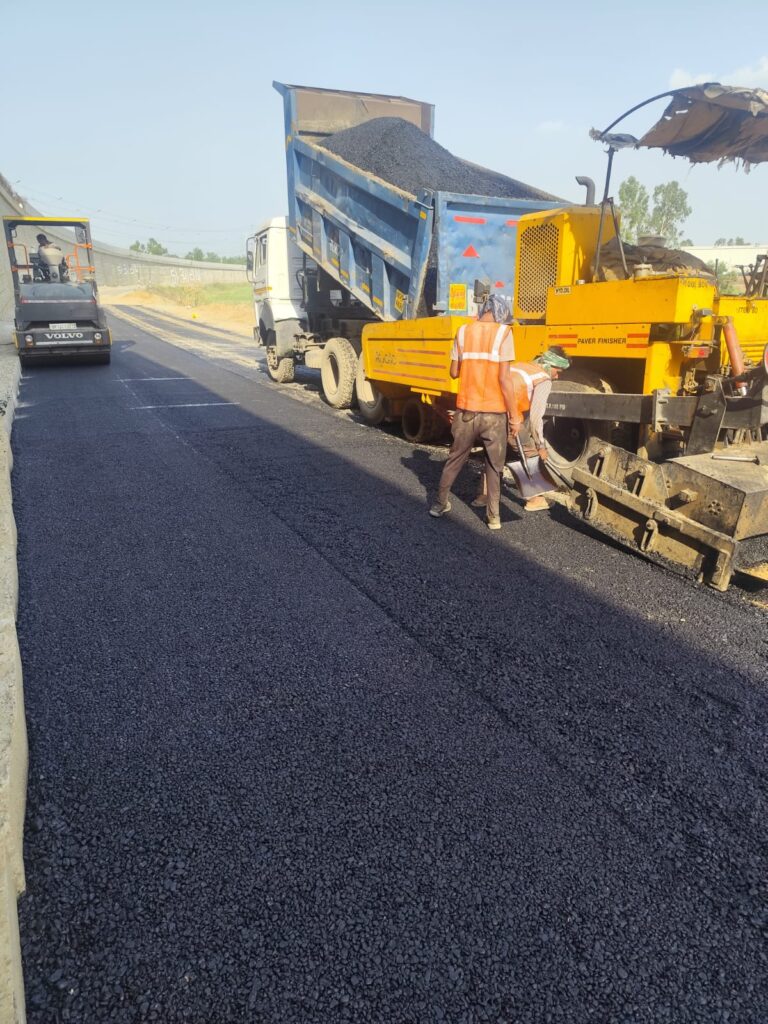
BC laying work

Bituminous Concrete

Top 9 Proven Steps for Bituminous Concrete (BC) | MoRTH Clause 507 Top 9 Proven Steps for Bituminous Concrete (BC) Construction Quick Summary: Bituminous Concrete (BC) is the final wearing course of flexible pavement laid in 30–50 mm thickness over DBM or bituminous base. Construction shall strictly follow MoRTH Clause 507, including approved mix design, controlled laying temperature, proper compaction and quality control tests. 1. Scope Methodology for laying of DBM in this project is detailed herein under. This method statement is based on parameters conforming to MoRTH, MS-2 Specifications. The construction of pavement layers on existing road involves the dismantling of existing bituminous layers, widening and strengthening of the existing road. This work covers preparation of surface, tack coat application, production of BC mix, transportation, laying, compaction, joint treatment and quality control testing in accordance with MoRTH Clause 507. 2. Reference Standards MoRTH Specifications – Clause 507 (5th Revision) IRC: SP: 84 – Manual of Specifications IS: 73 & IS: 15462 – Bitumen Standards IS: 2386 (All Parts) – Aggregate Testing Standards ASTM / AASHTO and MS-2 7th Rev– Marshall Mix Design Top Level Sheet – DBM (Dense Bituminous Macadam): Approved Mix Design & Approved GFC Drawings 3. Equipment Required Hot Mix Plant with automatic controls Self-propelled sensor paver with electronic, tamping/vibrating extendible screed (as per Clause 501.5) Tandem vibratory rollers Pneumatic Tyred Roller (PTR), 12–15 tonnes with minimum tyre pressure of 5.6 kg/cm² Bitumen pressure distributor/sprayer with accessories (as per Clause 502.4.1) Mechanical broom and air compressor for surface cleaning Core cutting machine for density testing Sufficient number of tippers for continuous and uninterrupted laying Materials & Job Mix Design Test Procedure of DBM & BC Mix Design (as per MoRTH & IRC Specifications) 1: Raise RFI for sampling of aggregates for DBM/BC mix design. 2: Sample the cold bin individual aggregates jointly. 3: Conduct individual gradation for aggregate as mentioned in MoRTH 500-10. 4: Blend the aggregate to meet the specified limits as mentioned in MoRTH 500-10. 5: Conduct the tests for aggregate to confirm its suitability for asphalt mix works: 6: AIV or LAAV, FI & EI, Stripping value, Water Absorption, Sand Equivalent value test to meet its suitability for DBM & BC as mentioned in MoRTH. 7: Feed the cold bin blending aggregate proportion in the Hot Mix Plant & take the individual hot bin aggregates. 8: Conduct specific gravity & water absorption test in the hot bin aggregates. Sl. No. 9: Conduct the individual gradation for aggregate & blend the aggregate to achieve the limit specified in MoRTH Table 500-10. 10: Feed the obtained blending proportion in the Hot Mix Plant and take the combined mix sample and check the combined gradation tests as mentioned in MoRTH 500-10. 11: Conduct the following tests for bitumen: Softening Point Test, Penetration Test, Viscosity Test from the approved bitumen source. 12: Prepare the mix with different binder content & find the Maximum Specific Gravity of the mix as per ASTM D-2041. 13: Cast the Marshall moulds with different binder content to check VMA, VFB, GSA, Air Voids, Stability & Flow of the mix. 14: With the obtained result plot the graph for Bulk Density, Marshall Stability, Air Voids, Flow, VMA & VFB. 15: All test data are interpreted & marked at which % all criteria passes. 16: Optimum Binder Content (OBC) has been found from chart. 17: Retained Stability Test conducted at OBC. 18: Refusal Density of the BC mix to be checked at 75, 150, 300 blows. 19: Marshall Quotient found for BC as per Table 7 of IRC SP:53-2002. 20: Confirmatory moulds casted & tested for Stability, Flow, VFB, VMA. Bituminous material of VG-40 grade shall confirm to the specifications of IS-73(2013). If modified binder is used then CRMB / PMB conforming to the requirement of CL.501.2.1, 507.2.1, IRC-SP-53-2010 and IS 15462-2004. Approved Aggregate and filler shall confirm two of MoRTH Cl.501.2 & Cl.507.2. Job Mix Formula (JMF): The Job Mix Formula (JMF) for Bituminous Concrete (BC) shall be developed and approved for use in the works in the presence of the Authority Engineer. The JMF shall include the following details: Source and location of all materials (bitumen, coarse aggregate, fine aggregate, and filler) Proportions of all constituent materials Binder type and percentage by weight of total mixture Coarse aggregate, fine aggregate, and mineral filler percentage Combined grading with specified sieve passing limits as per BC requirements Marshall test results as per Table 500-11 (Stability, Flow, Density, Air Voids, VMA, VFB) Aggregate compliance with MoRTH Clause 501.2 & Clause 507.2 Mixing, laying, and compaction temperature ranges Optimum Bitumen Content (OBC) and volumetric properties of mix Job Mix Design for BC shall be conducted in the Field Laboratory using Marshall Method. The materials shall be collected directly from the stockyard / storage tank and shall be checked for various physical requirements. The testing shall be carried out in the presence of the Consultant and submitted for approval. Approval of JMF: Approval shall be based on witnessed testing by the Independent Engineer. Samples shall be tested in in-house QC lab. Any change in material source requires submission of new JMF for approval prior to execution. Plant Trials: After laboratory approval, plant trials shall be conducted to ensure uniform mix production. Permissible variations shall comply with Table 500-13 limits. Laying Trials: Once the plant trials have been successfully completed and approved, the laying trials are executed to demonstrate that the proposed mix can be successfully laid and compacted in accordance with Clause 501. The laying trial shall be carried out on a suitable area which is not to form part of the works. The area of the laying trials shall be a minimum of 100 sq. m. of construction similar to that of the project road, and it shall be in all respects, particularly compaction, the same as the project construction, on which the bituminous material is to be laid. Information to AE is given of the proposed method for laying and compacting the material. The density

Bituminous Concrete Read More »

Bituminous Work

What is Bitumen? Grade, Types, Properties

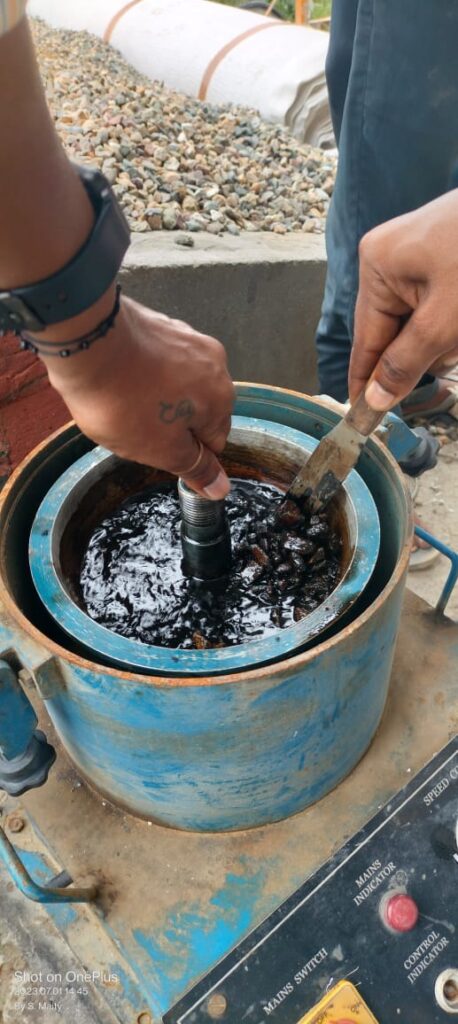
Bitumen is a viscous, black, sticky, and highly cementitious substance derived from crude petroleum through a refining process. It is primarily composed of hydrocarbons and their derivatives. Often referred to as asphalt cement in North America, bitumen is best known for its use as the binding agent in asphalt concrete for road construction, paving, and roofing applications.
________________________________________

What is Bitumen? Grade, Types, Properties Read More »

Bitumen

Bituminous Concrete (BC) – Profile Corrective Course Construction Methodology

Bituminous Concrete (BC) Profile Corrective Course – Construction Methodology | MoRTH Profile Corrective Course Using Bituminous Concrete (BC) – Construction Methodology Bituminous Concrete (BC) Profile Corrective Course is a thin, dense graded bituminous layer laid to correct minor surface undulations, rutting, shallow depressions and riding quality issues prior to or as part of the final wearing course. 1.0 Scope and Surface Preparation This work consists of providing a Profile Corrective Course using Bituminous Concrete of variable thickness, generally ranging from 30 mm to 50 mm, to restore the pavement profile as per approved longitudinal and cross levels. 1.1 Existing Bituminous Surface Repairs: Potholes, cracks, ravelled areas repaired as per MoRTH Clauses 3004.2 & 3004.3. Milling / Scarifying: Where required, shallow milling carried out to remove surface irregularities. Cleaning: Surface cleaned using mechanical broom and air compressor. Tack Coat: Uniform tack coat applied prior to BC laying. 1.2 Existing Granular Surface (If Applicable) Surface made firm, even and free from loose materials. Priming carried out as per MoRTH Clause 502. Tack coat applied after priming and curing. 1.3 Pre-Laying Level Checks Existing levels shall be checked jointly with Engineer’s representative and recorded to determine thickness and extent of profile correction. 2.0 Plant, Machinery & Equipment Sl. No. Equipment Quantity 1 Batch Type Hot Mix Plant (150–200 TPH) 01 2 Sensor Paver with Electronic Screed Control 01 3 Tandem Vibratory Roller 02 4 Pneumatic Tyred Roller 01 5 Bitumen Pressure Distributor 01 6 Mechanical Broom / Air Compressor 01 7 Tipping Trucks As required 3.0 Materials & Mix Design 3.1 Materials Coarse & fine aggregates conforming to MoRTH Table 500-18 Bitumen: VG-30 / VG-40 / Modified Bitumen (as per contract) Mineral Filler: Cement / Lime / Stone Dust Tack Coat: Rapid Setting Cationic Bitumen Emulsion 3.2 Job Mix Formula (JMF) BC mix design shall be carried out using the Marshall Method as per MoRTH Clause 509. Approved JMF shall specify grading, binder content, temperature limits and target density. 3.3 Hot Mix Plant Operation Bitumen temperature: 150–165°C Aggregate temperature: 150–170°C Mix discharge temperature: 140–165°C Uniform coating ensured with controlled mixing time 4.0 Laying & Compaction 4.1 Transportation of Mix BC mix transported in insulated, tarpaulin-covered trucks. Truck beds coated with approved release agent. Temperature at paver hopper: ≥135°C. 4.2 Tack Coat Application Application rate: 0.20–0.25 kg/m² on bituminous surface. Applied by calibrated mechanical sprayer. Laying commenced only after tack coat breaks. 4.3 Laying & Finishing Sensor wire fixed at 10 m intervals for level control. Minimum laying temperature: 130°C. Loose thickness allowance: approx. 20–25%. Manual finishing permitted in confined or irregular areas. 4.4 Compaction Initial rolling by tandem vibratory roller. Intermediate rolling by PTR. Final finish rolling by static tandem roller. Rolling continued till specified density achieved. Transverse joints cut full depth and edges painted with hot bitumen. 5.0 Quality Control & Traffic Management Core cutting after 24 hours for density verification. Marshall properties verified as per approved JMF. Surface regularity and levels checked as per Clause 902. Traffic opened minimum 24 hours after completion. Traffic diversion with barricades, cones and flagmen. Frequently Asked Questions – BC Profile Corrective Course Purpose of BC PCC? To correct minor profile defects and improve riding quality. Typical thickness? 30–50 mm. Where used? Rutting, shallow depressions, uneven surface. Material? Bituminous Concrete as per MoRTH Clause 509. Tack coat rate? 0.20–0.25 kg/m². Compaction? Tandem roller + PTR. Joint treatment? Full depth cut with hot bitumen painting. Traffic opening? After minimum 24 hours.

Bituminous Concrete (BC) – Profile Corrective Course Construction Methodology Read More »

Bituminous Work

Profile Corrective Course DBM

Profile Corrective Course (DBM) Construction Methodology | MoRTH Profile Corrective Course (Dense Bituminous Macadam) – Construction Methodology Profile Corrective Course (PCC) using Dense Bituminous Macadam (DBM) is executed to correct pavement profile irregularities such as depressions, sags, uneven camber and surface undulations before laying the final overlay. 1.0 Scope and Surface Preparation The Profile Corrective Course is a bituminous layer of variable thickness (typically 50–100 mm) laid over an existing granular or bituminous surface to restore the correct longitudinal and cross profile as per approved drawings. 1.1 Existing Bituminous Surface Repairs: Potholes, cracks and distressed areas shall be repaired as per MoRTH Clauses 3004.2 & 3004.3. Scarifying: Where specified, existing bituminous layer shall be scarified without disturbing underlying layers. Base Preparation: Exposed surface reworked, compacted and primed if required as per Clause 502. Tack Coat: Bituminous emulsion applied uniformly before laying PCC DBM. 1.2 Existing Granular Surface Surface cleaned of loose material and dust. Priming carried out as per MoRTH Clause 502 before bituminous layer. Surface to be firm, dry and broom-cleaned. 1.3 Pre-Laying Checks Existing top levels shall be jointly checked and recorded before and after preparation to confirm thickness and profile correction. 2.0 Plant, Machinery & Equipment Sl. No. Equipment Quantity 1 Batch Type Hot Mix Plant (200 TPH) 01 2 Sensor Paver with Auto Screed Control 01 3 Pneumatic Tyred Roller 01 4 Tandem Vibratory Roller 02 5 Bitumen Sprayer 01 6 Hydraulic Broom / Air Compressor 01 7 Water Tanker 01 8 Tipping Trucks As required 3.0 Materials & Mix Production 3.1 Materials Coarse & fine aggregates from approved quarries Bitumen: VG-30 / VG-40 (IS:73) Tack Coat: Rapid setting bituminous emulsion 3.2 Job Mix Formula (JMF) JMF shall be prepared in the site laboratory using Marshall Method and approved by IE/PMC. The procedure is identical to DBM/BC mix design as per MoRTH Section 500. 3.3 Hot Mix Plant Operation Bitumen storage temperature: 150–165°C Aggregate drying temperature: 150–170°C Mixing carried out in controlled, dust-free environment Maximum mix temperature not exceeding 165°C 4.0 Laying & Compaction 4.1 Transportation of Mix Mix transported in covered tipping trucks. Truck beds coated with release agent. Mix temperature at dispatch: 155–165°C. 4.2 Tack Coat Application Rate of application: 0.25–0.30 kg/m² Applied by mechanical sprayer DBM laid only after tack coat breaks 4.3 Laying & Finishing Sensor wire fixed at 10 m interval for profile control Minimum laying temperature: 125°C Loose thickness allowance: approx. 25% Manual laying permitted in confined areas 4.4 Compaction Rolling by vibratory roller followed by PTR Rolling from lower edge to higher edge Compaction continued until specified density achieved Joints cut full depth and edges painted with hot bitumen 5.0 Quality Control & Traffic Management Core cutting after 24 hours for density verification Routine bitumen testing for each consignment Surface finish as per MoRTH Clause 902 Traffic opened minimum 24 hours after completion Traffic managed using cones, barricades and flagmen Frequently Asked Questions – PCC DBM What is PCC? A corrective bituminous layer to restore pavement profile. Typical thickness? 50–100 mm per layer. Where used? Depressions, sags, uneven camber. Material used? DBM with VG-30/VG-40 bitumen. Surface preparation? Repair, scarify, clean, prime/tack. Compaction? Vibratory roller + PTR. Joint treatment? Full-depth cut with hot bitumen coating. Traffic opening? After minimum 24 hours. 🏗️ Highway Construction Methodology Hub Standard construction methodologies for highway works as per MoRTH 5th Revision and IRC Specifications. ✅ Earthwork Methodology ✅ Clearing & Grubbing Methodology ➡️ ✅ Embankment Construction Methodology ➡️ ✅ Flyash Embankment Construction Methodology ➡️ ✅ Subgrade Construction Methodology ➡️ ✅ Granular Work Methodology ✅ Granular Sub-Base (GSB) Methodology ➡️ ✅ Wet Mix Macadam (WMM) Methodology ➡️ ✅ Bituminous Work Methodology ✅ Prime Coat Application Methodology ➡️ ✅ Tack Coat Application Methodology ➡️ ✅ Dense Bituminous Macadam (DBM) Methodology ➡️ ✅ Bituminous Concrete (BC) Methodology ➡️ ✅ Profile Corrective Course of DBM ➡️ ✅ Use of Waste Plastic in Bitumen ➡️ ✅ Use of Waste Plastic in Road Construction ➡️ ✅ Thermoplastic Road Marking Methodology ➡️ ✅ Concrete Methodology ✅ Dry Lean Concrete (DLC) Methodology ➡️ ✅ PQC Road Construction Methodology ➡️ ✅ Kerb Construction Methodology ➡️

Profile Corrective Course DBM Read More »

Bituminous Work
bitumen penetration test

Penetration Test

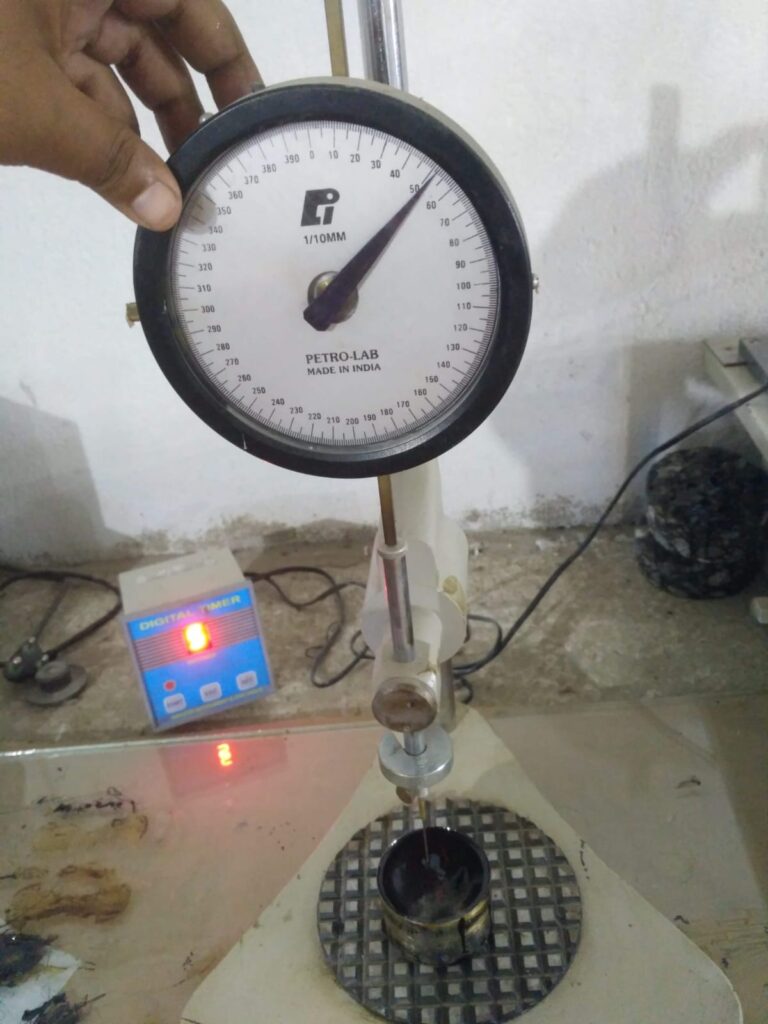
Bitumen Penetration Test – Procedure, Apparatus, Calculation & IS 1203 Limits 1. Introduction The Bitumen Penetration Test determines the hardness or softness of bitumen by measuring the depth a standard needle penetrates into the sample under specified load, time, and temperature conditions. This penetration test of bitumen is widely used in highway laboratories to determine bitumen consistency and pavement performance. 2. Definition and Standard Reference As per IS:1203 (1978) and ASTM D5, the Penetration Test determines the depth (in tenths of a millimetre) that a standard needle penetrates vertically into a bitumen sample under specific conditions of load, time, and temperature. The value obtained is known as the penetration value of the bitumen. 3. Importance of Bitumen Penetration Grade The penetration grade indicates the hardness or softness of bitumen. A higher penetration value means softer bitumen suitable for cold climates, while lower values indicate harder bitumen ideal for hot regions. Common penetration grades used in India are 30/40, 60/70, and 80/100. 4. Climate-Based Selection of Bitumen Grade Selection of bitumen grade should match the climatic conditions and traffic load. Hard grades such as VG-40 are recommended for high-temperature zones and heavy traffic, while softer grades like VG-10 are preferred in colder regions. 5. Penetration Test Apparatus for Bitumen Penetrometer with standard needle Water bath maintained at 25°C ± 0.1°C Sample container (metal cup) Thermometer (accurate to 0.1°C) Stopwatch 6. Sample Preparation Procedure Heat the bitumen sample to a pouring consistency (not exceeding 90°C). Pour the sample into a metal cup to a depth of about 35 mm and allow it to cool for 1 to 1.5 hours at room temperature. Place the sample in a water bath maintained at 25°C for at least 1 hour before testing. 7. Bitumen Penetration Test Procedure (IS 1203) Place the sample under the penetrometer needle. Ensure the needle just touches the surface of the bitumen. Apply a load of 100 g for 5 seconds. Note the penetration value in tenths of a millimetre (dmm). Repeat the test at three different points not less than 10 mm apart. Calculate the average value as the final result. 8. Calculation of Penetration Value Penetration Value (dmm) = Average of three readings Example: (67 + 68 + 69) / 3 = 68 dmm 9. Importance of the Heating Process Heating bitumen must be carefully controlled to prevent oxidation and hardening. Excessive heating alters bitumen’s chemical properties, reducing penetration value and flexibility. Purpose of Heating To bring the bitumen to a fluid state for easy pouring and uniform temperature distribution without causing aging or volatility loss. The 90°C Rule – Preventing Age Hardening Bitumen should never be heated beyond 90°C during sample preparation. Higher temperatures accelerate oxidation and make the bitumen brittle, leading to premature pavement cracking. Pro Tips Always stir the sample gently while heating. Use a controlled water bath for uniform test temperature. Record temperature before and after the test to ensure consistency. Penetration Grades of Bitumen Bitumen Grade Penetration Range (dmm) Typical Use 30/40 30–40 Heavy traffic roads 60/70 60–70 Highway construction 80/100 80–100 Cold climate regions 10. Importance of Bitumen Hardness Test in Road Construction This test ensures that the bitumen used in road construction meets design requirements for flexibility, binding strength, and temperature susceptibility. a. Quality Control Helps verify that the bitumen supplied on site matches the approved specification before mixing. b. Performance Prediction Indicates how bitumen will behave under traffic and climatic stress conditions. c. Consistency Indicator Shows the relative hardness or softness of bitumen, which influences pavement flexibility. d. Prevents Premature Failures Using bitumen of correct penetration value minimizes cracking, rutting, and bleeding in pavements. 11. Final Thoughts The Bitumen Penetration Test is an essential quality control measure that defines the usability and performance of paving bitumen. Engineers use this penetration test of bitumen to select the correct grade for durable and flexible road pavements. By maintaining the correct penetration value, highway engineers can ensure durable and flexible pavements suited to Indian climatic conditions. ✅ Expert Tip Always cross-check penetration test results with the Softening Point Test of Bitumen (IS 1205) to understand bitumen behaviour under temperature variations. Frequently Asked Questions What is IS 1203 penetration test? The IS 1203 penetration test is a laboratory method used to determine the hardness or softness of bitumen by measuring the depth a standard needle penetrates under a load of 100 g for 5 seconds at 25°C. The penetration value indicates the hardness or softness of bitumen measured as the depth a standard needle penetrates under specified conditions. What is the standard load used in penetration test? The standard load used in the penetration test is 100 grams applied for 5 seconds. What is IS 1203 penetration test? The penetration test of bitumen is conducted as per IS 1203. Related Bitumen and Pavement Tests In highway quality control laboratories, the penetration test is usually conducted along with other important bitumen and pavement tests to evaluate the overall performance of road materials. Related Bitumen & Pavement Tests Softening Point Test of Bitumen (IS 1205) Marshall Stability & Flow Test – Procedure & MoRTH Limits Ductility Test of Bitumen Bitumen Viscosity Test (IS 1206) California Bearing Ratio (CBR) Test Flakiness Index Test of Aggregates Modified Proctor Compaction Test Consistency of Cement Test

Penetration Test Read More »

Bitumen

© 2026 HIGHWAY QUALITY TEST. All rights reserved.

WhatsAppNeed Help?
Scroll to Top