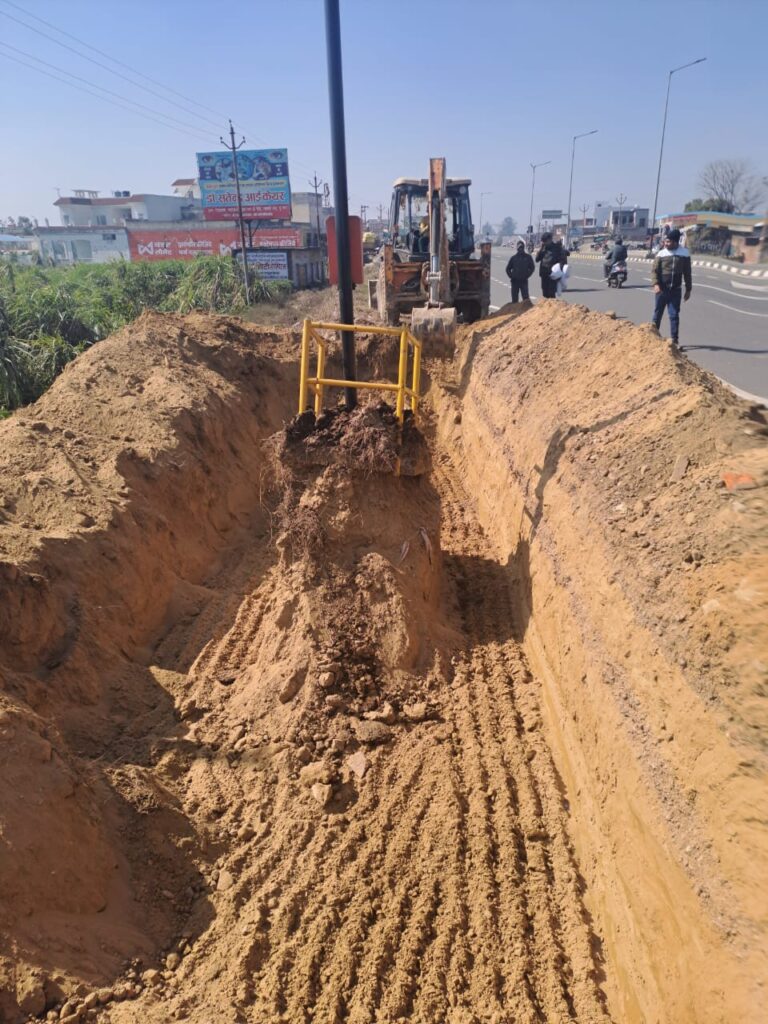
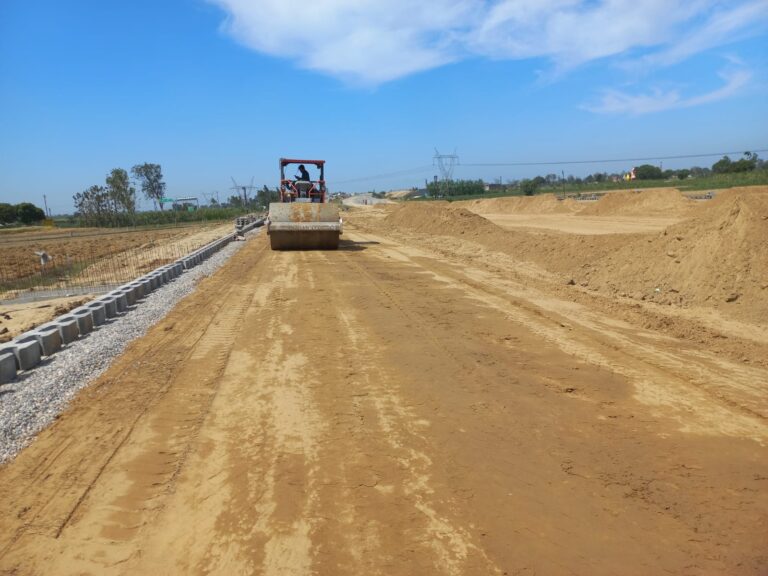
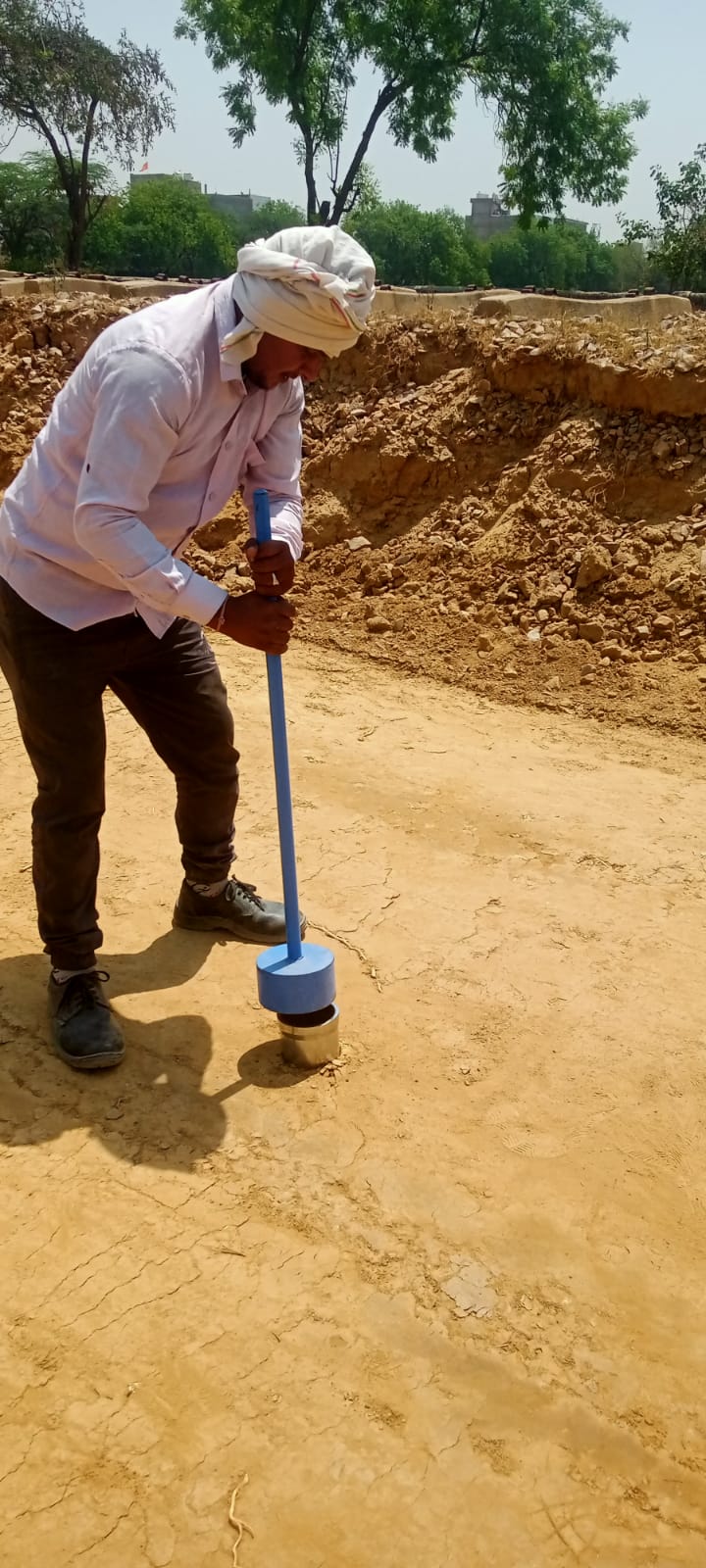
Subgrade is the most critical structural layer of highway pavement. This guide provides a complete and practical methodology for subgrade construction as per MoRTH Clause 305 (5th Revision), including field quality control procedures, tolerances, inspection checklists, and acceptance criteria.
All earthwork and subgrade layers shall be executed and verified in strict compliance with the approved Quality Assurance Plan (QAP), relevant MoRTH Specifications, and project drawings. The following control parameters shall be ensured at site prior to proceeding with subsequent layers:
QA/QC Requirement: No subsequent layer shall be permitted without written clearance from authorized QA/QC engineer based on field test results and level checks.
The work shall consist of construction of subgrade using approved and specified materials obtained from approved borrow areas or suitable material derived from roadway excavation and drain excavation, strictly in accordance with MoRTH Specifications Clause 305.
All operations shall be executed under controlled conditions ensuring compliance with approved drawings, quality assurance plan (QAP), and project specifications.
After completion of site clearance and embankment formation, the limits of the subgrade shall be accurately marked using survey pegs at regular intervals on both sides.
A permanent working benchmark shall be established outside the construction zone to ensure uninterrupted reference for level control during execution.
Engineering Control Note: No earthwork shall commence without verified setting-out approval from the site survey and QA/QC engineer.
Borrow areas shall be systematically investigated by gridding the area at approximately 25 m c/c, or closer spacing where variability in soil strata is observed, extending to the full depth of proposed excavation.
Test pits shall be excavated, properly logged, and plotted to establish stratification and identify zones of suitable and unsuitable materials. This shall form the basis for selection and approval of borrow sources by the Engineer.
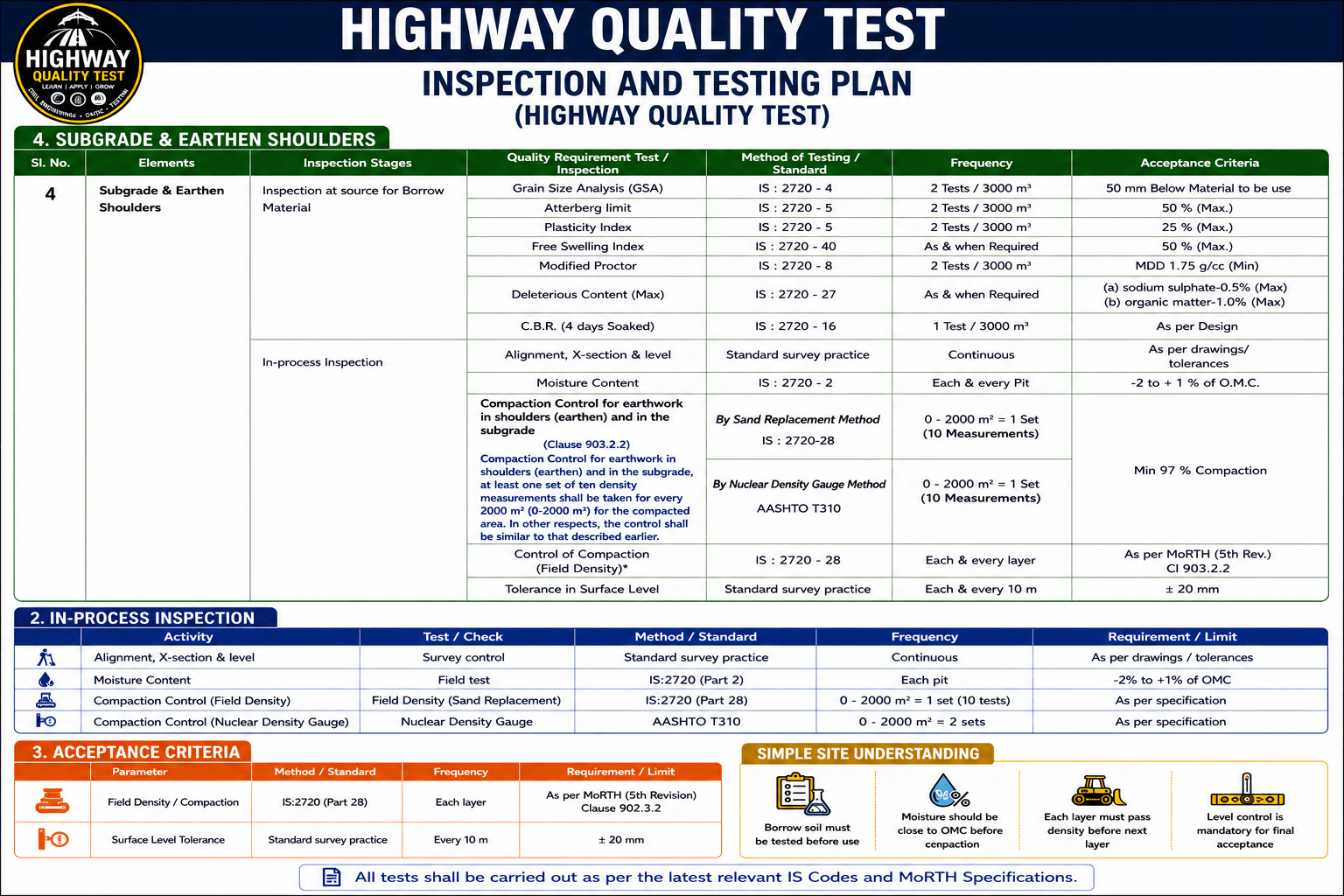
All equipment, tools, and manpower deployed for subgrade construction shall be adequate in capacity, well-maintained, and approved prior to commencement of work. The Contractor shall ensure that all resources are available at site and demonstrate the operational efficiency of plant and machinery whenever required by the Engineer. Equipment requiring calibration or certification shall possess valid calibration records.
The following plant and machinery shall be deployed for the systematic execution of subgrade works:
| Equipment | Purpose |
|---|---|
| Hydraulic Excavator / Backhoe Loader | Excavation and material handling |
| Dozer | Spreading and rough grading |
| Motor Grader | Final grading and profile correction |
| Dumpers / Tipper Trucks | Transportation of approved earth material |
| Vibratory Roller (Minimum 8–10 T or as specified) | Layer-wise compaction |
| Water Tanker with Sprinkler | Moisture conditioning and dust suppression |
| Tractor Trolley (if required) | Auxiliary transportation |
| Auto Level / Total Station | Survey, line, level and cross-section control |
| Measuring Tape, Staff & Survey Instruments | Dimensional verification |
Engineering Control: All equipment shall be maintained in sound working condition. Compaction equipment shall be suitable for the specified layer thickness and soil type to achieve the required density as per MoRTH Specifications.
Site Requirement: Adequate quantities of tools shall be available at site to facilitate continuous construction activities without interruption.
Qualified personnel shall be deployed throughout the execution of subgrade works to ensure compliance with project specifications, quality requirements, and safety regulations.
No subgrade construction activity shall commence unless the following requirements have been fulfilled:
Quality Control Note: The Engineer reserves the right to suspend the work if the deployed resources, equipment, or manpower are found inadequate to achieve the specified quality requirements under the Contract and MoRTH Specifications.
| Test / Parameter | Standard | Frequency | Acceptance Criteria |
|---|---|---|---|
| Grain Size Analysis (GSA) | IS: 2720 (Part 4) | 2 Tests / 3000 m³ | 50 mm below material to be used |
| Atterberg Limits | IS: 2720 (Part 5) | 2 Tests / 3000 m³ | LL ≤ 50% |
| Plasticity Index | IS: 2720 (Part 5) | 2 Tests / 3000 m³ | PI ≤ 25% |
| Free Swelling Index | IS: 2720 (Part 40) | As required | ≤ 50% |
| Modified Proctor | IS: 2720 (Part 8) | 2 Tests / 3000 m³ | MDD ≥ 1.75 g/cc |
| Deleterious Content | IS: 2720 (Part 27) | As required | (a) Sodium Sulphate ≤ 0.5% (b) Organic Matter ≤ 1.0% |
| CBR (4 Days Soaked) | IS: 2720 (Part 16) | 1 Test / 3000 m³ | As per Design |
| Activity | Standard | Frequency | Acceptance Criteria | In-process Inspection |
|---|---|---|---|
| Alignment, Cross-section & Level | Standard Survey Practice | Continuous | As per design |
| Moisture Content | IS: 2720 (Part 2) | Each & every pit | -2% to +1% of OMC |
| Field Density (Sand Replacement) | IS: 2720 (Part 28) | 0–2000 m² = 1 set (10 observations) | ≥ 97% |
| Field Density (Nuclear Gauge) | AASHTO T310 | 0–2000 m² = 2 sets (10 observations each) | ≥ 97% |
| Parameter | Permissible Tolerance |
|---|---|
| Compaction | ≥ 97% MDD |
| Moisture Content | ±2% of OMC |
| Finished Level | ±20 mm |
| Width | +100 mm / -50 mm |
| Cross Slope | ±0.3% |
The following quality control checklist shall be followed during and after subgrade construction to ensure compliance with MoRTH Specifications, approved drawings, and project quality requirements.
QA/QC Requirement: No subsequent pavement layer shall be laid until the completed subgrade has been inspected, tested, and formally approved by the Engineer. Any non-conforming area shall be rectified and re-tested before proceeding with further construction activities.
During subgrade construction, defects may arise due to improper material selection, inadequate moisture control, poor compaction practices, or non-compliance with construction methodology. The following table summarizes the common defects, their likely causes, and recommended corrective measures.
| Defect | Possible Cause | Recommended Rectification |
|---|---|---|
| Low Field Density | Insufficient rolling, incorrect moisture content, excessive layer thickness | Scarify the layer, adjust moisture to OMC, relay and recompact until the specified density is achieved. |
| Over-Wet Layer | Excessive water application or rainfall | Aerate the material, allow drying to near OMC, remix thoroughly and recompact. |
| Dry Layer | Moisture content below Optimum Moisture Content (OMC) | Apply water uniformly using a water tanker, remix the material and compact immediately. |
| Uneven Surface | Improper grading or inadequate finishing | Trim using a motor grader, correct line and level, and recompact the affected area. |
| Segregation of Material | Improper dumping or spreading of soil | Remove segregated material, remix thoroughly, spread uniformly and recompact. |
| Surface Rutting | Weak foundation, excessive moisture or premature traffic movement | Remove affected material, reconstruct the layer and restrict traffic until approval. |
| Ponding of Water | Improper cross fall or inadequate drainage | Re-establish the required cross slope, improve drainage and compact the corrected surface. |
| Cracks on Surface | Drying shrinkage or inadequate moisture control | Scarify the cracked portion, adjust moisture, remix and recompact. |
QA/QC Requirement: Any portion of the subgrade failing to meet the specified density, moisture content, line, level, thickness, or surface tolerance shall be rejected and rectified before subsequent pavement layers are placed. Corrective measures shall be carried out at the Contractor's own cost and shall be subject to re-inspection and approval by the Engineer.
The following frequently asked questions address common site queries related to subgrade construction in accordance with MoRTH Specifications for Road and Bridge Works.
| S.No. | Question | Answer |
|---|---|---|
| 1 | What is the minimum compaction requirement for subgrade? | Subgrade shall be compacted to a minimum of 97% of the Maximum Dry Density (MDD) determined as per IS:2720 (Part 8), unless otherwise specified in the Contract or MoRTH Specifications. |
| 2 | What is the maximum compacted layer thickness? | The compacted thickness shall generally not exceed 250 mm with a vibratory roller and 200 mm with a static roller, unless otherwise approved by the Engineer. |
| 3 | What should be the moisture content during compaction? | Compaction shall be carried out at or near the Optimum Moisture Content (OMC), generally within +1% and −2% of OMC or as specified in the project specifications. |
| 4 | How frequently should Field Density Tests (FDT) be conducted? | Field Density Tests shall be conducted at the frequency specified in the Contract or MoRTH Specifications. A common requirement is 10 tests per 2,000 m² of completed subgrade. |
| 5 | What should be done if the required density is not achieved? | The layer shall be scarified, moisture content adjusted to OMC, reworked, and recompacted. If satisfactory compaction is still not achieved, the unsuitable material shall be removed and replaced with approved material. |
| 6 | What materials are suitable for subgrade construction? | Approved soil, moorum, gravel, selected earth, fly ash, pond ash, or other approved materials meeting the requirements of the project specifications and free from organic matter and deleterious substances may be used. |
| 7 | Can construction proceed during rainfall? | No. Earthwork and compaction operations should be suspended during rainfall or when the material becomes excessively wet. Construction may resume only after the moisture content is brought back within the specified limits. |
| 8 | Which field tests are normally carried out for subgrade quality control? | Common quality control tests include Moisture Content, Field Density Test (Sand Replacement or Nuclear Gauge), CBR (where applicable), Plate Load Test (if specified), and survey checks for line, level, thickness, and cross slope. |
| 9 | What are the common causes of subgrade failure? | Poor-quality material, inadequate compaction, improper moisture control, insufficient drainage, excessive layer thickness, and premature traffic movement are the most common causes of failure. |
| 10 | Can the next pavement layer be laid immediately after subgrade construction? | No. The completed subgrade shall be inspected, tested, and approved by the Engineer. The subsequent pavement layer shall only be laid after all quality requirements have been satisfactorily met. |