Bitumen & Bituminous Mix

What is Bitumen? Grade, Types, Properties

Bitumen is a viscous, black, sticky, and highly cementitious substance derived from crude petroleum through a refining process. It is primarily composed of hydrocarbons and their derivatives. Often referred to as asphalt cement in North America, bitumen is best known for its use as the binding agent in asphalt concrete for road construction, paving, and roofing applications.
________________________________________

What is Bitumen? Grade, Types, Properties Read More »

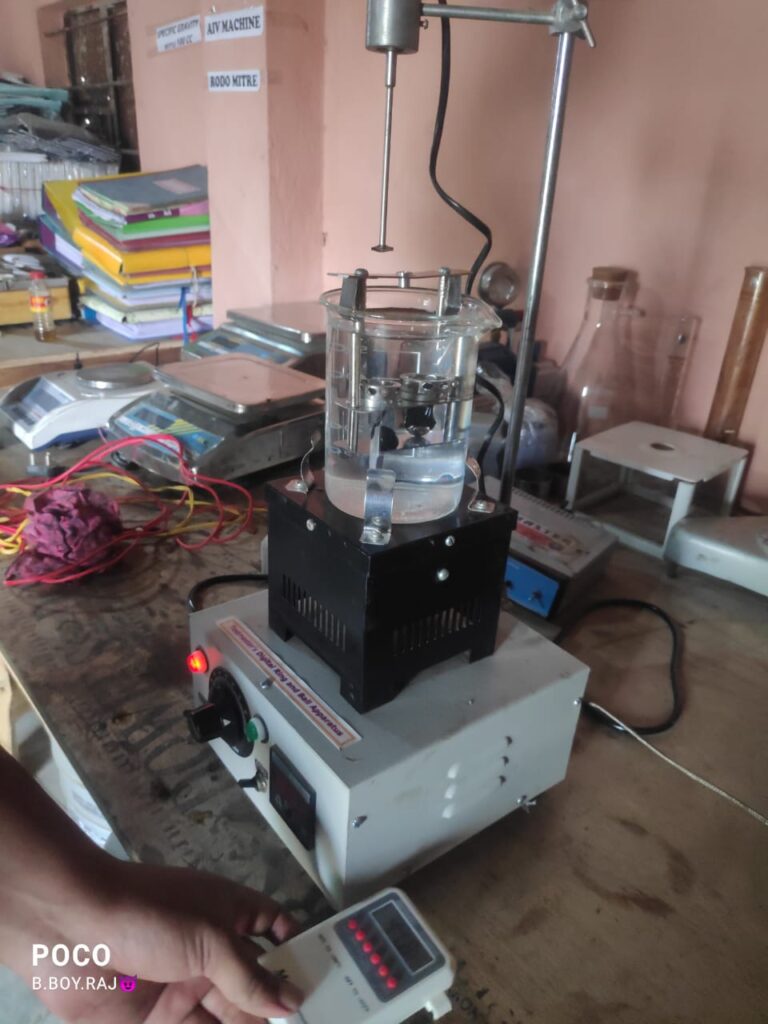
Absolute Vicosity Test

Absolute Viscosity Test of Bitumen – Cannon Manning Vacuum Capillary Viscometer (ASTM D2171) Absolute Viscosity Test of Bitumen – ASTM D2171 The Absolute Viscosity Test measures the flow resistance of bitumen using a Cannon-Manning Vacuum Capillary Viscometer. This method is widely used for quality control of paving-grade bitumen. 1. OBJECTIVE To determine the absolute viscosity of bitumen using the Cannon-Manning Vacuum Capillary Viscometer at a controlled temperature under a vacuum. 2. APPARATUS Constant Temperature Bath (accuracy ±0.1 Â°C). Silicone Oil Bath (up to 150 Â°C) or Water Bath (up to 100 Â°C). Vacuum System (maintains ±0.05 cm Hg accuracy up to 30 cm Hg). Stopwatch (accuracy 0.5 sec). Cannon-Manning Vacuum Viscometers (Size 12 & Size 13). Viscometer Stand (for 6 tubes). 3. PROCEDURE Collect bitumen sample in a clean container. Heat the sample to 135 Â± 5.5 Â°C. Pour into viscometer up to the fill mark (±2 mm of line E). Allow sample to stand for 10 Â± 2 minutes to release air bubbles. Transfer viscometer into the bath maintained at 60 Â°C. Connect the viscometer to vacuum pump and apply 30 cm Hg vacuum. Start the stopwatch and record the time (T sec) for bitumen to flow from Mark G to Mark H. 4. CALCULATION Formula for Absolute Viscosity Absolute Viscosity (Poises) = K × T K = Calibration factor of viscometer (Poises/sec) T = Flow time in seconds 5. RESULTS The absolute viscosity of the bitumen sample is reported in Poises at 60 Â°C under a vacuum of 30 cm Hg. Quick Reference: Absolute Viscosity Test (ASTM D2171) Standard: ASTM D2171 – Viscosity by Vacuum Capillary Viscometer Purpose: To measure the flow resistance of bitumen at 60 Â°C under vacuum Required Vacuum: 30 cm Hg (maintained ±0.05 cm Hg) Test Temperature: 60 Â°C (constant temperature bath, accuracy ±0.1 Â°C) Viscometer Used: Cannon–Manning Vacuum Capillary Viscometer (Size 12/13) Sample Heating: Heat bitumen to 135 Â± 5.5 Â°C before pouring in viscometer Flow Timing: Time recorded for bitumen flow between Mark G → Mark H Viscosity Formula: Absolute Viscosity (Poises) = K × T K: Calibration factor of viscometer (provided by manufacturer) T: Flow time in seconds Top 10 FAQs – Absolute Viscosity Test of Bitumen (ASTM D2171) What is the Absolute Viscosity Test? It measures the resistance of bitumen to flow at 60 Â°C using a vacuum capillary viscometer under a fixed vacuum of 30 cm Hg. Why is a vacuum used in this test? Vacuum minimizes air bubbles and ensures controlled laminar flow inside the capillary tube. Which viscometer is used? Cannon-Manning Vacuum Capillary Viscometer (typically Size 12 for paving grades). What is the test temperature? 60 Â°C (±0.1 Â°C). How is viscosity calculated? Viscosity = K × T, where K is calibration factor and T is flow time. Minimum sample heating temperature? 135 Â± 5.5 Â°C before pouring. How long should bitumen stand after filling? 10 Â± 2 minutes to release trapped air. Precision required for timing? Stopwatch accurate to 0.5 sec. Typical viscosity values? 800 – 4000 Poises at 60 Â°C for paving grade bitumen. Why 60 Â°C? It represents the typical temperature of bitumen in service on roads. Prepared by Kishor Kumar | Source: HighwayQualityTest.com 🧪 Bitumen Laboratory Tests – Arranged as per IS Codes ✔ Penetration Test of Bitumen – IS 1203 ✔ Softening Point of Bitumen (Ring & Ball) – IS 1205 ✔ Absolute Viscosity Test of Bitumen – IS 1206 (Part 2) ✔ Ductility Test of Bitumen – IS 1208 ✔ Bitumen Extraction Test – IS 2720 (Part 39) ✔ Marshall Stability & Flow Test – ASTM D6927 / MoRTH

Absolute Vicosity Test Read More »

Bitumen Extraction test

Bitumen Extraction Test: A laboratory method to determine exact bitumen (binder) content in asphalt mixes using solvent extraction (centrifuge / reflux). Also used to recover aggregates for gradation. Parameter Details Standard IS 13826 / ASTM D2172 Purpose Determine bitumen content & recover aggregates for gradation Sample ~1000 g typical On this page: Objective Apparatus Procedure Calculation & Example MoRTH Limits Notes & Safety Downloads FAQ 1. OBJECTIVE To determine percentage of binder (bitumen) in a bituminous mix by cold solvent extraction using a centrifugal extractor (ASTM D2172 / IS 13826). 2. APPARATUS Centrifugal extraction machine Analytical balance (0.1 g) Cold solvent (benzene / petrol / trichloroethylene) Filter paper (Watt 60) Oven, beakers, spatula, glass plate PPE: gloves, goggles, extractor ventilation 3. PROCEDURE Weigh a representative sample (W1 ≈ 1000 g) and place into the extractor bowl. Add sufficient commercial benzene (or specified solvent) to cover the sample and allow to stand up to 1 hour to soften the bitumen. Line the bowl with pre-weighed filter paper and assemble the bowl with the paper in place. Place a beaker to collect the solvent/bitumen extract. Start the extractor slowly and increase speed gradually up to 3600 rpm. Maintain until solvent flow reduces significantly. Stop the machine and add about 200 ml fresh solvent. Repeat extraction cycles at least 3 times or until the extract becomes light straw in colour. Remove filter paper with retained fines; dry in air then oven at 115°C to constant weight (record Wf). Recover fines in solvent by centrifuging the extract; dry and weigh recovered fines (W3). Dry remaining aggregate in oven to constant weight and record as W2. Record all weights and proceed to calculation. 4. CALCULATION & EXAMPLE % Binder Content = [(W1 − (W2 + W3)) / W1] × 100 Where: W1 = Original weight of sample (g) W2 = Weight of aggregate after extraction (g) W3 = Weight of fines recovered from extract (g) Parameter Value (g) W1 (sample) 1000.0 W2 (after extraction) 955.2 W3 (fines) 6.8 Binder % 3.80% W1 (g) W2 (g) W3 (g) Calculate 5. MoRTH Binder Content Requirements (Typical) Layer Typical Binder % DBM (Grade-I) 3.5 – 4.5% DBM (Grade-II) 4.0 – 4.5% BC (Grade-I) 5.0 – 5.4% BC (Grade-II) 5.2 – 5.6% 6. NOTES & SAFETY Handle solvents in a ventilated area and use PPE. Ensure extractor lid seals to avoid solvent loss. Dispose used solvent as hazardous waste per local rules. Repeat extraction until extract clears; incomplete extraction underestimates binder %. 7. DOWNLOADS & TEMPLATES Download Extraction Test Format (Excel) 8. FAQ Q: Which solvent is used? A: Commercial benzene, trichloroethylene, or petrol—choose as per lab regulations and safety. Q: How many cycles are needed? A: Typically 3 cycles or until extract becomes light straw in colour. Q: How to calculate binder %? A: % Binder = [(W1 − (W2 + W3)) / W1] × 100 🧪 Bitumen Laboratory Tests – Arranged as per IS Codes ✔ Penetration Test of Bitumen – IS 1203 ✔ Softening Point of Bitumen (Ring & Ball) – IS 1205 ✔ Absolute Viscosity Test of Bitumen – IS 1206 (Part 2) ✔ Ductility Test of Bitumen – IS 1208 ✔ Bitumen Extraction Test – IS 2720 (Part 39) ✔ Marshall Stability & Flow Test – ASTM D6927 / MoRTH

Bitumen Extraction test Read More »

penetrometer.jpg

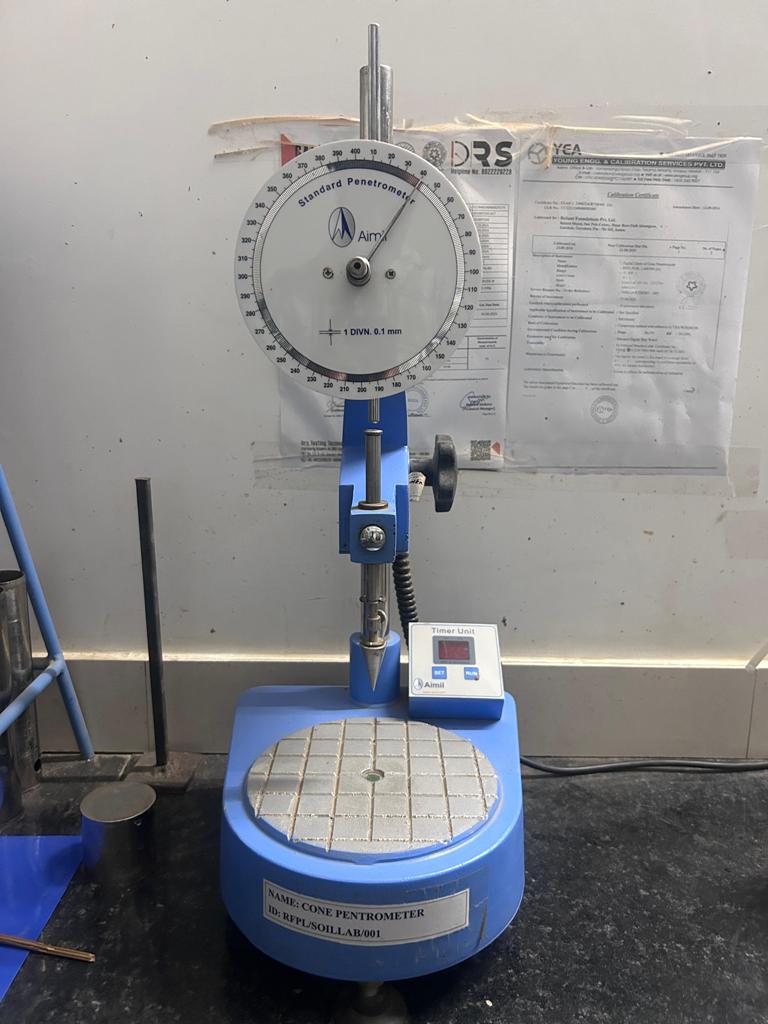
Penetration Test

Learn the complete Bitumen Penetration Test procedure as per IS 1203 and ASTM D5. Understand grades, heating precautions, and how penetration value affects pavement performance. Bitumen Penetration Test – Complete Guide for Highway Quality Control Description: Learn the complete procedure of the Bitumen Penetration Test as per IS 1203 and ASTM D5. Includes apparatus, sample preparation, heating process, and its significance in highway construction quality control. 1. Introduction The Bitumen Penetration Test is one of the most common tests performed in highway quality laboratories to determine the consistency or hardness of bitumen. It helps assess the ability of bitumen to resist deformation under load. The test result directly influences pavement flexibility, durability, and service life. 2. Definition and Standard Reference As per IS:1203 (1978) and ASTM D5, the Penetration Test determines the depth (in tenths of a millimetre) that a standard needle penetrates vertically into a bitumen sample under specific conditions of load, time, and temperature. The value obtained is known as the penetration value of the bitumen. 3. Importance of Bitumen Penetration Grade The penetration grade indicates the hardness or softness of bitumen. A higher penetration value means softer bitumen suitable for cold climates, while lower values indicate harder bitumen ideal for hot regions. Common penetration grades used in India are 30/40, 60/70, and 80/100. 4. Climate-Based Selection of Bitumen Grade Selection of bitumen grade should match the climatic conditions and traffic load. Hard grades such as VG-40 are recommended for high-temperature zones and heavy traffic, while softer grades like VG-10 are preferred in colder regions. 5. Apparatus Required for Bitumen Penetration Test Penetrometer with standard needle Water bath maintained at 25°C ± 0.1°C Sample container (metal cup) Thermometer (accurate to 0.1°C) Stopwatch 6. Sample Preparation Procedure Heat the bitumen sample to a pouring consistency (not exceeding 90°C). Pour the sample into a metal cup to a depth of about 35 mm and allow it to cool for 1 to 1.5 hours at room temperature. Place the sample in a water bath maintained at 25°C for at least 1 hour before testing. 7. Test Procedure (As per IS 1203 / ASTM D5) Place the sample under the penetrometer needle. Ensure the needle just touches the surface of the bitumen. Apply a load of 100 g for 5 seconds. Note the penetration value in tenths of a millimetre (dmm). Repeat the test at three different points not less than 10 mm apart. Calculate the average value as the final result. 8. Calculation of Penetration Value Penetration Value (dmm) = Average of three readings Example: (67 + 68 + 69) / 3 = 68 dmm 9. Importance of the Heating Process Heating bitumen must be carefully controlled to prevent oxidation and hardening. Excessive heating alters bitumen’s chemical properties, reducing penetration value and flexibility. Purpose of Heating To bring the bitumen to a fluid state for easy pouring and uniform temperature distribution without causing aging or volatility loss. The 90°C Rule – Preventing Age Hardening Bitumen should never be heated beyond 90°C during sample preparation. Higher temperatures accelerate oxidation and make the bitumen brittle, leading to premature pavement cracking. Pro Tips Always stir the sample gently while heating. Use a controlled water bath for uniform test temperature. Record temperature before and after the test to ensure consistency. 10. Significance of the Bitumen Penetration Test This test ensures that the bitumen used in road construction meets design requirements for flexibility, binding strength, and temperature susceptibility. a. Quality Control Helps verify that the bitumen supplied on site matches the approved specification before mixing. b. Performance Prediction Indicates how bitumen will behave under traffic and climatic stress conditions. c. Consistency Indicator Shows the relative hardness or softness of bitumen, which influences pavement flexibility. d. Prevents Premature Failures Using bitumen of correct penetration value minimizes cracking, rutting, and bleeding in pavements. 11. Final Thoughts The Bitumen Penetration Test is an essential quality control measure that defines the usability and performance of paving bitumen. By maintaining the correct penetration value, highway engineers can ensure durable and flexible pavements suited to Indian climatic conditions. ✅ Expert Tip Always cross-check penetration test results with Softening Point Test (IS 1205) and Viscosity Test (IS 1206) to obtain a complete understanding of bitumen behavior under varying temperature conditions. 🧪 Bitumen Laboratory Tests – Arranged as per IS Codes ✔ Penetration Test of Bitumen – IS 1203 ✔ Softening Point of Bitumen (Ring & Ball) – IS 1205 ✔ Absolute Viscosity Test of Bitumen – IS 1206 (Part 2) ✔ Ductility Test of Bitumen – IS 1208 ✔ Bitumen Extraction Test – IS 2720 (Part 39) ✔ Marshall Stability & Flow Test – ASTM D6927 / MoRTH

Penetration Test Read More »

Scroll to Top
WhatsApp