Table of Contents
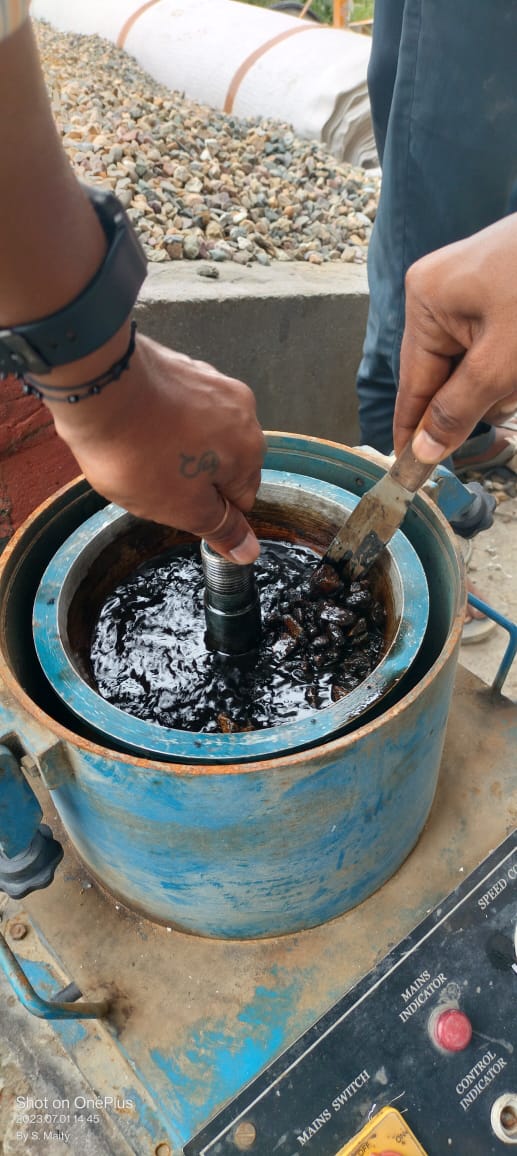
ToggleThe Absolute Viscosity Test of Bitumen is a critical laboratory procedure used to assess the flow characteristics of paving-grade bitumen under controlled temperature and vacuum conditions. This test is essential for highway engineers, laboratory technicians, and quality control professionals who need accurate and reproducible data on bitumen viscosity. Using a Cannon-Manning Vacuum Capillary Viscometer, the test measures the time it takes for a bitumen sample to flow through a capillary tube, which is then converted into absolute viscosity using a calibrated factor. Performing this test correctly ensures that the selected bitumen will perform effectively under traffic loads and varying climatic conditions.
The main goal of this test is to determine the absolute viscosity of bitumen at a standard temperature of 60 °C under a vacuum of 30 cm Hg. Viscosity measurement is critical for:
Bitumen is a viscoelastic material, meaning its resistance to flow depends on temperature and load. The absolute viscosity represents its internal resistance to flow under laminar conditions. The Cannon-Manning Vacuum Capillary Viscometer determines this property by:
Using a vacuum helps remove air bubbles and ensures smooth laminar flow, which is essential for accurate results. The ASTM D2171 standard ensures consistency and repeatability in viscosity measurements across different laboratories and projects.
Note: All apparatus should be clean, dry, and calibrated according to the manufacturer’s specifications to ensure accurate measurements.
Tips for Accuracy: Avoid shaking the viscometer, maintain bath temperature ±0.1 °C, and ensure a stable vacuum during the test.
Absolute Viscosity (Poises) = K × T
Example: If T = 250 s and K = 12.5 Poises/sec, then Absolute Viscosity = 12.5 × 250 = 3125 Poises.
The results should be reported as follows:
| Sample | Temp (°C) | Vacuum (cm Hg) | Flow Time T (s) | Absolute Viscosity (Poises) |
|---|---|---|---|---|
| Bitumen A | 60 | 30 | 250 | 3125 |
| Bitumen B | 60 | 30 | 200 | 2500 |
| Problem | Possible Cause | Solution |
|---|---|---|
| Erratic flow | Air bubbles trapped in viscometer | Let bitumen stand longer or reheat gently |
| Slow flow | Sample too viscous or too cold | Ensure bath temperature is correct and bitumen is properly heated |
| Vacuum drops | Leaks in tubing or joints | Inspect vacuum system and seal leaks |
| Temperature fluctuates | Faulty thermostat | Use calibrated bath and monitor continuously |
Prepare professional Absolute Viscosity Test of Bitumen reports in minutes using our ready-to-use Excel format with automatic calculations. Accurately determine the absolute viscosity of bitumen at 60°C using the Vacuum Capillary Viscometer Method while eliminating manual calculation errors and generating laboratory-ready reports instantly.
✔ Secure Payment | ✔ Instant Download | ✔ Editable Excel
Engineering Precision. Digital Quality. Highway Excellence.
© 2026 HIGHWAY QUALITY TEST. All rights reserved.