
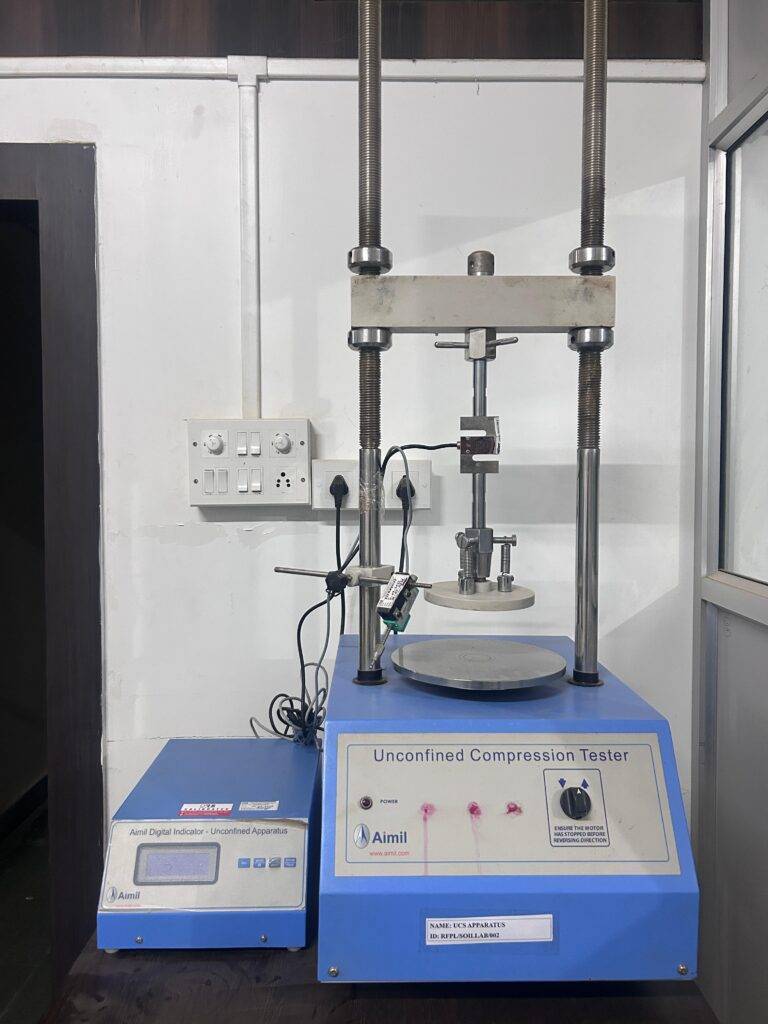
California Bearing Ratio Test
The CBR test evaluates the strength of subgrade soil, sub-base, or base course material under controlled compaction and moisture conditions. The value obtained is used in pavement thickness design.
The CBR test evaluates the strength of subgrade soil, sub-base, or base course material under controlled compaction and moisture conditions. The value obtained is used in pavement thickness design.
he Liquid Limit (LL) Test determines the water content at which soil changes from a plastic to a liquid state. It is a key parameter for classifying soils, evaluating their plasticity, and assessing suitability for highway and civil engineering works.
Plastic Limit of Soil Test (PL Test) – Procedure, Calculations & Examples Plastic Limit of Soil Test (PL Test) Objective: To determine the plastic limit of soil (PL), which is the moisture content at which soil starts to exhibit plastic behavior. Apparatus Required Evaporating dish Spatula Glass plate Moisture containers with lids Rolling rod (3 mm diameter) Sensitive balance (accuracy 0.01 g) Oven (temperature 105–110 °C) Procedure for Plastic Limit Test Take about 20 g of dry, pulverized soil passing through a 425 μm IS sieve. Mix the soil thoroughly with distilled water until it forms a plastic paste. Form a small ball of soil and roll it between fingers and a glass plate to form a thread. Apply uniform pressure and roll at a speed of 80–90 strokes per minute. Continue rolling until the thread diameter reaches 3 mm. Observe crumbling: Thread crumbles below 3 mm → moisture content is above PL Thread crumbles above 3 mm → moisture content is below PL Repeat rolling and kneading until the thread crumbles at exactly 3 mm diameter. Collect the crumbled soil immediately in a moisture container, cover it, and weigh. Dry the sample in an oven to determine the dry weight and calculate moisture content. Repeat the test at least three times and report the average value as PL. Calculations Plasticity Index (PI or Ip): PI = Liquid Limit (LL) – Plastic Limit (PL) PI = WL – WP Toughness Index (TI or IT): TI = IP / IF (Where IF = Flow Index from Liquid Limit Test) Liquidity Index (LI or IL): LI = (W – WP) / IP W = Natural moisture content of soil Consistency Index (CI or IC): CI = (WP – W) / IP Notes Maintain uniform rolling strokes for accurate results. Determine moisture content immediately after crumbling. The Plastic Limit helps classify soil into low, medium, or high plasticity. 🔬 Related Soil Tests for Highway & Pavement Works Explore detailed test procedures, calculations and acceptance criteria as per IS, MoRTH & IRC specifications: ✅ Free Swell Index (FSI) Test – Expansive Soil Identification ✅ Liquid Limit (LL) Test – Consistency Characteristics of Soil ✅ Plastic Limit (PL) Test – Plasticity Range Evaluation ✅ Modified Proctor Test – Soil Classification & Swelling Potential ✅ CBR Test of Soil – Subgrade Strength for Pavement Design 📌 Pro Tip: Use FSI, Atterberg Limits (LL–PL–PI), and CBR collectively for reliable subgrade and embankment design as per IRC:37 & MoRTH.
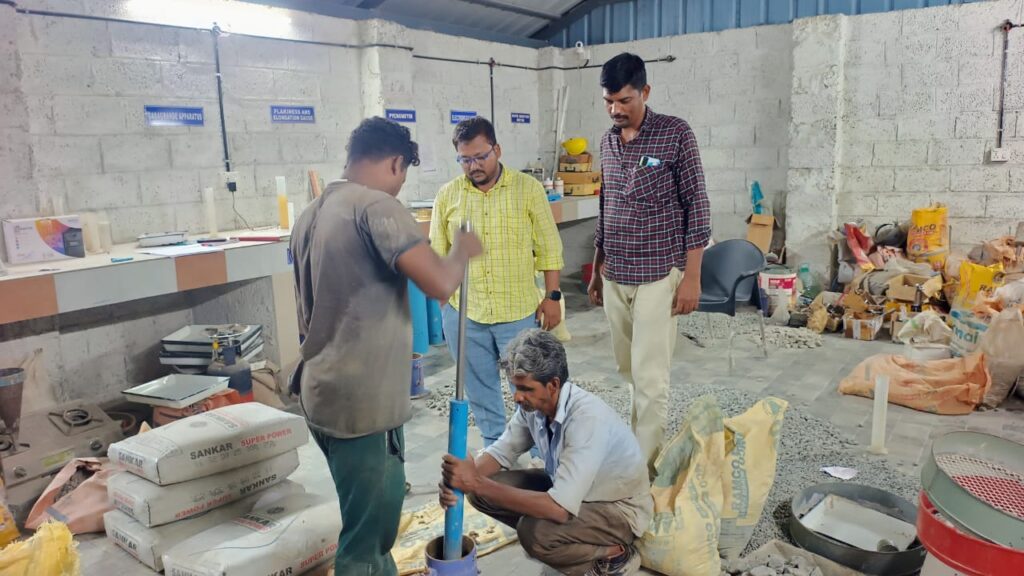
It helps in understanding how much water should be added to the soil for achieving maximum compaction under a given compactive effort.
Home » Geotechnical Tests » Free Swell Index (FSI) Free Swell Index (FSI) Test — Procedure, Calculation & Acceptance Criteria Method: IS:2720 (Part 40) • Standards: MoRTH, IRC:75 (2015), IRC:SP:89 Overview The Free Swell Index (FSI) test evaluates the expansive nature of soil by determining its swelling in water under unconstrained conditions. A high FSI indicates the presence of expansive clay minerals (e.g., montmorillonite) which may cause heaving, cracking, and pavement instability. This test is essential for embankment and subgrade suitability assessments. Quick fact: Soils with FSI > 50% are generally unsuitable for direct use in subgrade or embankment without stabilization. Scope & Applicable Standards IS:2720 (Part 40) — Determination of Free Swell Index of Soils MoRTH Section 300 — Subgrade and Earthwork Quality Requirements IRC:75 (2015) — Guidelines for Design and Construction of Embankments & Subgrades IRC:SP:89 — Guidelines for Soil Testing in Road Works NHAI QA/QC Manual — Frequency & acceptance criteria for geotechnical testing Apparatus Required 425-micron sieve Two 100 ml glass graduated cylinders (as per IS:878-1956) Oven capable of 110 °C Balance (500 g capacity, accuracy 0.01 g) Distilled water and kerosene Spatula, weighing dishes and glass rod Testing Procedure (Step-by-Step) Take 500 g of oven-dried or air-dried soil and sieve through a 425-micron sieve. Divide 20 g of the sieved soil into two equal portions (10 g + 10 g). Place each portion into separate 100 ml glass graduated cylinders. Fill one cylinder to the 100 ml mark with kerosene and the other to the 100 ml mark with distilled water. Stir gently with a glass rod to remove trapped air bubbles. Allow samples to stand undisturbed for 24 hours at (27 ± 2)°C until volume stabilizes. Record the final volume readings of soil in both cylinders (Vk for kerosene, Vw for water). Calculation Use the following formula to compute the Free Swell Index: FSI (%) = ((Vw – Vk) / Vk) × 100 Where: Vw = volume of soil in water (ml) and Vk = volume of soil in kerosene (ml). Technical Interpretation & Acceptance Criteria Interpretation of FSI based on MoRTH and IRC guidance: Free Swell Index (%) Swelling Nature Suitability for Subgrade 0 – 20 Low Good — suitable for direct use 20 – 50 Moderate Usable with control measures (moisture regulation, compaction) > 50 High / Very High Requires stabilization (lime/cement) or replacement Recommendation: For moderate to high FSI soils, always run complementary tests (Atterberg limits, swell pressure) and design appropriate stabilization. Precautions Use clean, dry glass cylinders and ensure removal of trapped air bubbles. Maintain the test temperature at 27 ± 2 °C during the 24-hour period. Avoid disturbing the samples until volumes stabilize. Record all readings carefully and document trial-to-trial variation. Quick Facts Test Method IS:2720 (Part 40) Sample Size 10 g (per cylinder) Test Duration 24 hours (stand period) Key Application Assessing expansive soil for embankment/subgrade Conclusion The Free Swell Index test is a simple, reliable indicator of soil expansivity and is a key part of highway geotechnical investigations. Soils with FSI > 50% should not be used directly in embankment or subgrade without suitable treatment. Proper testing and stabilization help ensure pavement performance and reduce long-term maintenance costs. Download Lab Test Format (Excel) FAQ Is FSI the same as swell pressure? No. FSI is a measure of volume increase in unconstrained conditions. Swell pressure measures the pressure developed when soil is allowed to swell under constrained conditions. Can we rely on FSI alone to design stabilization? FSI is an indicator. For design you should combine FSI with Atterberg limits, swell pressure, and field investigations before finalizing stabilization measures. What stabilization methods are commonly used? Lime stabilization, cement stabilization, blending with non-expansive materials, and undercutting/replacement are common methods depending on project needs. References: IS:2720 (Part 40); MoRTH Section 300; IRC:75 (2015); IRC:SP:89; NHAI QA/QC Manual. © 2025 Highway Quality Test Frequently Asked Questions Why Black Cotton Soil is Expansive in Nature Ans: The Black cotton soil, widely found in India, is known for its challenging behavior in civil engineering projects. What makes this soil so problematic? Its ability to swell during wet seasons and shrink during dry periods can severely affect pavements, embankments, and building foundations. In this post, we explore the science behind its expansive nature and why understanding it is crucial for highway and geotechnical engineers. Black cotton soil, commonly found in central and western India, is known for its expansive behavior — it swells when wet and shrinks when dry. This property poses serious challenges in highway and foundation engineering. What Makes Black Cotton Soil Expansive? Ans: The key reason lies in its mineral composition, specifically the presence of montmorillonite, a clay mineral with a high capacity for moisture absorption. Montmorillonite has a layered crystal structure that allows water molecules to enter, causing the soil to expand during wet seasons (like the monsoon) and contract during dry weather. This moisture-driven volume change leads to: Pavement heaving and surface distortions Longitudinal and transverse cracks in roads Loss of ride quality and pavement durability Uneven settlements in embankments and building foundations Structural failure in subgrade and base layers Bentonite, a commercially known form of montmorillonite clay, exhibits similar swelling and shrinkage behavior — often used in lab studies as a reference for expansive soils. Why It Matters in Highway Engineering Ans: To understand the swelling behavior of black cotton soil becuase it is essential for effective highway design. Without proper soil stabilization, these soils can cause premature pavement failure and unsafe road conditions. Hence, it is mandatory to perform this test prior to use the borrow area materials. What to do if FSI limit exceeds the accetable Limit?Recommended stabilization methodologies (when FSI > acceptable limit) Recommended Stabilization Methodologies — When FSI Exceeds Acceptable Limits Guidance for highway engineers and site teams on choosing and validating stabilisation treatments for expansive soils (Free Swell Index > acceptable limit). 1) Lime Treatment (Modification / Stabilization) When to use: Highly plastic clays and soils with significant clay fraction where
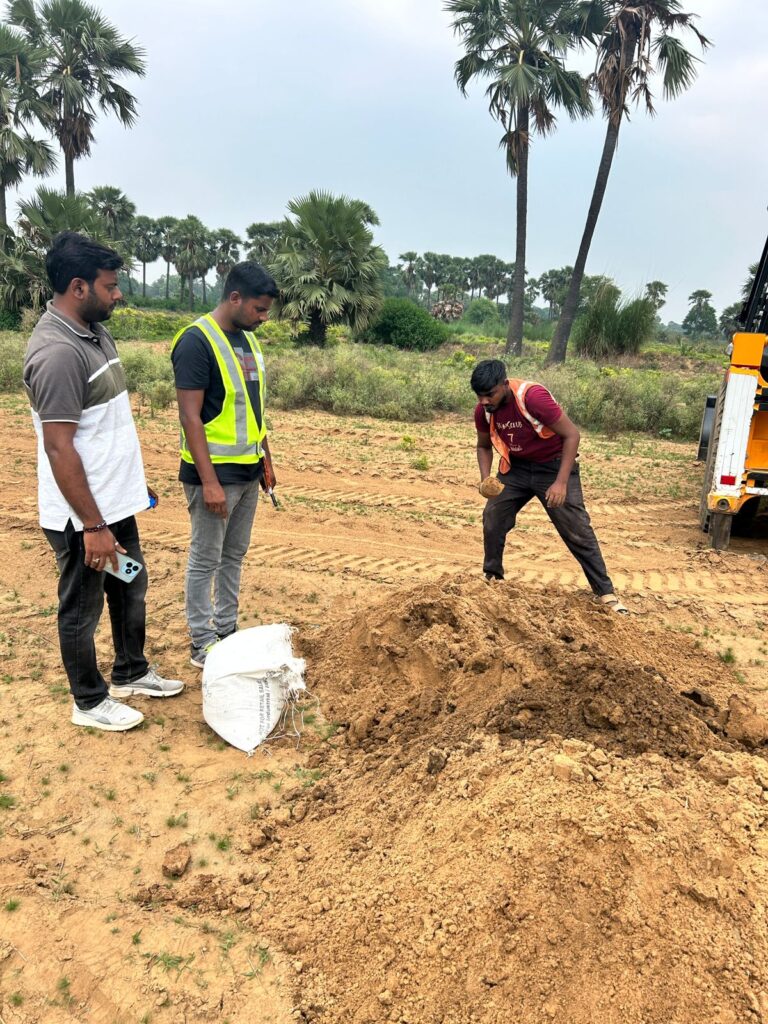
Highway Material Testing Index – As per MoRTH 5th Revision A complete reference of all laboratory and field tests for each layer of highway construction — from Subgrade to Rigid Pavement — based on MoRTH 5th Revision, IS, and IRC standards. Earthwork & Subgrade Moisture Content – IS:2720 (Part 2) Sieve Analysis – IS:2720 (Part 4) Atterberg Limits – IS:2720 (Part 5) Compaction / Proctor Test – IS:2720 (Part 7 & 8) California Bearing Ratio (CBR) – IS:2720 (Part 16) Field Density – Core Cutter / Sand Replacement (IS:2720 Part 28) DCP / Plate Load Test Borrow Area / Embankment Material Tests Granular Sub-Base (GSB) Gradation – IS:2386 (Part 1) Flakiness & Elongation Index – IS:2386 (Part 1) Los Angeles Abrasion Value – IS:2386 (Part 4) Water Absorption – IS:2386 (Part 3) Field Density & Moisture – IS:2720 (Part 28) Degree of Compaction – (Min. 97% of MDD) Wet Mix Macadam (WMM) Aggregate Impact Value – IS:2386 (Part 4) Gradation Check – IS:2386 (Part 1) Proportioning of Materials – MoRTH Clause 406 Field Density (Core Cutter / NDT) Moisture Content Check Layer Thickness Verification Bituminous Layers (BM / DBM / BC) Binder Content Determination Marshall Stability & Flow Value – ASTM D1559 / MoRTH 507 Bitumen Penetration, Softening Point, Ductility, Specific Gravity – IS:1203–1208 Aggregate Stripping Value – IS:6241 Bitumen Extraction Test Core Density / Thickness Test Temperature Control Record Rigid Pavement (Concrete Pavement) Cement Tests – IS:4031 Coarse Aggregate Tests – IS:2386 (Part 1–4) Fine Aggregate Tests – Sieve, Silt, Bulking, Specific Gravity Concrete Mix Design – IS:10262 / IRC:44 Workability (Slump Test) – IS:1199 Compressive Strength (Cube Test) – IS:516 Flexural Strength (Beam Test) – IS:516 (Part 5) Pavement Thickness (Core Cutting) Surface Regularity / Texture Depth Additional / Common Tests Water Quality Test – IS:456 / IS:10500 Reinforcement Bar Tests – IS:1786 Geotextile / Geogrid Tensile Strength Test Temperature / Weather Records Looking for detailed procedures? Explore our complete testing guides below Soil Testing Aggregate Testing Bitumen & Bituminous Testing Concrete Testing © 2025 Highway Quality Test | Developed to promote Quality Road Construction through Standardized Testing