Introduction to Softening Point of Bitumen
Learn the Softening Point Test of Bitumen (Ring and Ball Method) as per IS 1205:1978. Step-by-step procedure, apparatus, formula, and significance for highway QA/QC engineers in NHAI projects.
Relevant Standards and Codes
- IS 1205:1978 – Methods for Testing Tar and Bituminous Materials: Determination of Softening Point (Ring and Ball Method)
- ASTM D36 – Standard Test Method for Softening Point of Bitumen (Ring-and-Ball Apparatus)
Apparatus Required
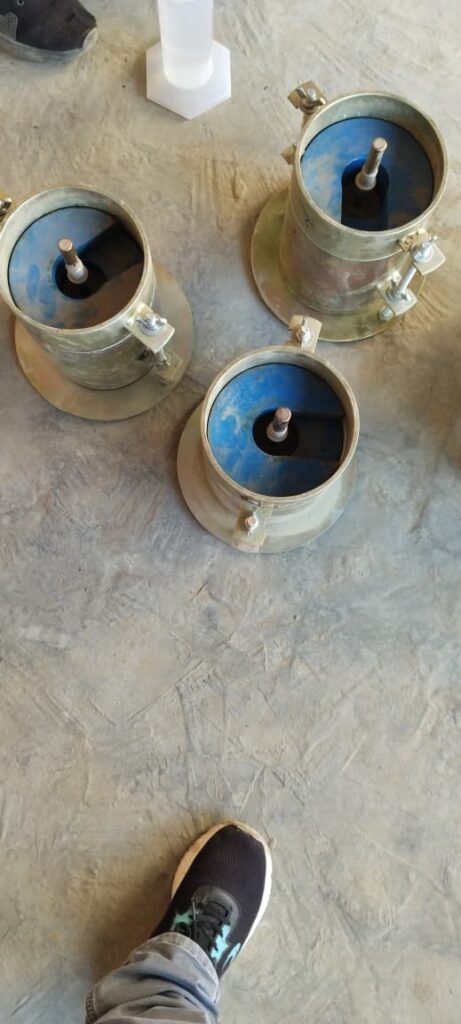
- Ring and Ball Apparatus (Brass rings + steel balls)
- Thermometer (Range: 0°C to 110°C, accuracy ±0.5°C)
- Beaker – 800 ml capacity
- Heating device – to maintain uniform temperature rise (5 ± 0.5°C per minute)
- Glycerin or distilled water (as heating medium depending on temperature range)
Procedure for Softening Point Test (IS 1205:1978)
Preparation of Sample (Clause 4.1)
- Heat the bitumen sample to 75–100°C above its expected softening point to make it completely fluid without overheating.
- Stir thoroughly until homogeneous and free from air bubbles and moisture.
- If necessary, filter through IS Sieve 30 (as per IS 460:1962) to remove impurities or coarse particles.
- Preheat brass rings to approximately the same temperature as the molten bitumen.
- Coat metal base plate with a mixture of glycerin and dextrine to avoid adhesion.
- Fill the rings completely with molten bitumen and allow to cool in air for 30 minutes.
- Trim the excess using a warm, sharp knife to get a perfectly level surface.
Assembly of the Apparatus
- Place the filled rings in the ring holder.
- Position the steel balls (9.5 mm diameter, approx. 3.5 g each) using centering guides.
- Immerse the assembly in a liquid bath:
- Water bath for softening points below 80°C.
- Glycerin bath for softening points above 80°C.
- Ensure liquid level is at least 50 mm above the top surface of the rings.
Placing of Thermometer and Initial Temperature
- Insert a calibrated thermometer so that its bulb is level with the ring sample.
- Adjust bath temperature to 5°C below expected softening point before starting.
- Ensure setup is stable and free from vibrations.
Heating of the Bath and Determination of Softening Point
- Heat the bath uniformly at 5 ± 0.5°C per minute.
- Observe the bitumen softening until the steel ball touches the base plate.
- Record the temperature at this instant.
- Conduct the test on two samples and take the average as the Softening Point.
Report – Softening Point Test (Summary)
- Observation: Record the temperature (°C) when the ball touches the bottom plate.
- Repeatability: Difference between two results should not exceed 1.0–3.0°C.
- Reproducibility: Results should be within ±5.5°C.
- Final Result: Average of two readings rounded to nearest 0.5°C (without thermometer stem correction).
QA/QC Best Practices (Field Implementation Notes)
- Maintain consistent heating rate using a controlled water or oil bath.
- For VG-40 or modified binders, use glycerin bath.
- Avoid drafts and sudden movements around the apparatus.
- Verify thermometer calibration before and after each test series.
Example Observation Table
| Sample No. | Medium Used | Temperature at Drop (°C) | Remarks |
|---|---|---|---|
| 1 | Water | 54.0 | Normal drop observed |
| 2 | Water | 53.5 | Consistent result |
| Average Softening Point | 53.75°C | ||
Reporting Format (IS 1205:1978)
- Softening Point (°C) = Average of two observations
- Include type and grade of bitumen
- Bath medium used
- Heating rate maintained
- Reference standard: IS 1205:1978
Quality Engineer’s Insight
For NHAI and MoRTH projects, bitumen batches must show consistent softening point within limits prescribed by IS 73:2013. Regular testing ensures temperature stability, resistance to rutting, and longer pavement life.
Typical Softening Point Values (Paving Grade Bitumen)
| Bitumen Grade | Softening Point (°C) | Recommended Use |
|---|---|---|
| VG-10 | 40–55 | Cold Climate Roads |
| VG-20 | 45–60 | Moderate Climate |
| VG-30 | 47–63 | Hot Climate Regions |
| VG-40 | 50–70 | Heavy Traffic & High Temp. Roads |
Importance of Softening Point Test in Quality Control
- Determines bitumen suitability for climatic zones.
- Prevents bleeding, rutting, and deformation in pavements.
- Aids in bitumen grade selection (VG-10 to VG-40).
- Essential for bituminous mix design verification as per IS 73:2013.
- Required in NHAI/MoRTH quality records during audits.
Precautions
- Maintain heating rate of 5°C/min throughout.
- Avoid air entrapment while filling rings.
- Use clean water or glycerin for each test.
- Calibrate thermometer and apparatus regularly.
Final Quality Note (QA/QC Insight)
In hot climates or heavy traffic zones, prefer higher softening point bitumen (VG-30 or VG-40). Always compare results with penetration and viscosity tests for IS 73:2013 compliance.
Conclusion
The Softening Point Test (Ring and Ball Method) provides a reliable measure of temperature susceptibility of bitumen. Accurate testing ensures durable, rut-free pavements under varying temperatures.