
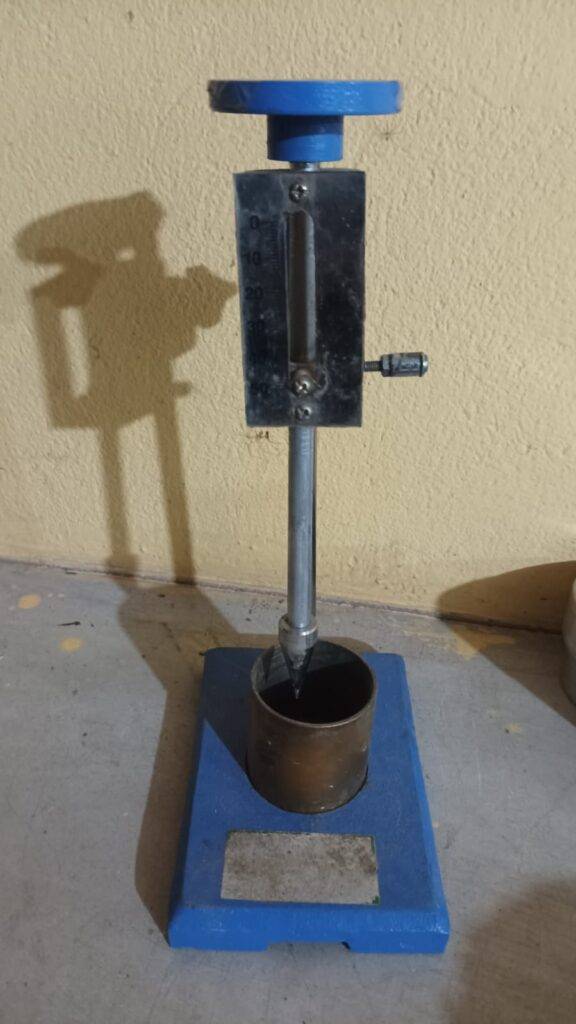
Final Setting Time of Cement
Final setting time is the time taken by cement paste to completely lose plasticity and attain hardness. As per IS 4031, it should not exceed 600 minutes for OPC.
DLC & PQC
Final setting time is the time taken by cement paste to completely lose plasticity and attain hardness. As per IS 4031, it should not exceed 600 minutes for OPC.
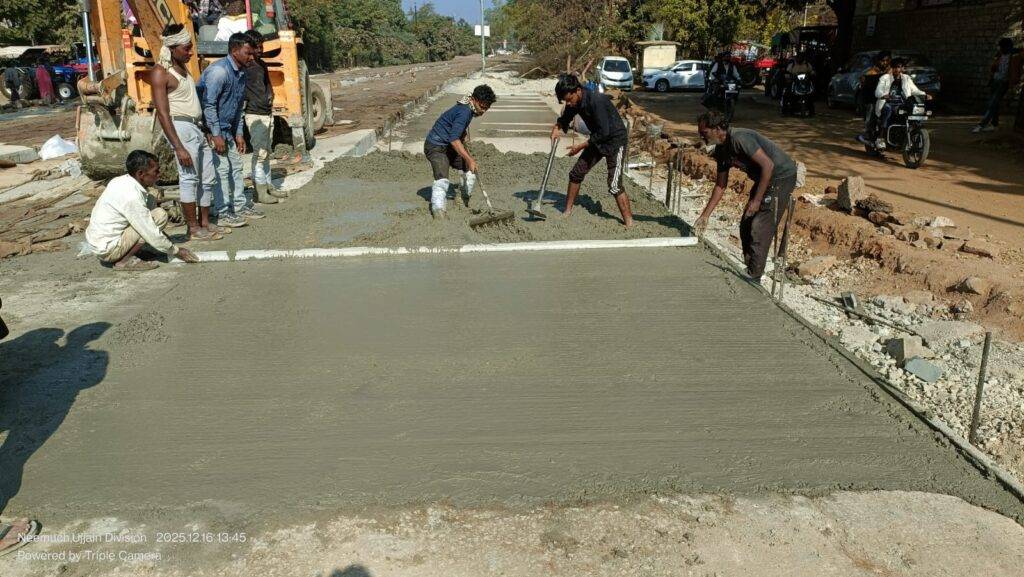
Pavement Quality Concrete (PQC) M40: Complete Construction & QA/QC Guide Pavement Quality Concrete (PQC) of M40 grade forms the structural load-bearing layer in rigid pavements of National Highways. This guide provides a detailed overview of materials, mixing, placement, curing, joint detailing, dowel and tie bar installation, and quality assurance/quality control (QA/QC) procedures. It also highlights common issues, their solutions, and aligns with MoRTH Section 602 and IRC standards. For more insights, see the main pillar page on Rigid Pavement Components. Applicable Standards: MoRTH Section 602 IRC:15 IRC:44 IRC:SP:62 1. Understanding PQC PQC is a high-strength concrete layer designed to transfer traffic loads directly to the subgrade through slab action. It is especially suited for highways with heavy traffic, high axle loads, and long-term durability requirements. Benefits of PQC include: Exceptional flexural strength and load transfer capacity Durable surface resistant to rutting and deformation Expected service life of 30–40 years Reduced long-term maintenance requirements Resistance against oil, water, and temperature-induced damage 2. Material Specifications for M40 PQC 2.1 Cement Use Ordinary Portland Cement (OPC) of grade 43 or 53 from approved suppliers. Maintain a cement content of 350–425 kg/m³. Ensure proper initial and final setting times. Store cement in dry, ventilated conditions, and check for lumps or moisture contamination. 2.2 Aggregates Aggregates must comply with IS 383 standards. Use crushed stone aggregates with a well-graded size distribution. Keep deleterious material content below 3%. Measure moisture content prior to batching to correctly adjust the water-cement ratio. For National Highways, use coarse aggregates with a nominal size of 20 mm. 2.3 Water Only clean, potable water should be used, free from salts, oil, or organic matter. Maintain a water-cement ratio between 0.40–0.45 to ensure workability and strength. 2.4 Admixtures Use IS 9103 compliant chemical admixtures to enhance workability, control setting time, or reduce water content. Calcium chloride is prohibited according to MoRTH regulations. 2.5 Dry Lean Concrete (DLC) vs PQC Dry Lean Concrete (DLC) serves as the base layer for rigid pavements, providing a stable working platform for the placement of Pavement Quality Concrete (PQC). A typical DLC layer has a thickness of 150 mm and is compacted to 97% of the Proctor density. The PQC layer is then placed on top of DLC to transfer structural loads efficiently to the subgrade. 3. Dowel and Tie Bar Installation Dowel and tie bars are crucial for load transfer and slab alignment. Correct placement minimizes faulting, corner breaks, and joint failures. 3.1 Dowel Bars Use mild steel S240 or epoxy-coated bars. Diameter: 25–32 mm, Length: 500–600 mm depending on slab thickness. Place at mid-slab depth with a tolerance of ±20 mm. Align bars parallel to the pavement centerline, with one end coated as a bond breaker. 3.2 Tie Bars Use deformed steel Fe415 for longitudinal reinforcement. Position tie bars at longitudinal joints, in the middle third of the slab depth. Coat the ends with bituminous paint for a length of 75 mm. 4. Step-by-Step Construction Workflow 4.1 Subgrade Preparation The subgrade forms the foundation of rigid pavements, and proper preparation is essential for long-term PQC performance. Poor subgrade work can cause differential settlement, pumping, faulting, and premature cracking. Key Steps: Survey & Proof Rolling: Conduct a thorough survey to locate low spots, soft zones, and uneven areas. Use a loaded roller or light truck to identify weak regions requiring stabilization or excavation. Excavation & Trimming: Remove soft or unsuitable soils to reach the design depth, and trim the subgrade to ensure consistent slope and crossfall for drainage. Compaction: Compact the subgrade in layers of 150–200 mm using a vibratory roller, achieving a minimum of 97% Proctor density as per MoRTH standards. Proper compaction reduces settlement under traffic loads. Moisture Control: Maintain optimum moisture content during compaction. Excess water can lead to pumping, while too little moisture reduces compaction efficiency. Drainage Provision: Ensure adequate drainage with temporary side drains, cross drains, or filter layers to prevent waterlogging. Subgrade Proofing: Conduct a CBR test or plate load test to verify strength. Areas below the specified values (typically ≥ 8% CBR for National Highways) should be stabilized using lime or cement. Pro Tip: Keep a detailed log of compaction, moisture, and test results for QA/QC compliance. Untreated soft spots can compromise even high-quality PQC layers. 4.2 Dry Lean Concrete (DLC) Placement DLC provides a uniform, stable platform for PQC and helps prevent early-age cracking. Although it is not load-bearing, proper placement and compaction significantly influence the performance of the PQC above. Mix Design: Use a 1:4:8 ratio (cement:sand:aggregate) with 3–5% moisture content. The mix should be stiff but workable to allow proper compaction. Placement Methods: Employ fixed formwork or slip-form pavers, ensuring straight edges and level surfaces as per drawings. Compaction: Compact the DLC with vibratory rollers or tamping screeds to at least 95% of maximum dry density. Adequate compaction prevents voids that can transfer stresses to PQC. Curing: Apply wet hessian or a curing compound for 7 days to maintain moisture. Proper curing reduces shrinkage cracks that may reflect in the overlying PQC. Insight: Many rigid pavement failures originate from weak or uneven DLC layers, making careful preparation a critical quality control checkpoint. 4.3 Pavement Quality Concrete (PQC) Placement Accurate PQC placement is crucial for uniform thickness, flatness, and long-term pavement durability. Following these best practices ensures high-quality results: Continuous Supply: Use concrete from a computerized batching plant to maintain consistent water-cement ratio, aggregate grading, and admixture dosing. Paver Operation: Employ slip-form pavers for continuous placement. Use vibratory screeds or internal vibrators to eliminate honeycombing and ensure full consolidation. Thickness & Camber: Follow MoRTH guidelines for slab thickness (typically 300–350 mm for National Highways) with a tolerance of ±10 mm. Check the camber to prevent water ponding on the surface. Temperature Management: In hot weather, reduce water content, use retarders, and schedule placement during cooler hours. For cold weather, consider heated aggregates or insulated blankets. Joint Planning: Identify contraction, expansion, and construction joints before placement to ensure proper load transfer and avoid ad-hoc cuts. 4.4 Finishing