Check the seal number as per invoice of the browser. If the seal found tight and match with the invoice, then collect a representative sample of 20kg for in-house testing in the presence of client.
Conduct the routine test like fineness, % passing on 90 mic sieve and allow for unload, if found complied to IS 4031.
The tests like consistency, soundness, compressive strength, initial and final setting of the cement shall be tested as per IS 4031.
Prepare formats for above tests and get it signed by client and file the records.
Maintain invoice register for cement receipt at plant.
Ensure all the tests shall be performed as per week number of the cement.
SAMPLING AND TESTING OF REINFORCEMENT:
Once the reinforcement lots arrived to site from approved sources, unload the material in stacking yard.
Inspect the reinforcement lot as per invoice and ensure tagging of reinforcement for every lot.
Collect 2 samples (3 pieces of 1m length for each sample) from every dia of reinforcement for a lot of 50t and 3 samples for 100MT.
Bring the cutting pieces to lab and in the sampling register.
Check the weight per running meter for the samples collected.
Rolling margin of all samples shall be collected for every lot.
If the rolling margin found within the tolerable limits as per IS 1786-2008, accept the lot. Otherwise inform to supplier to take back the lot.
Invoice with test certificate shall be verified by quality in charge and sign on test certificate.
Enter the details of reinforcement received in the invoice register and get the signature of client.
If any lot required for independent lab testing, raise RFI and collect the samples in the presence of client.
Sign the sample card by client and IE representatives and keep one copy in lab and other copy to tie for sample pieces.
Physical and chemical properties of the reinforcement tested in independent lab shall be reviewed by quality in charge and client and ensure complied to IS 1786-2008.
The test reports of independent lab will be submitted to client for review and approval.
SAMPLING AND TESTING OF FINE AGGREGATE:
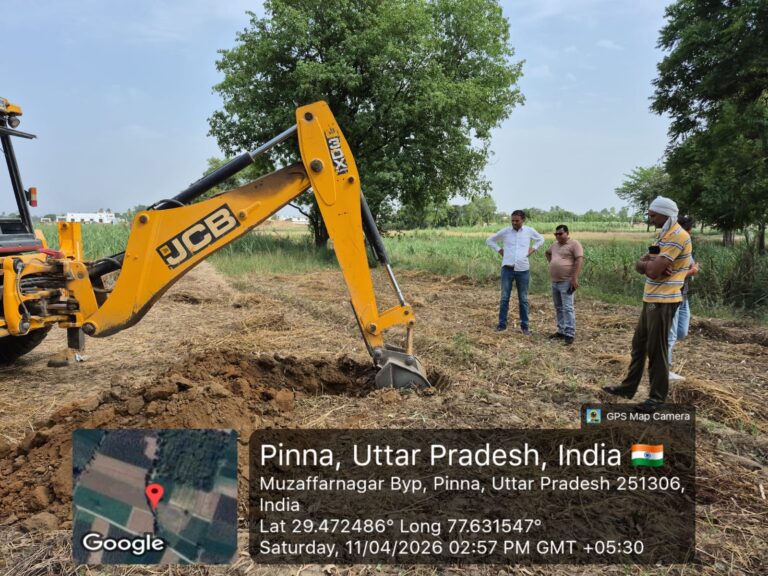
Once the fine aggregate (river sand) load received at site from approved source, collect a representative sample of 20kg for lab testing to check physical properties.
Enter the details of river sand in the sampling register.
The material shall be tested for sieve analysis and check for zone of the sand and Fineness Modulus (FM).
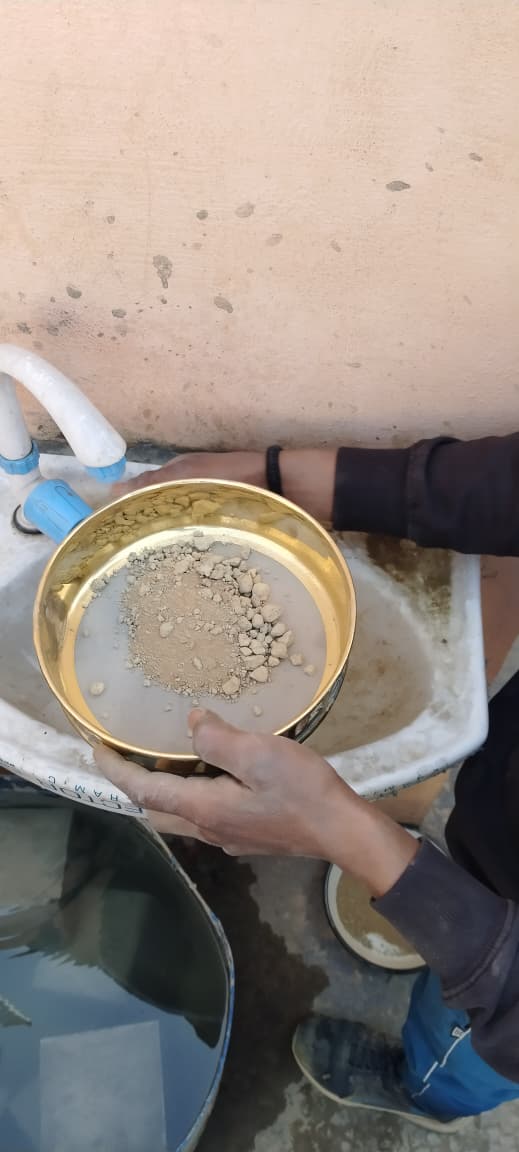
Check the silt content of the sand as per IS 2386.
If the sand falls in zone-II and the FM lies in between 2 to 3.5 and the silt content less than 3% , the vehicle shall be allowed for unloading .
If the sand doesn’t meet the above requirements (FM and silt content) shall be rejected.
If the sand contains over size material more than 10% on 10mm sieve shall be screened and use for permanent works.
Independent lab testing of sand shall be tested as per approved ITP.
SAMPLING AND TESTING OF BITUMEN:
Once the bitumen tanker arrived at site, verify the invoice number and seal of the tanker.
Collect the sample with sampler of weight not less than 1 kg.
Enter the sample details in sampling register and sample number shall be given.
Test the sample for absolute viscosity, softening point, and penetration.
If the test results found satisfactory, allow the tanker for unload.
Review the conducted test results and compare with MTC.
Prepare the test reports and get it signed by client and file the records.
Maintain the invoice register for incoming bitumen and get the signature in theregister by client.
The sample shall be collected for independent lab testing frequency as per theapproved ITP.
SAMPLING AND TESTING OF ADMIXTURE:
Once the admixture barrels arrived at site, verify the invoice number and batch number of the material.
Collect the sample with sampler of weight not less than 2 kg.
Enter the sample details in sampling register and sample number shall be given.
Test the sample for density at room temperature.
If the test results found satisfactory, then allow the admixture to use in permanent work.
Review the MTC test results as per IS 9103.
Maintain the invoice register for incoming bitumen and get the signature in the register by client.
SAMPLING AND TESTING OF EMULSION (SS-1 & RS-1):
Once the emulsion tanker arrived at site, verify the invoice number and seal of the tanker.
Collect the sample with sampler of weight not less than 1 kg.
Enter the sample details in sampling register and sample number shall be given.
Test the sample for viscosity by say bolt furl viscometer.
If the test results found satisfactory, allow the tanker for unload.
Conduct the balance tests like residue test by evaporation.
Review the conducted test results and compare with MTC.
Prepare the test reports and get it signed by client and file the records.
Maintain the invoice register for incoming emulsions and get the signature in the register by client.
The sample shall be collected for independent lab testing frequency as per the approved ITP.
SAMPLING AND TESTING OF GEO-GRIDS / GEO-TEXTILE:
Once the Geogrid material arrived at site, verify the invoice number and grade.
Raise the RFI and Collect the sample from bundle I roll of size not less than 2m*2m from each grade.
Enter the sample details in sampling register and sample number shall be given.
Count the number of ribs in machine direction and transverse direction.
The samples shall be tagged with sample card mentioned all the details with signatures of client.
The collected samples shall be sent for independent lab testing as per approved ITP.
Review the MTC test results as per grade requirement.
Maintain the invoice register for Geogrid and get the signature of client.
TEST PROCEDURE OF CTSB MIX DESIGN
Raise RFI for sampling of aggregates for CTSB Mix Design.
Sample the individual aggregates jointly.
Do individual gradation for each aggregate as mentioned in MoRTH 403.2.2.
Blend the aggregate to meet the specified limits as mentioned in MoRTH Table 400-4.
Conduct AIV Test (as per IS2386 P4), Water absorption (IS2386 P3), Atterberg’s limit (IS2720 P5) for aggregates.
Conduct the proctor density test (IS2720 P8) with the blending proportion of aggregate by different cement content (1.5%, 2%, 2.5% and 3%).
Obtain the MDD/OMC results for the different cement content.
Caste the 5 No cube moulds with compactor with the obtained MDD/OMC with the cement content of 1.5%, 2%, 2.5% & 3%.
Demould the cube on the next day & cure the cube moulds by moist curing. After 7 days, test the cube moulds as per IS516 for its compressive strength.
Note the compressive strength of cubes as casted with different cement content.
Plot graph – Cement content VS strength achieved.
From graph find the cement content required to produce 1.75 Mpa strength & adopt the same for the use in CTSB.
If the cement content from graph is less than 2 %, then take min 2% cement. If the cement content from graph is more than 2%, then take the same.
Submit the mix design with the obtained test results.
Sampling and Testing Process of Filter Media
Raise RFI for sampling of aggregates for FILTER MEDIA mix design.
Collect the individual aggregates jointly for Base & Filter material gradation.
Conduct individual gradation for Base & Filter material as per IS2720-P4.
Plot the graph from the % of aggregates passing in the individual sieves.
From the graph find the value of DI5, D50, D85.
Compile the values of base material & Filter material as per the acceptance criteria of MoRTH Clause: 305.4.4 & 2504.2.2.
Submit the mix design with the compiling the test result.