
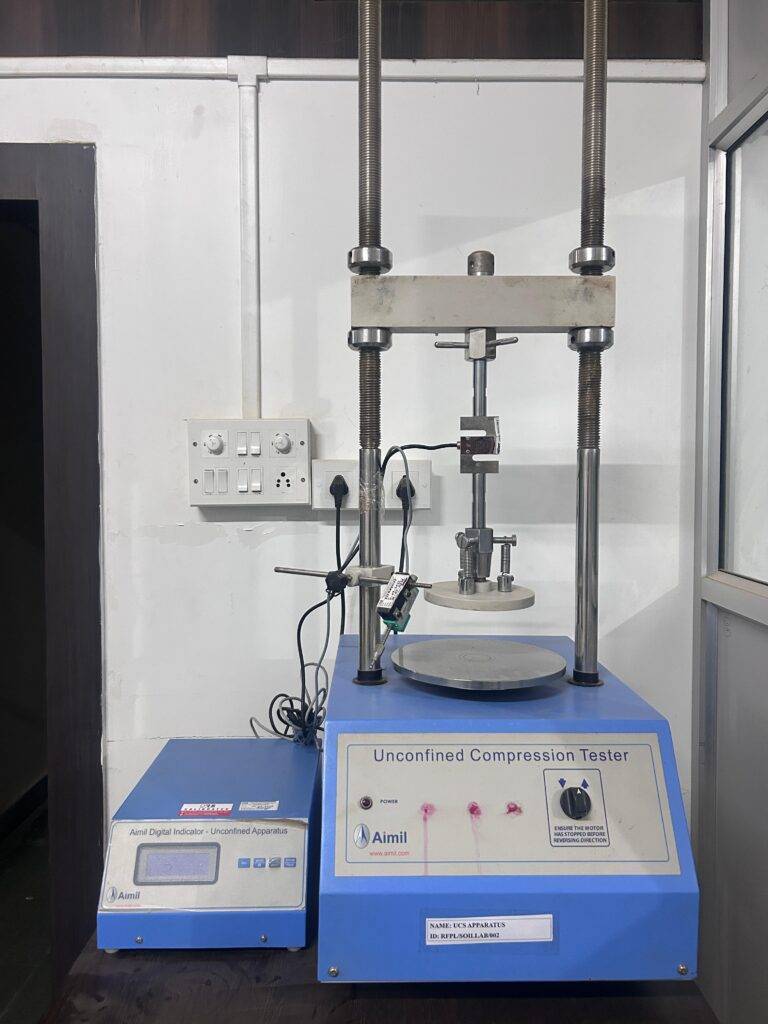
California Bearing Ratio Test
The CBR test evaluates the strength of subgrade soil, sub-base, or base course material under controlled compaction and moisture conditions. The value obtained is used in pavement thickness design.
The CBR test evaluates the strength of subgrade soil, sub-base, or base course material under controlled compaction and moisture conditions. The value obtained is used in pavement thickness design.
he Liquid Limit (LL) Test determines the water content at which soil changes from a plastic to a liquid state. It is a key parameter for classifying soils, evaluating their plasticity, and assessing suitability for highway and civil engineering works.
Plastic Limit of Soil Test (PL Test) – Procedure, Calculations & Examples Plastic Limit of Soil Test (PL Test) Objective: To determine the plastic limit of soil (PL), which is the moisture content at which soil starts to exhibit plastic behavior. Apparatus Required Evaporating dish Spatula Glass plate Moisture containers with lids Rolling rod (3 mm diameter) Sensitive balance (accuracy 0.01 g) Oven (temperature 105–110 °C) Procedure for Plastic Limit Test Take about 20 g of dry, pulverized soil passing through a 425 μm IS sieve. Mix the soil thoroughly with distilled water until it forms a plastic paste. Form a small ball of soil and roll it between fingers and a glass plate to form a thread. Apply uniform pressure and roll at a speed of 80–90 strokes per minute. Continue rolling until the thread diameter reaches 3 mm. Observe crumbling: Thread crumbles below 3 mm → moisture content is above PL Thread crumbles above 3 mm → moisture content is below PL Repeat rolling and kneading until the thread crumbles at exactly 3 mm diameter. Collect the crumbled soil immediately in a moisture container, cover it, and weigh. Dry the sample in an oven to determine the dry weight and calculate moisture content. Repeat the test at least three times and report the average value as PL. Calculations Plasticity Index (PI or Ip): PI = Liquid Limit (LL) – Plastic Limit (PL) PI = WL – WP Toughness Index (TI or IT): TI = IP / IF (Where IF = Flow Index from Liquid Limit Test) Liquidity Index (LI or IL): LI = (W – WP) / IP W = Natural moisture content of soil Consistency Index (CI or IC): CI = (WP – W) / IP Notes Maintain uniform rolling strokes for accurate results. Determine moisture content immediately after crumbling. The Plastic Limit helps classify soil into low, medium, or high plasticity. 🔬 Related Highway & Pavement Tests Explore detailed test procedures, calculations and acceptance criteria as per IS, MoRTH & IRC specifications: ✅ CBR Test – Subgrade Strength ✅ Field Density Test (Core Cutter) ✅ Plasticity Index Test ✅ Free Swell Index Test 🪨 Aggregate Tests: ✅ Aggregate Impact Value Test ✅ Los Angeles Abrasion Test ✅ Aggregate Crushing Value Test ✅ Aggregate Water Absorption Test 🛢️ Bitumen Tests: ✅ Marshall Stability & Flow Test 🏗️ Cement & Concrete Tests: ✅ Fineness of Cement Test ✅ Slump Cone Test 📌 Pro Tip: Combine soil, aggregate, bitumen, and concrete tests to ensure comprehensive QA/QC on highway pavement layers as per MoRTH & IRC standards.
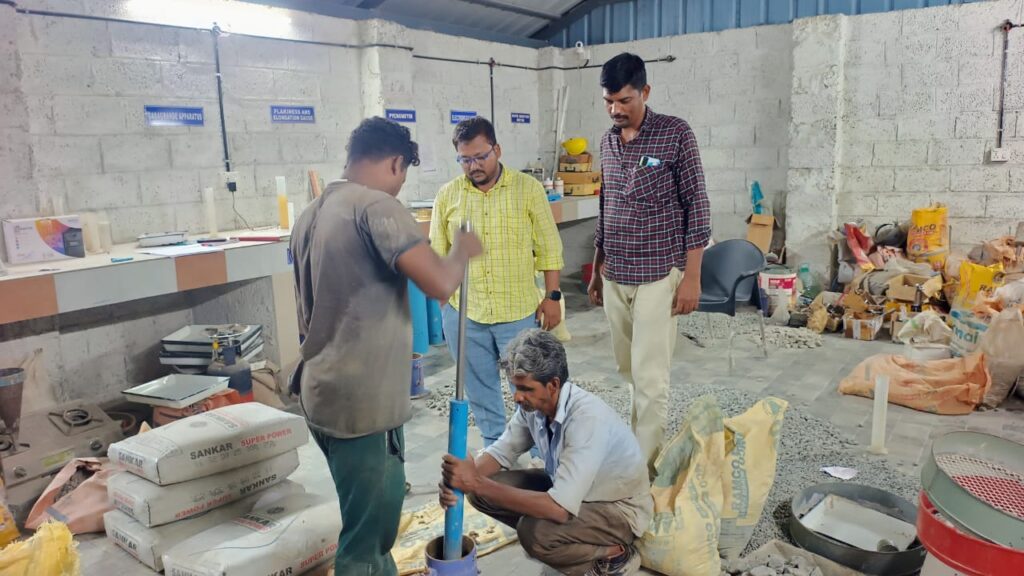
It helps in understanding how much water should be added to the soil for achieving maximum compaction under a given compactive effort.
Explore all Soil Tests: Soil Testing Hub Home » Geotechnical Tests » Free Swell Index (FSI) Test Free Swell Index (FSI) Test – Procedure, Formula & Acceptance Criteria (IS 2720 Part 40) Test Standard: IS:2720 (Part 40) | Applicable Codes: MoRTH, IRC:75 (2015), IRC:SP:89 What is Free Swell Index (FSI) Test? The Free Swell Index (FSI) test is a laboratory test used to determine the swelling potential of soil when immersed in water under unconstrained conditions. It helps in identifying expansive soils containing clay minerals such as montmorillonite. Why it matters: High Free Swell Index values may lead to pavement heaving, cracking, and loss of subgrade stability if the soil is used without treatment. Scope & Applicable Standards IS:2720 (Part 40) – Determination of Free Swell Index of Soil MoRTH Section 300 – Subgrade and Earthwork IRC:75 (2015) – Guidelines for Embankments and Subgrades IRC:SP:89 – Soil Testing in Road Works NHAI QA/QC Manual Apparatus Required for FSI Test 425 micron IS sieve Two 100 ml graduated glass cylinders (IS:878) Oven maintained at 110 ± 5 °C Electronic balance with 0.01 g accuracy Distilled water and kerosene Glass rod, spatula and weighing dishes Free Swell Index Test Procedure (IS 2720 Part 40) Take about 500 g of air-dried soil and sieve it through a 425-micron sieve. Weigh two soil samples of 10 g each. Place one sample in each 100 ml graduated cylinder. Fill one cylinder with kerosene and the other with distilled water up to the 100 ml mark. Stir gently to remove entrapped air bubbles. Allow the samples to stand undisturbed for 24 hours at 27 ± 2 °C. Record the final soil volumes: Vk = Volume of soil in kerosene Vw = Volume of soil in water Free Swell Index Formula FSI (%) = [(Vw – Vk) / Vk] × 100 FSI Interpretation and Acceptance Criteria Free Swell Index (%) Swelling Nature Suitability for Subgrade 0 – 20 Low Suitable for direct use 20 – 50 Moderate Use with control measures Above 50 High to Very High Stabilization or replacement required Note: Free Swell Index is an index test and should be used along with Atterberg limits and swell pressure tests for design decisions. Precautions During FSI Test Ensure glass cylinders are clean and dry. Maintain the specified test temperature. Do not disturb the samples during the standing period. Record volume readings accurately. Frequently Asked Questions Is Free Swell Index the same as swell pressure? No. Free Swell Index measures volume increase without restraint, whereas swell pressure measures pressure developed under confinement. Can Free Swell Index alone be used for soil design? No. It is only an indicator test and must be supported by other geotechnical tests. How can expansive soil be treated? Common methods include lime stabilization, cement stabilization, blending with non-expansive soil, or soil replacement. References: IS:2720 (Part 40), MoRTH Specifications, IRC:75 (2015), IRC:SP:89 © 2025 Highway Quality Test
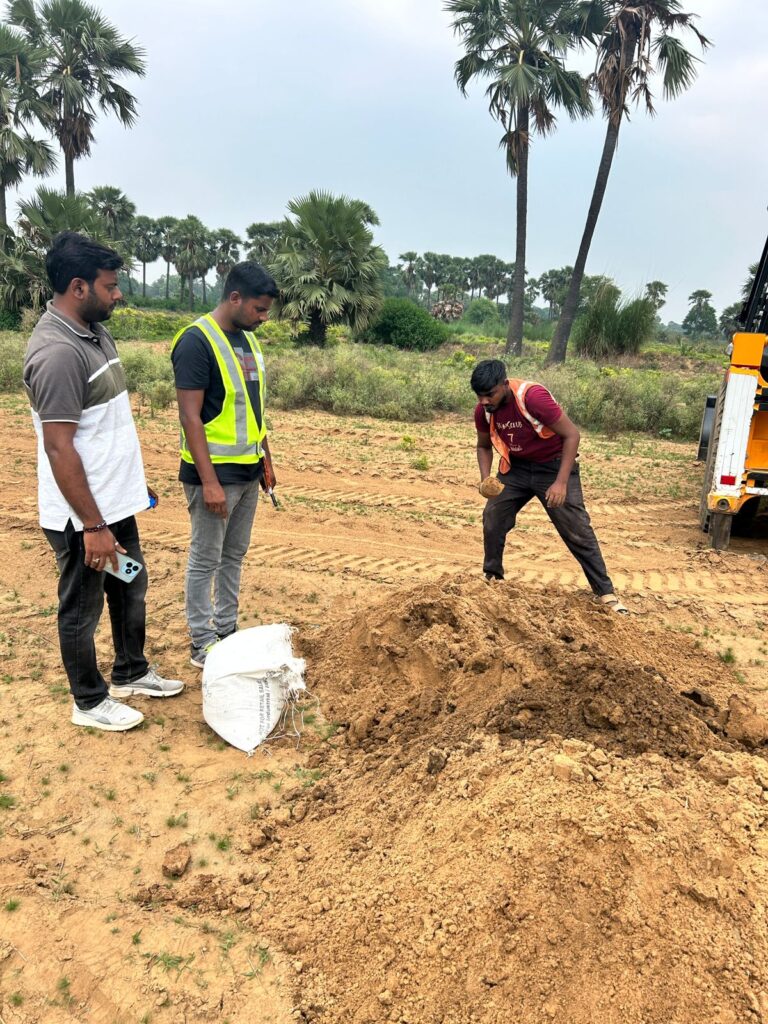
Soil Testing for Highway Construction | MoRTH & IS Standards – Complete Guide Soil Testing for Highway Construction – Complete Quality Control Guide Soil testing forms the backbone of highway construction quality control. The strength, compaction, and durability of soils directly affect pavement performance, embankment stability, and long-term maintenance costs. Without proper soil testing, highways are prone to settlement, rutting, cracking, and premature failure. This comprehensive guide covers all soil tests required in highway projects as per MoRTH (5th Revision) and IS 2720. Each test includes purpose, procedure, acceptance criteria, and field relevance, with frequency guidelines as per MoRTH Clause 900. 1. Importance of Soil Testing in Highway Construction Highway pavements transmit heavy traffic loads to the underlying soil layers. If the soil lacks adequate strength, compaction, or moisture control, structural distresses appear early, increasing maintenance costs. Ensures construction meets design assumptions Controls moisture and compaction during placement Verifies suitability of borrow materials Supports quality assurance and payment certification Reduces risk of pavement failure and expensive repairs 2. Applicable Standards & References MoRTH Specifications (5th Revision) IS 2720 – Methods of Test for Soils (Parts 1–40) IRC:37 – Guidelines for Embankment & Subgrade IRC:SP:84 – Soil Quality Control Practices Project Technical Specifications 3. Classification of Soil Tests in Highway Works A. Field Tests Field Density Test (Sand Replacement / Core Cutter) In-situ Moisture Content Visual Inspection & Classification of Borrow Material B. Laboratory Tests Grain Size Analysis Atterberg Limits Proctor Compaction Test (Modified / Standard) California Bearing Ratio (CBR) Test Free Swell Index Moisture Content Verification 4. Mandatory Soil Tests & Their Purpose Test Purpose MoRTH Reference Field Density Test Verify achieved compaction on site Clause 903, 305 Modified Proctor Test Determine MDD & OMC IS 2720 (Part 8) CBR Test Assess load-bearing capacity Clause 305, 903 Atterberg Limits Evaluate plasticity & volume change IS 2720 (Part 5) Grain Size Analysis Soil gradation & classification IS 2720 (Part 4) Free Swell Index Check expansive soil behavior IS 2720 (Part 40) Moisture Content Verify optimum moisture for compaction IS 2720 (Part 2) 5. Acceptance Criteria (Key Requirements) Parameter Requirement Field Density – Embankment ≥ 95% of MDD Field Density – Subgrade ≥ 97% of MDD Moisture Content OMC ± 2% CBR (Subgrade) As per design (typically ≥ 8%) Free Swell Index ≤ 50% Atterberg Limits Plasticity Index within project limits 6. Field Quality Control Procedures Quality control is continuous. Before placing any layer, soil moisture is adjusted to OMC. Compaction is done using approved rollers, followed by immediate density verification. Scarify or remix soil if density is below required Adjust moisture content Re-compact and retest Maintain records for all layers 7. Inspection Checklist for Site Engineers ✔ Borrow soil approved by Engineer ✔ Laboratory test reports available ✔ Moisture within OMC range ✔ Layer thickness controlled ✔ Field density test passed ✔ Failed areas rectified and retested ✔ Documentation per MoRTH Clause 903 maintained 8. Detailed Soil Test Procedures by Construction Stage This section organizes soil tests based on construction stage: Original Ground Level (OGL), Embankment, and Subgrade. Each test includes What, Why, and When (MoRTH Clause 900 frequency). 8.1 Original Ground Level (OGL / Borrow Soil) OGL represents the natural ground or borrow material used in embankment construction. Tests here ensure the foundation soil is suitable. Field Density Test – Sand Replacement / Core Cutter What: Measure in-situ density of OGL soil. Why: Ensures soil compaction at natural state meets design assumptions. When: 1 test per 3000 m³ (MoRTH Clause 900). Learn more Grain Size Analysis What: Determine soil particle distribution. Why: Classifies soil for suitability and stability. When: 1 test per 5000 m³ (MoRTH Clause 900). Learn more Atterberg Limits Test What: Determine plasticity and shrink-swell potential. Why: Identifies highly plastic soils that may cause settlement. When: 1 test per 5000 m³ (MoRTH Clause 900). Learn more Free Swell Index Test – Coming Soon Moisture Content Test – Coming Soon Modified Proctor Compaction Test – Coming Soon 8.2 Embankment Layer The embankment is the built-up layer above OGL. Tests ensure proper compaction, layer thickness, and material quality for load-bearing. Field Density Test What: Measure compaction of each embankment layer. Why: Prevents settlement and ensures design strength. When: 1 test per 250 m³ per layer (MoRTH Clause 900). Coming Soon Moisture Content Test What: Ensure soil is at Optimum Moisture Content before compaction. Why: Moisture outside OMC reduces compaction efficiency. When: 1 test per 250 m³ per layer (MoRTH Clause 900). Coming Soon Modified Proctor Compaction Test What: Determine MDD and OMC for embankment soil. Why: Guides compaction process for each layer. When: 1 test per soil type or 10000 m³ (MoRTH Clause 900). Coming Soon CBR Test What: Assess load-bearing capacity of embankment layer. Why: Ensures embankment can support pavement layers. When: 1 test per 5000 m³ (MoRTH Clause 900). Learn more 8.3 Subgrade Layer Subgrade is the topmost soil layer that directly supports the pavement. Quality here is critical for long-term pavement performance. Field Density Test What: Measure density after final compaction of subgrade. Why: Prevents differential settlement and ensures uniform support. When: 1 test per 200 m² (MoRTH Clause 900). Coming Soon Moisture Content Test What: Verify soil moisture is within ±2% of OMC. Why: Ensures optimal compaction for design strength. When: 1 test per 200 m² (MoRTH Clause 900). Coming Soon CBR Test What: Evaluate subgrade strength and pavement design adequacy. Why: Determines structural capacity for traffic loads. When: 1 test per 500 m² (MoRTH Clause 900). Learn more Atterberg Limits / Plasticity Check What: Detect highly plastic soils in subgrade. Why: High plasticity soils may cause swelling, shrinkage, and cracking. When: 1 test per 5000 m³ (MoRTH Clause 900). Coming Soon Free Swell Index What: Measure potential for soil expansion. Why: Prevents distress in subgrade and pavement. When: 1 test per 5000 m³ (MoRTH Clause 900). Learn more 9. Common Site Issues & Rectification Low density → Increase roller passes or adjust moisture content High plasticity → Blend with granular material or use chemical