Ductility Test of Bitumen – IS 1208 Complete Guide
The ductility test measures the stretching capacity of bitumen under tensile load before failure. It is a key parameter for evaluating flexibility and crack resistance in flexible pavements.

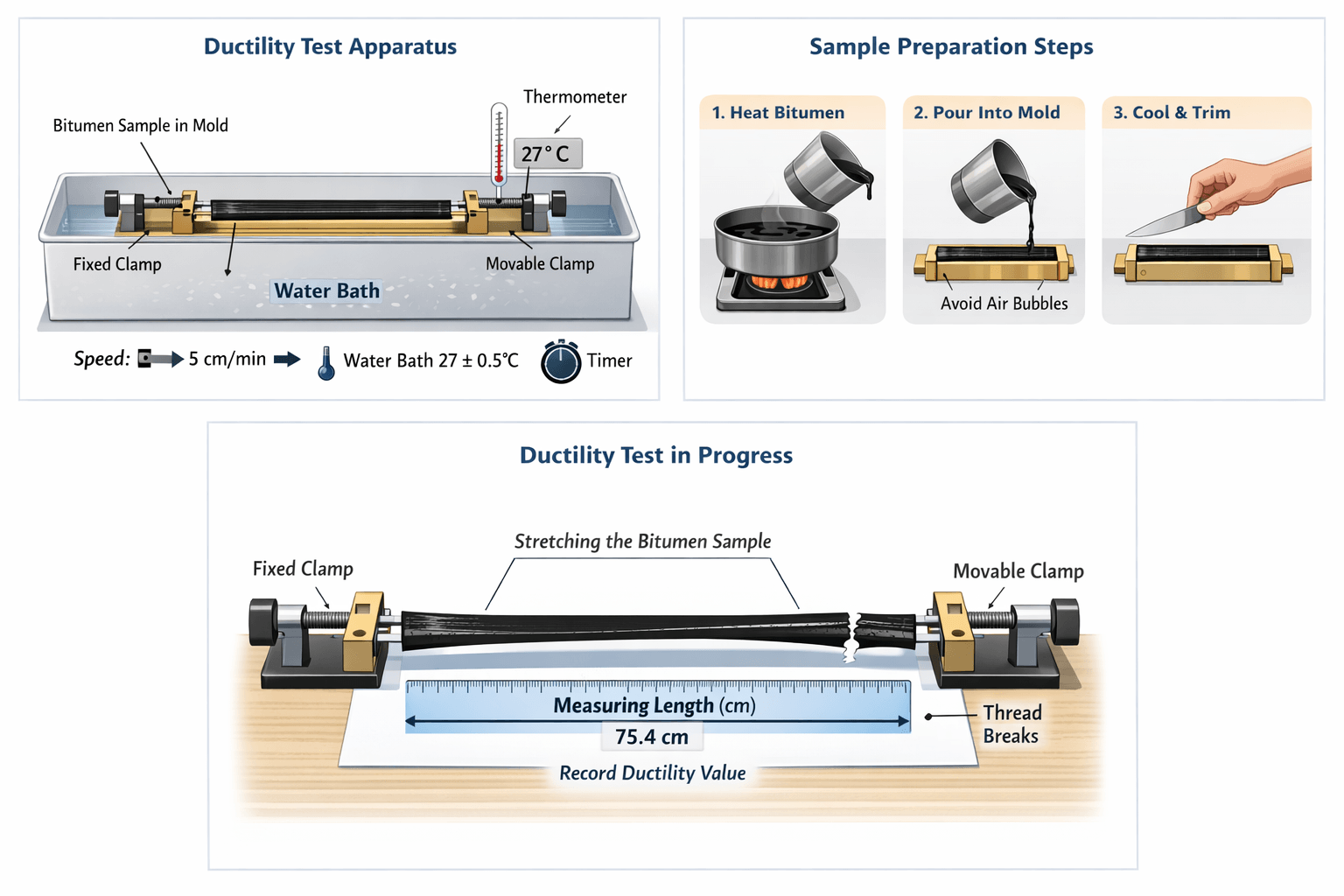
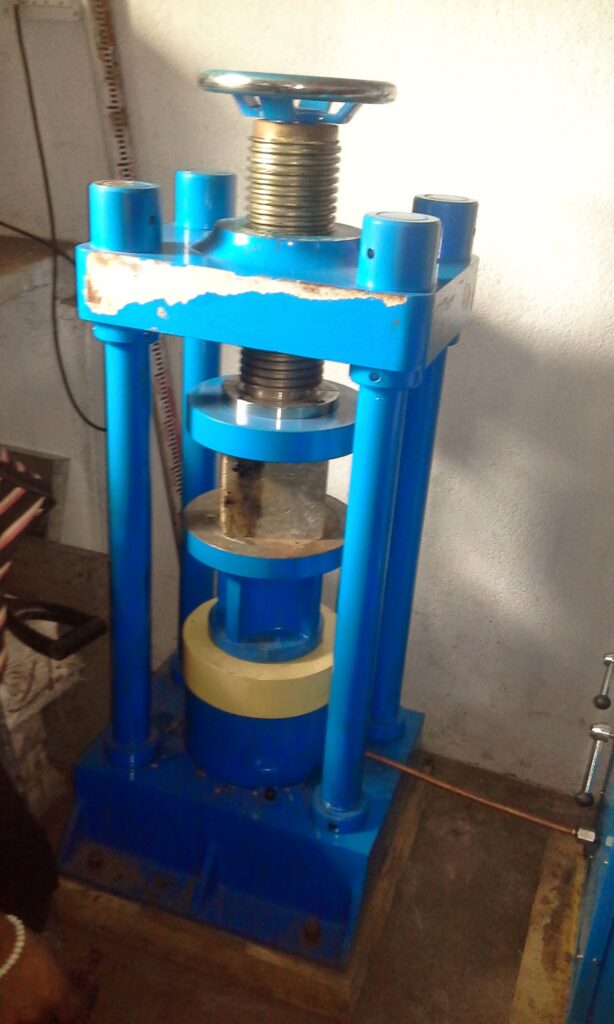
Fig: Ductility test process flow
Objective
To determine the ductility of bituminous material i.e. its ability to stretch without breaking under standard test conditions.
Apparatus Required
- Ductility testing machine
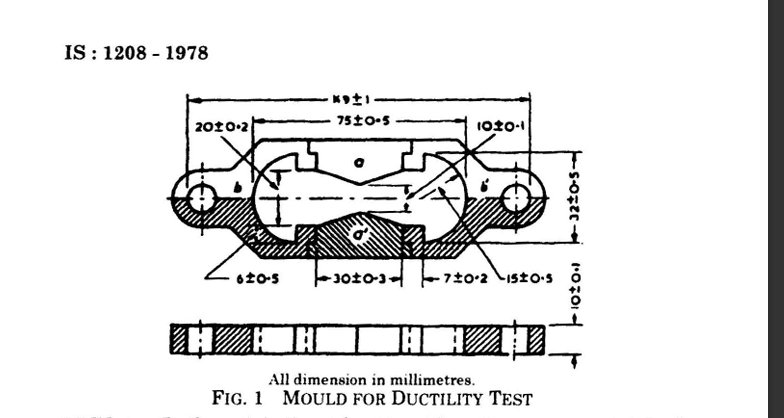
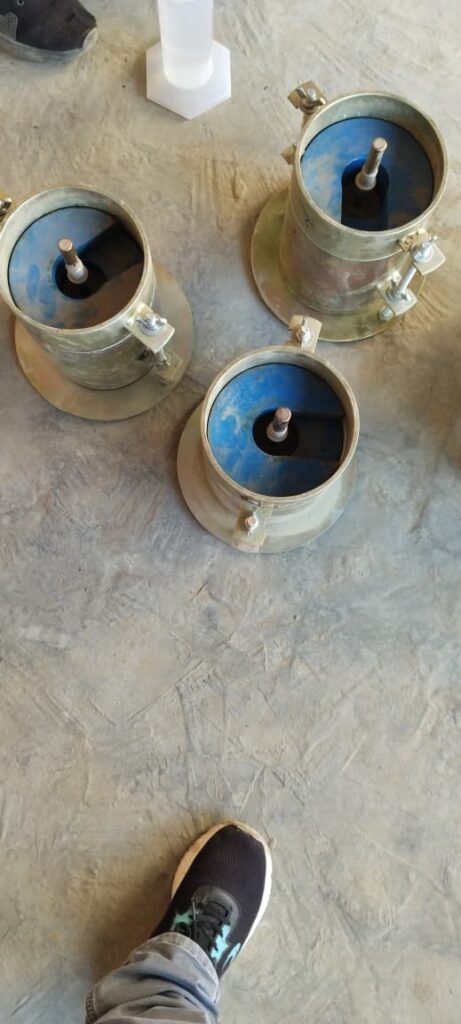
- Briquette mould
- Water bath (temperature controlled)
- Thermometer
- Hot knife / spatula

Fig: Briquette mould assembly
Sample Preparation
- Heat the bituminous material until it becomes completely fluid.
- Filter the molten bitumen through a 90-micron sieve to remove impurities.
- Assemble the briquette mould on a clean brass plate.
- Coat the brass plate and inner surfaces of the mould with a mixture of equal parts glycerine and dextrine to prevent sticking.
- Pour the molten bitumen slowly in a thin continuous stream from end to end of the mould until slightly overfilled.
- Allow the specimen to cool at room temperature for 30–40 minutes.
- Place the mould assembly in a water bath maintained at the specified temperature for 30 minutes.
- Level the surface using a hot straight-edged knife or spatula to make the mould exactly flush.
Procedure (IS Standard Method)
Step 1 – Standard Test Conditions
Unless otherwise specified, the ductility test shall be conducted at a temperature of 25.0 ± 0.5°C and at a pulling rate of 50.0 ± 2.5 mm/min.
Step 2 – Low Temperature Ductility Test
When low-temperature ductility is required, the test shall be performed at 4.0 ± 0.5°C with a pulling rate of 10.0 ± 0.5 mm/min.
Step 3 – Mould Conditioning
Place the brass plate with mould and sample in a water bath maintained at the specified temperature.
Keep it for 85–95 minutes for proper conditioning before testing.
Step 4 – Specimen Preparation
Remove the briquette carefully from the water bath and detach the side plates without disturbing the specimen.
Step 5 – Mounting in Machine
Immediately fix the specimen in the ductility testing machine by attaching the clips without applying any initial strain.
Step 6 – Test Execution
Pull the two clips horizontally at a uniform rate of 50 ± 2.5 mm/min until rupture occurs.
Step 7 – Test Conditions Control
Ensure the specimen remains fully submerged in water during the test.
Water level must be at least 25 mm above and below the specimen, and temperature must remain within ±0.5°C.
Result
The ductility value is the distance in centimeters through which the bitumen thread stretches before breaking.
Interpretation of Results
- High ductility: Indicates flexible, durable, and crack-resistant pavement performance.
- Low ductility: Indicates brittle bitumen with higher risk of pavement cracking.
Limits of Ductility
- A35 & S35 grade bitumen: Minimum 50 cm at 27°C
- Other paving grades: Minimum 75 cm at 27°C
Importance
- Ensures pavement flexibility
- Prevents thermal cracking
- Improves service life
- Essential for QA/QC testing
Conclusion
Ductility test ensures bitumen has sufficient elongation capacity to withstand traffic loads and temperature variations in highway construction.
Precautions
1. If the bituminous material comes in contact with the surface of water or touches the bottom of the water bath during the test, the result shall not be considered normal.
In such cases, the specific gravity of the water in the bath shall be adjusted by adding either methyl alcohol or sodium chloride, so that the bituminous material neither floats on the surface nor touches the bottom of the bath at any time during the test.
2. The plate on which the mould is placed shall be perfectly flat and level so that the bottom surface of the mould remains in full contact throughout the test.
3. While filling the mould, care shall be taken not to disturb the mould assembly, as this may distort the briquette. It shall also be ensured that no air pockets are trapped within the moulded specimen.
4. If a normal test result is not obtainable in three successive attempts, the ductility shall be reported as “unobtainable under the conditions of test.”
FAQs
What does ductility indicate?
It indicates the ability of bitumen to stretch without breaking.
Why is ductility important?
It prevents cracking and improves pavement flexibility.
Standard temperature?
25–27°C as per IS 1208.
How is ductility measured?
In centimeters of elongation before rupture.