Methodology for Casting of Pier / Abutment Cap
1. Survey
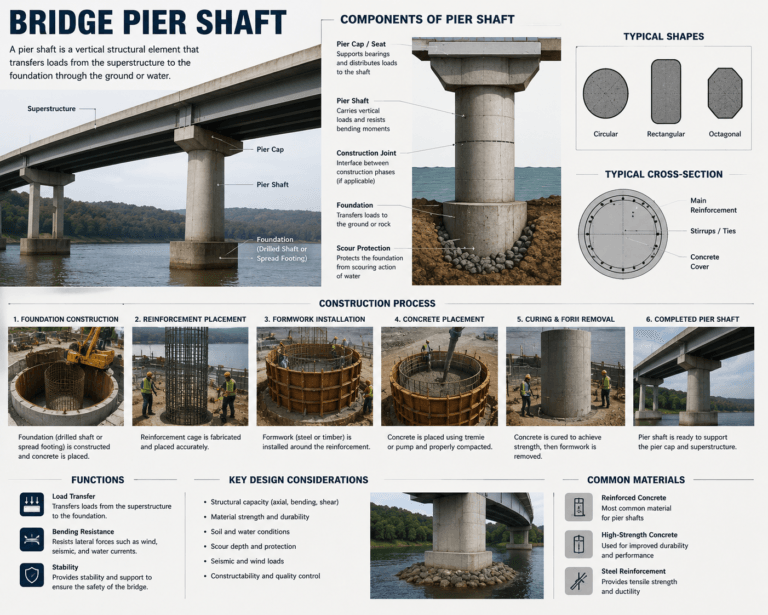
After completion of pier or abutment shaft casting, centerlines in both longitudinal and transverse directions shall be marked on the top surface of the pier shaft for fixing of reinforcement and formwork for pier/abutment cap.
- Survey coordinates, centerline, and levels shall be checked with reference to approved drawings and control points.
- Top level and alignment of pier shaft shall be verified before commencement of cap works.
- Reference markings shall be used for accurate placement of reinforcement and shuttering.
2. Reinforcement Work
2.1 Preparation of BBS
- Bar Bending Schedule (BBS) shall be prepared as per approved structural drawings.
- The BBS shall be submitted to the AE for approval before fabrication.
2.2 Cutting & Bending
- Reinforcement bars shall be cut according to approved BBS using cutting machines or manually.
- Bars shall be bent as per approved bending details.
- Cutting and bending may be carried out at rebar yard or site depending upon site conditions.
- Reinforcement bars shall be cleaned properly before placing.
2.3 Fixing of Reinforcement
- Reinforcement shall be fixed manually as per approved drawings.
- Prefabricated reinforcement cages may be transported and erected to reduce cycle time.
- Cover blocks, spacers, and chairs shall be provided to maintain required cover.
- Proper anchorage, lap lengths, and spacing shall be ensured before concreting.
- Reinforcement inspection shall be carried out jointly with the AE before shuttering closure.
3. Formwork
Formwork shall be fabricated and erected in accordance with approved drawings and specifications.
- Standard steel shuttering shall be used wherever possible.
- Special shuttering shall be fabricated wherever required.
- All shutter joints shall be connected properly using bolts.
- Rubber strips or foam strips shall be provided at joints to prevent grout leakage during concreting.
- Adequate lateral supports, tie rods, and bracings shall be provided to resist pressure of fresh concrete.
- Gaps and holes in formwork shall be sealed using foam, putty, or suitable materials to make shuttering leak-proof.
- Formwork surfaces shall be cleaned thoroughly before application of approved shuttering oil.
- Wire ropes, turn buckles, or chain pulley arrangements shall be used for verticality and alignment adjustment.
- Formwork shall be checked as per IRC SP:112 checklist before concreting.
- RFI shall be raised for inspection and approval by the AE.
4. Concreting
Concrete of approved grade shall be produced at batching plant using approved mix design.
- Concrete shall be transported using transit mixers.
- Slump shall be maintained between 80 mm and 130 mm at pouring location.
- Regular slump tests shall be conducted during concreting operations.
- Concrete shall be placed using concrete pump with flexible hose or crane and bucket arrangement.
- Free fall of concrete shall not exceed 1.5 m.
- Concrete shall be compacted using 40 mm / 60 mm diameter needle vibrators.
- Concrete cubes shall be cast and tested for compressive strength as per Clause 1718 of MoRTH Specifications.
- Suitable shear keys shall be provided at horizontal construction joints.
- Surface of previous lift shall be roughened and cleaned to remove laitance for proper bonding.
- Continuous concreting shall be ensured to avoid cold joints.
5. De-shuttering
De-shuttering shall be carried out only after the concrete attains required strength.
- Shuttering removal shall be done carefully using cranes or suitable lifting arrangements.
- Bolts and supports shall be loosened gradually to prevent damage to concrete surfaces.
- Edges, corners, and exposed concrete surfaces shall be protected during de-shuttering.
- Surface defects, if any, shall be repaired immediately after shutter removal.
6. Curing
Concrete curing shall commence immediately after de-shuttering.
- Hessian cloth shall be wrapped around exposed concrete surfaces and kept continuously wet.
- Top surfaces shall be cured by direct watering or ponding.
- Curing shall continue for a minimum period of 14 days.
- Approved curing compounds may also be used where necessary.
7. Deployment of Equipment
- Batching Plant
- Transit Mixer
- Concrete Pump
- Welding Generator
- Concrete Vibrator
- Vibrator Needles
- Crane
- Truck / Trailer
- Bar Bending Machine
The quantity and capacity of equipment shall be decided by the site team based on project requirements and construction schedule.
8. Quality Control
- Survey & Centerline Verification
- Reinforcement Inspection
- Cover Block & Spacer Check
- Formwork Alignment & Verticality Check
- Concrete Slump Test
- Concrete Cube Testing
- Inspection of Construction Joints
- Surface Finish Inspection
- Dimensional Tolerance Check
9. Safety
- All safety precautions shall comply with relevant IRC and MoRTH Specifications.
- Workers shall wear PPE including helmets, gloves, safety shoes, reflective jackets, and safety belts.
- Safe working platforms and access arrangements shall be provided.
- Concrete pumps, cranes, and lifting tools shall be inspected before use.
- Barricading and caution signage shall be maintained around work areas.
- Proper illumination shall be provided during night operations.
- Traffic diversion and safety arrangements shall be implemented where required.