

Factors afffecting the warkability of mix
To determine the workability (ease of placing, compacting, and finishing) of freshly mixed concrete.
The slump value indicates the consistency and fluidity of concrete — i.e., how wet or dry it is.
To determine the workability (ease of placing, compacting, and finishing) of freshly mixed concrete.
The slump value indicates the consistency and fluidity of concrete — i.e., how wet or dry it is.

Learn the complete procedure of the Slump Cone Test of concrete as per IS 1199:1959 — apparatus, step-by-step method

Los Angeles Abrasion Test – Procedure, Grading & Limits (IS 2386) Highway Quality Test › Aggregate Tests Los Angeles Abrasion Test – Step-by-Step Procedure (IS 2386 Part IV) The Los Angeles Abrasion Test determines the resistance of aggregates to abrasion, wear and impact. It is one of the most important quality control tests for highway pavements and concrete works. The test is carried out as per IS 2386 (Part IV) and referenced in MoRTH Specifications (5th Revision, 2013). Step 1 – Purpose of the Test To assess the toughness and abrasion resistance of aggregates when subjected to mechanical wear. Aggregates with lower abrasion values are stronger and more durable. Step 2 – Apparatus Required Los Angeles Abrasion Machine – steel drum rotating at 30–33 rpm Steel Balls (Abrasive Charge) Diameter: 48 ± 2 mm Weight per ball: 390–445 g Hardness: 400–450 HB IS Sieves: 80, 63, 50, 40, 25, 20, 12.5, 10, 6.3 and 1.70 mm Balance: accuracy up to 1 g Oven: capable of maintaining 105–110°C Step 3 – Sample Preparation Take clean aggregates of the required size as per grading. Dry the sample in an oven at 105–110°C to constant weight. Weigh a total of 5000 g of aggregates. Step 4 – Selection of Grading (A–G) Aggregates are classified into grading groups based on nominal size. The grading determines the number of revolutions and steel balls used. Grading Aggregate Size (mm) Sample Weight (g) Revolutions Typical Use A 63–50 5000 500 GSB / Sub-base B 50–40 5000 500 WMM Base C 40–25 5000 500 DBM Base D 25–20 5000 500 Bituminous Macadam E 20–12.5 5000 1000 Bituminous Concrete F 12.5–10 5000 1000 SMA / OGPC G 10–6.3 5000 1000 Seal Coat Step 5 – Steel Ball Requirement Grading No. of Steel Balls Total Weight (g) A 12 5000 ± 25 B 11 4584 ± 25 C 8 3330 ± 20 D 6 2500 ± 15 E 12 5000 ± 25 F 12 5000 ± 25 G 12 5000 ± 25 Step 6 – Test Procedure Place aggregates and steel balls into the drum. Rotate the drum at 30–33 rpm. Run for the specified number of revolutions. Discharge the material and sieve through 1.70 mm sieve. Weigh material retained on sieve (B). Step 7 – Calculation Los Angeles Abrasion Value (%) = ((A − B) / A) × 100 Where: A = Original weight of sample (g) B = Weight retained on 1.70 mm sieve (g) Step 8 – Interpretation Lower abrasion value indicates tougher aggregates with better resistance to wear and longer pavement life. Step 9 – Permissible Limits (MoRTH 2013) Base / Sub-base: ≤ 45% Bituminous Layers: ≤ 35% Wearing Courses: ≤ 30% Frequently Asked Questions (FAQ) Which IS code specifies this test? IS 2386 (Part IV). What is sample weight? 5000 g. Machine speed? 30–33 rpm. Final sieve size? 1.70 mm. Lower value means? Better quality aggregate. © 2025 Highway Quality Test • Author: Kishor Kumar • Reference: IS 2386 (Part IV) & MoRTH (5th Revision, 2013) Related Aggregate Tests for Highway & Concrete Works Explore detailed test procedures, calculations and acceptance criteria as per IS, MoRTH & IRC specifications: ✅ Aggregate Impact Value (AIV) Test – Toughness of Aggregates ✅ Los Angeles Abrasion Test – Wear & Abrasion Resistance ✅ Aggregate Crushing Value (ACV) Test – Strength Evaluation ✅ Flakiness & Elongation Index Test – Shape Characteristics ✅ Water Absorption Test – Durability & Porosity Check 📌 Pro Tip: Use AIV, ACV, Los Angeles Abrasion, and Shape & Water Absorption Tests together to ensure aggregate suitability for bituminous layers & cement concrete as per MoRTH Section 400 & 500.

[web_stories_embed url=”https://highwayqualitytest.com/web-stories/aggregate-impact-value-test/” title=”Aggregate Impact Value Test” poster=”https://highwayqualitytest.com/wp-content/uploads/2025/11/cropped-WhatsApp-Image-2025-10-15-at-11.35.28-AM.jpeg” width=”360″ height=”600″ align=”none”]
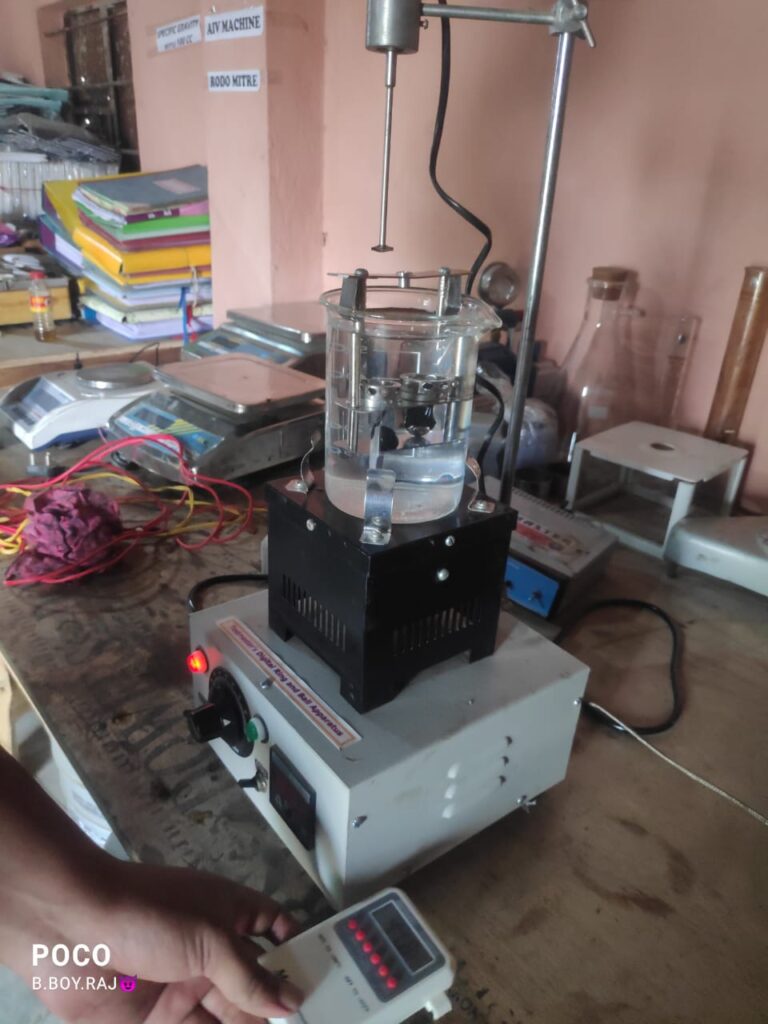
Softening point is the temperature at which the substance attains a particular
degree of softening under specified conditions of test.
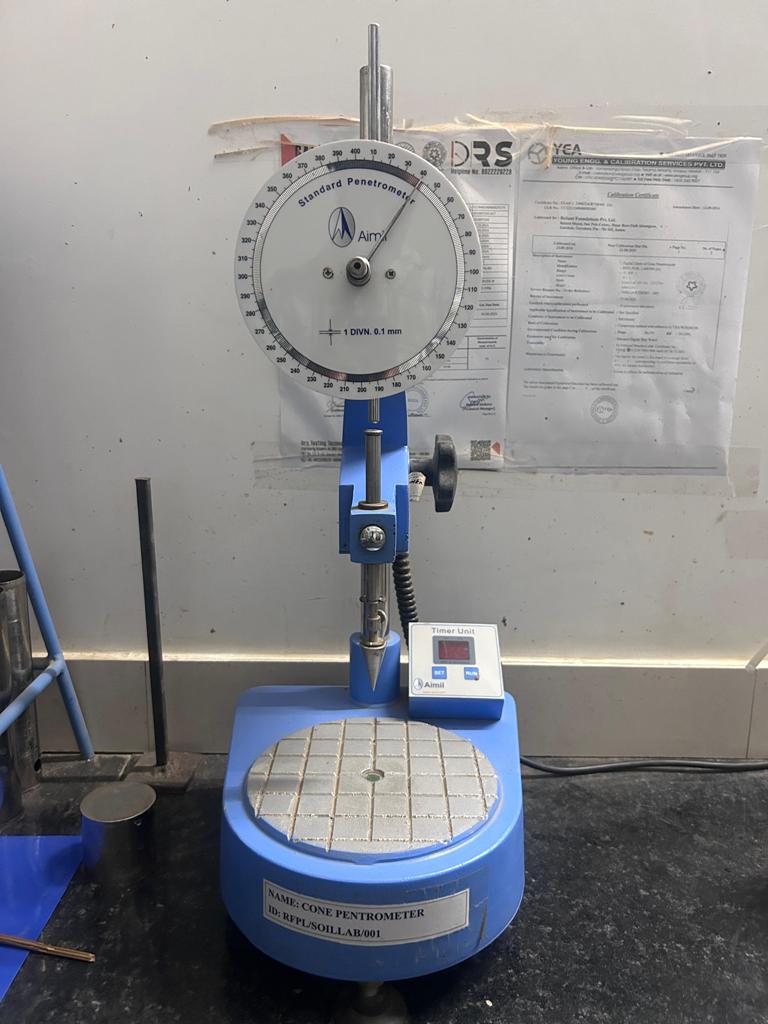
Bitumen Penetration Test – Complete Guide for Highway Quality Control Description: Learn the complete procedure of the Bitumen Penetration Test as per IS 1203 and ASTM D5. Includes apparatus, sample preparation, heating process, and its significance in highway construction quality control. 1. Introduction The Bitumen Penetration Test is one of the most common tests performed in highway quality laboratories to determine the consistency or hardness of bitumen. It helps assess the ability of bitumen to resist deformation under load. The test result directly influences pavement flexibility, durability, and service life. 2. Definition and Standard Reference As per IS:1203 (1978) and ASTM D5, the Penetration Test determines the depth (in tenths of a millimetre) that a standard needle penetrates vertically into a bitumen sample under specific conditions of load, time, and temperature. The value obtained is known as the penetration value of the bitumen. 3. Importance of Bitumen Penetration Grade The penetration grade indicates the hardness or softness of bitumen. A higher penetration value means softer bitumen suitable for cold climates, while lower values indicate harder bitumen ideal for hot regions. Common penetration grades used in India are 30/40, 60/70, and 80/100. 4. Climate-Based Selection of Bitumen Grade Selection of bitumen grade should match the climatic conditions and traffic load. Hard grades such as VG-40 are recommended for high-temperature zones and heavy traffic, while softer grades like VG-10 are preferred in colder regions. 5. Apparatus Required for Bitumen Penetration Test Penetrometer with standard needle Water bath maintained at 25°C ± 0.1°C Sample container (metal cup) Thermometer (accurate to 0.1°C) Stopwatch 6. Sample Preparation Procedure Heat the bitumen sample to a pouring consistency (not exceeding 90°C). Pour the sample into a metal cup to a depth of about 35 mm and allow it to cool for 1 to 1.5 hours at room temperature. Place the sample in a water bath maintained at 25°C for at least 1 hour before testing. 7. Test Procedure (As per IS 1203 / ASTM D5) Place the sample under the penetrometer needle. Ensure the needle just touches the surface of the bitumen. Apply a load of 100 g for 5 seconds. Note the penetration value in tenths of a millimetre (dmm). Repeat the test at three different points not less than 10 mm apart. Calculate the average value as the final result. 8. Calculation of Penetration Value Penetration Value (dmm) = Average of three readings Example: (67 + 68 + 69) / 3 = 68 dmm 9. Importance of the Heating Process Heating bitumen must be carefully controlled to prevent oxidation and hardening. Excessive heating alters bitumen’s chemical properties, reducing penetration value and flexibility. Purpose of Heating To bring the bitumen to a fluid state for easy pouring and uniform temperature distribution without causing aging or volatility loss. The 90°C Rule – Preventing Age Hardening Bitumen should never be heated beyond 90°C during sample preparation. Higher temperatures accelerate oxidation and make the bitumen brittle, leading to premature pavement cracking. Pro Tips Always stir the sample gently while heating. Use a controlled water bath for uniform test temperature. Record temperature before and after the test to ensure consistency. 10. Significance of the Bitumen Penetration Test This test ensures that the bitumen used in road construction meets design requirements for flexibility, binding strength, and temperature susceptibility. a. Quality Control Helps verify that the bitumen supplied on site matches the approved specification before mixing. b. Performance Prediction Indicates how bitumen will behave under traffic and climatic stress conditions. c. Consistency Indicator Shows the relative hardness or softness of bitumen, which influences pavement flexibility. d. Prevents Premature Failures Using bitumen of correct penetration value minimizes cracking, rutting, and bleeding in pavements. 11. Final Thoughts The Bitumen Penetration Test is an essential quality control measure that defines the usability and performance of paving bitumen. By maintaining the correct penetration value, highway engineers can ensure durable and flexible pavements suited to Indian climatic conditions. ✅ Expert Tip Always cross-check penetration test results with Softening Point Test (IS 1205) and Viscosity Test (IS 1206) to obtain a complete understanding of bitumen behavior under varying temperature conditions. 🧪 Bitumen Laboratory Tests – Arranged as per IS Codes ✔ Penetration Test of Bitumen – IS 1203 ✔ Softening Point of Bitumen (Ring & Ball) – IS 1205 ✔ Absolute Viscosity Test of Bitumen – IS 1206 (Part 2) ✔ Ductility Test of Bitumen – IS 1208 ✔ Bitumen Extraction Test – IS 2720 (Part 39) ✔ Marshall Stability & Flow Test – ASTM D6927 / MoRTH

It helps in understanding how much water should be added to the soil for achieving maximum compaction under a given compactive effort.
fineness of cement, which governs the rate of hydration, strength gain, and overall performance of concrete in highway and bridge works.
Finer cement ensures rapid strength development but must be within standard limits to prevent shrinkage and excess water demand.
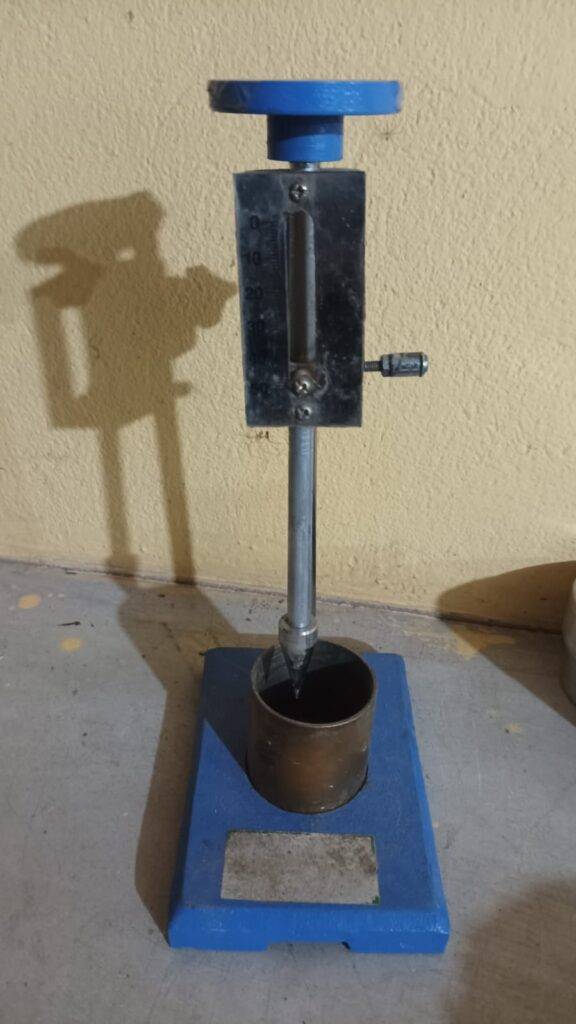
The Initial Setting Time Test measures the time when a cement paste starts losing its plasticity and begins to harden. This test ensures that cement provides adequate workable time for mixing, transporting, and placing
Initial Setting Time of Cement – IS 4031 (Part 5) Read More »