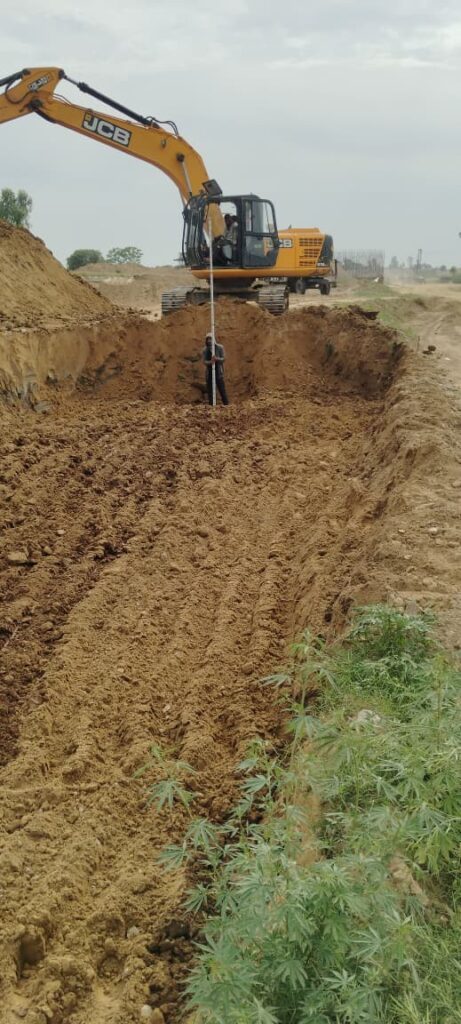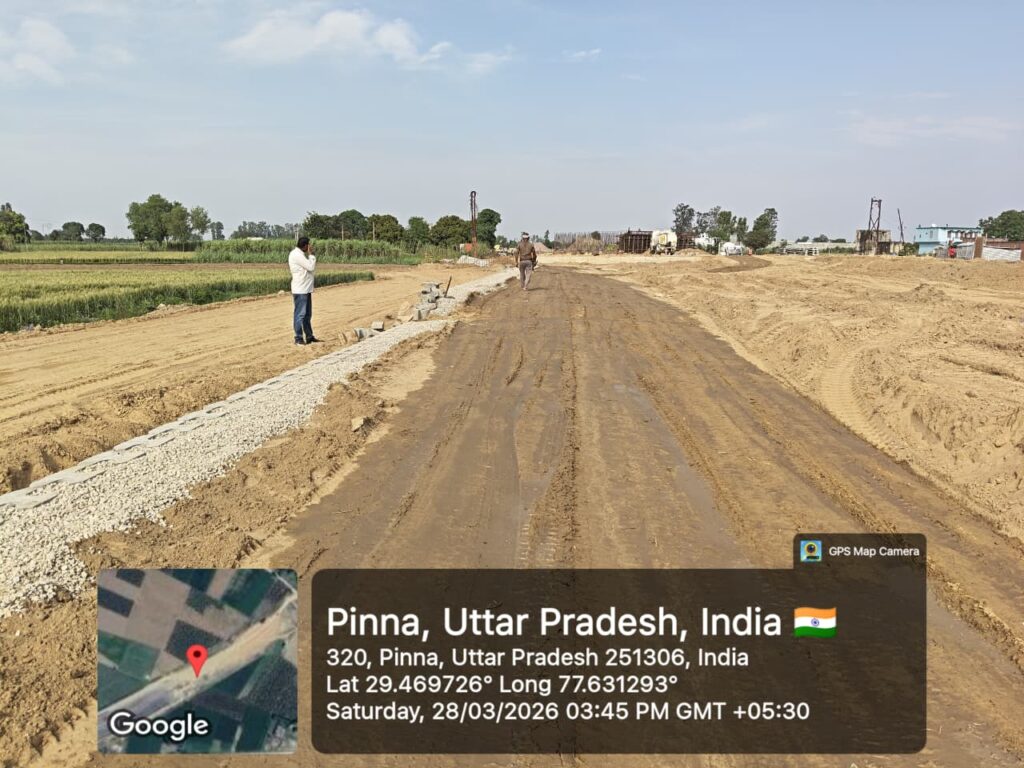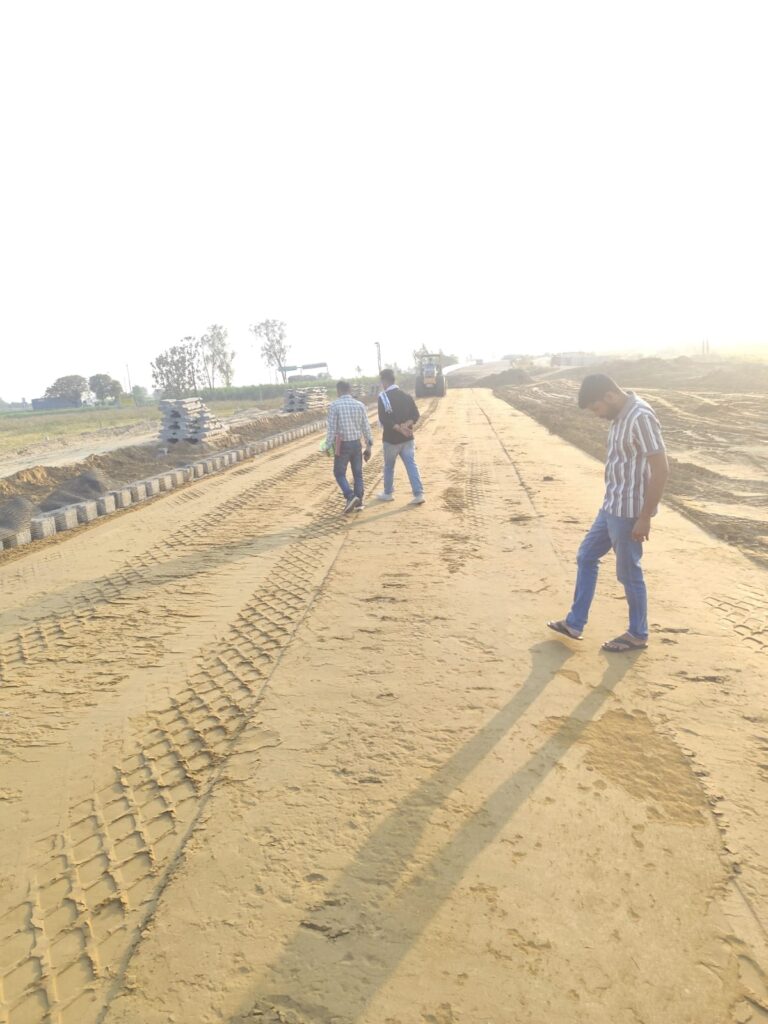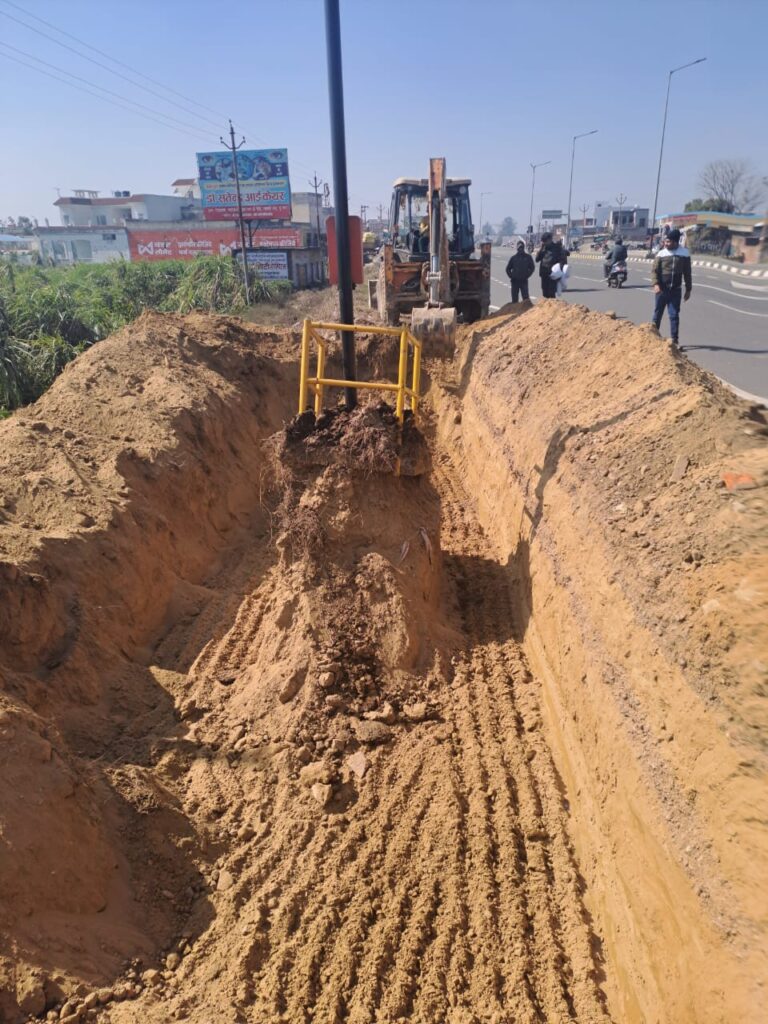
METHOD STATEMENT FOR ROADWAY EXCAVATION

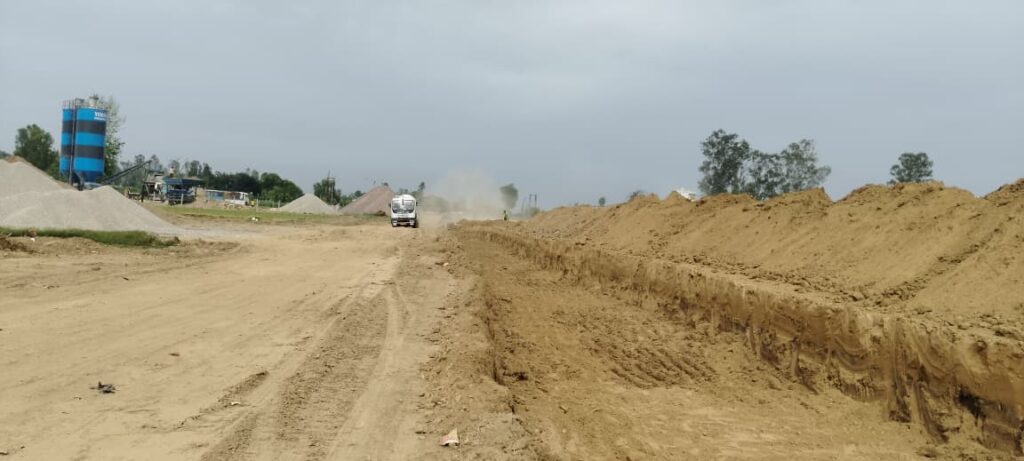
Scope of Work – Excavation Scope  This work shall consist of excavation by mechanical means in all types of soil in final line, level, grades, cross section as shown in drawings for roadways drains, shoulders, median and foundation for structures, including hauling suitable excavation materials to site for embankment and sub grade construction also disposal of unsuitable cut materials specified manner. Reference  MoRT&H Specification clause No 301 to 303 and technical specification of contract Equipment  Excavators, Dumpers, dewatering arrangements Tools  Line rope, lime powder, pegs etc. Manpower & Responsibilities  Construction manager, Earth work engineer/supervisor, land surveyor, material engineer, safety supervisor, helpers Construction Manager He shall be overall responsible for the activity including planning, organising the resources required to carry out the work in consultation with the project manager, implement and ensure safety requirements during the work including that of utility services. Ensures relevant test conducted and records are maintained as per the contract requirements. Coordinate with the consultant engineer in obtaining necessary approvals for the completed activity. Earthwork Engineer / Supervisor Deploying necessary resources at site as planned. Execute the work as per drawing and maintain quality requirements as per specification. Implement and maintain safety regulations and good housekeeping. Coordinate with the consultant staff in obtaining necessary approvals for the completed activity. Land Surveyor Establishing necessary reference points to carry out the work as per the level and alignment. Checking and recording the levels as completed. Coordinate with the consultant staff in obtaining approvals for the finished work. Material Engineer Implement quality procedures as per plan. Ensure the materials used are meeting the specification requirement conduct the required tests as per the relevant specification and maintain all records. Safety Supervisor Ensure that activity is being carried out safely as prescribed in the project safety plan. Procedure General  The excavation shall be set out true to lines curves, grades and sections in works involving removal of existing carriage way, earthen shoulder, median, shall be excavated to the full width and to the required levels, after satisfying CBR and density requirements, as shown in drawings. After reaching to the required depth, it shall be compacted at OMC to achieve min. of 95% for embankment and 97% of MDD for sub grade.  Excavated soil shall be tested for its suitability for reuse or disposal.  The cut formation, which serves as sub grade, if found suitable, shall be loosened, graded, watered and compacted in layers in the specified manner. Any unsuitable material encountered at the sub grade level shall be removed and replaced with suitable material.  While executing excavation all adequate precautions shall be taken to prevent soil erosion and appropriate drainage measures shall be adopted to keep the site free of water stagnation.  The suitable material obtained from excavation shall be used for filling of roadway embankment, sub grade filling of existing pits in the ROW, landscaping etc. All other unsuitable materials shall be disposed of. Surplus suitable material if any shall be stacked at approved locations. Site Clearance  Controlled blasting shall be carried out in fixed hours as ordered by the Engineer and kept known to the public and authorities in the vicinity sufficiently in advance.  Red flags shall be displayed in all directions during blasting operations. People except those who actually light the fuse shall be prohibited from the area and all persons including workmen shall be evacuated from the flagged area at least 10 minutes before firing. A warning alarm or siren shall be sounded for this purpose. The man in-charge shall satisfy himself that all charges are exploded before allowing any workman or people to enter. Firing  The firing of charge holes shall be done by electric detonators by using a sufficiently long fuse wire (at least 10 m) and all charge holes shall be blasted at one instance. Explosive  The explosives for blasting shall be as per permitted explosives as per procedure and requirement. The weight of charge depends upon the quantity of rock to be blasted/excavated, hardness of rock and site condition. Stemming  Stemming may be used if required, of free dry-running material, which passes through 2.8 mm sieve and retained on 1.2 mm sieve by 90%. Muffling  This shall be done to control the fly rock. Since the drill holes are loaded with less charge, sand/earth bags weighing at least 50 kg shall be kept on each charge hole to control fly rock. Safety Measures  All safety measures shall be as per approved EHS Plan.

Method Statement for Earthwork | Embankment and Subgrade Construction (MoRTH)

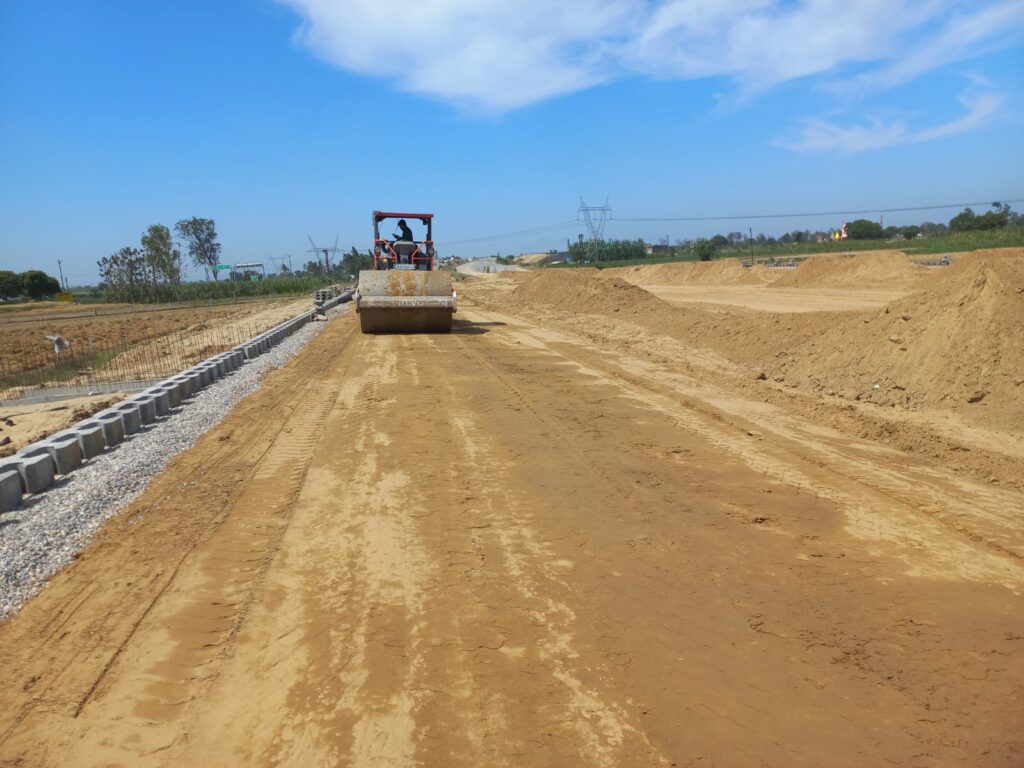
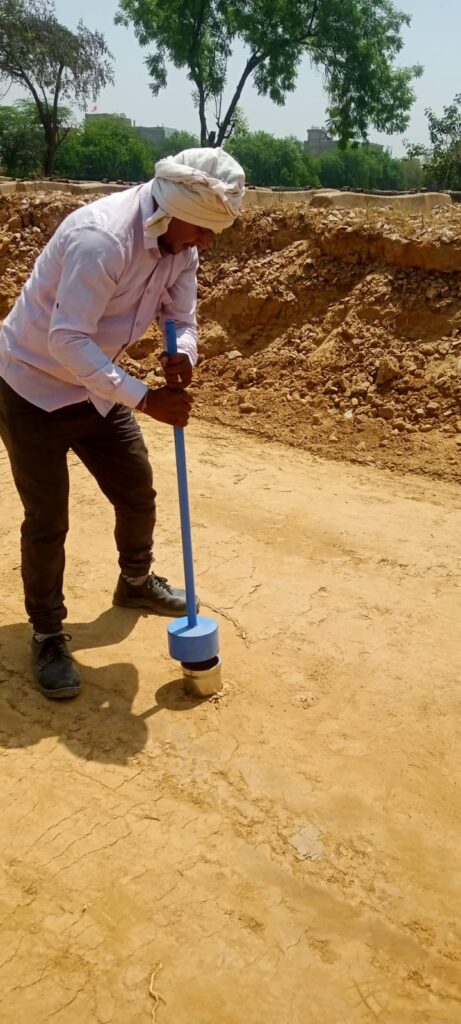
Method Statement for Earthwork (Embankment and Subgrade) Scope This work shall consist of embankment construction with approved material from roadway excavation or borrow pits. Reference IRC:SP:84-2014 MoRTH Specifications, Clause No. 305 IRC:36 Technical Specifications of Contract Equipment Excavator / Backhoe Dozer Motor Grader Dumpers Vibratory Roller Water Tanker Auto Level Measuring Tape Tools Hammer Crow Bar Spade Strings Pegs Lime Powder Manpower & Responsibilities Construction Manager Engineer / Supervisor Land Surveyor Material Engineer Safety Supervisor Helpers Construction Manager He shall be overall responsible for the activity including planning and organizing resources in consultation with the Project Manager. He shall ensure safety requirements, conduct relevant tests, maintain records, and coordinate with the consultant for approvals. Engineer / Supervisor Responsible for deploying resources, executing work as per drawings, maintaining quality as per specifications, and ensuring safety compliance. Also responsible for obtaining necessary approvals. Land Surveyor Responsible for establishing reference points, checking levels and alignment, recording completed work, and coordinating with the consultant for approvals. Material Engineer Responsible for implementing quality procedures, ensuring materials meet specifications, conducting tests, and maintaining records. Safety Supervisor Ensure that all activities are carried out safely as per the project safety plan. Materials Materials shall be free from logs, stumps, roots, rubbish, or any deleterious matter affecting stability. The material shall have: Liquid Limit (LL) less than 55% Plasticity Index (PI) less than 25% Free Swell Index less than 50% Minimum MDD of 15.2 kN/m³ as per IS:2720 Part-8 Samples from borrow areas shall be tested in the laboratory to verify these requirements. Procedures Before commencing earthwork, toe limits of embankment shall be marked. Original ground shall be leveled, scarified, watered, and compacted to achieve 95% of MDD. Material shall be excavated from borrow areas and transported by dumpers. Material shall be spread uniformly using grader/mechanical means. Clods shall be broken to maximum size of 75 mm. If NMC is less than OMC, water shall be added to maintain +1% to -2% of OMC. If NMC is more than OMC, material shall be dried by sun exposure. Compaction shall be done using vibratory roller (80–150 kN) to achieve 95% MDD. Rolling shall start from lower edge to upper edge. Each roller pass shall overlap 1/3rd of the previous pass. Acceptance Criteria Field dry density ≥ 95% of MDD Layer thickness tolerance ±25 mm Moisture content +1% to -2% of OMC during compaction Frequency of Testing Gradation Test (IS 2720 Part-4): 2 tests per 3000 cum Plasticity Test (IS 2720 Part-5): 2 tests per 3000 cum Density Test (IS 2720 Part-8): 2 tests per 3000 cum Deleterious Content (IS 2720 Part-27): As required Moisture Content (IS 2720 Part-2): 1 test per 250 cum CBR Test (IS 2720 Part-16): As required Field Compaction Testing One set of ten density measurements for every 3000 sqm or as required for statistical evaluation. Safety Measures All safety measures shall be followed as per approved EHS Plan. Frequently Asked Questions (FAQ) 1. What is the purpose of embankment construction? Embankment construction is carried out to raise the formation level of the road and provide a stable base for pavement layers. 2. What is the required compaction for embankment? The field dry density should be at least 95% of the Maximum Dry Density (MDD) as per MoRTH specifications. 3. What type of soil is suitable for embankment construction? Soil used should have Liquid Limit less than 55%, Plasticity Index less than 25%, and Free Swell Index less than 50%. 4. What is the optimum moisture condition during compaction? Moisture content should be maintained within +1% to -2% of Optimum Moisture Content (OMC) during compaction. 5. What equipment is commonly used in earthwork? Excavators, dumpers, graders, vibratory rollers, and water tankers are commonly used for embankment and subgrade work. 6. What is the maximum layer thickness allowed? Layer thickness tolerance is generally maintained within ±25 mm as per specifications. 7. Why is CBR testing important? CBR (California Bearing Ratio) test determines the strength of subgrade soil and its suitability for pavement design. 8. How frequently should field density tests be conducted? One set of ten density measurements is carried out for every 3000 sqm of compacted area or as required. 9. What are the key safety measures during earthwork? All activities must follow the approved EHS plan, including use of PPE, proper equipment handling, and safe working practices. 10. What is the role of a surveyor in earthwork? The surveyor establishes reference points, checks alignment and levels, and ensures the work is executed as per design.

Clearing and Grubbing Methodology as per MoRTH Clause 201

Clearing and Grubbing is the first activity before earthworks. It covers removal and disposal of vegetation including trees (up to 300 mm girth), bushes, shrubs, stumps, roots, grass, weeds, rubbish and top organic soil up to 150 mm thick. The scope includes draining stagnant water, backfilling pits created by uprooting trees and compacting to required density as per MoRTH Clause 305.3.4.

Embankment Construction Methodology | Highway Earthwork Guide

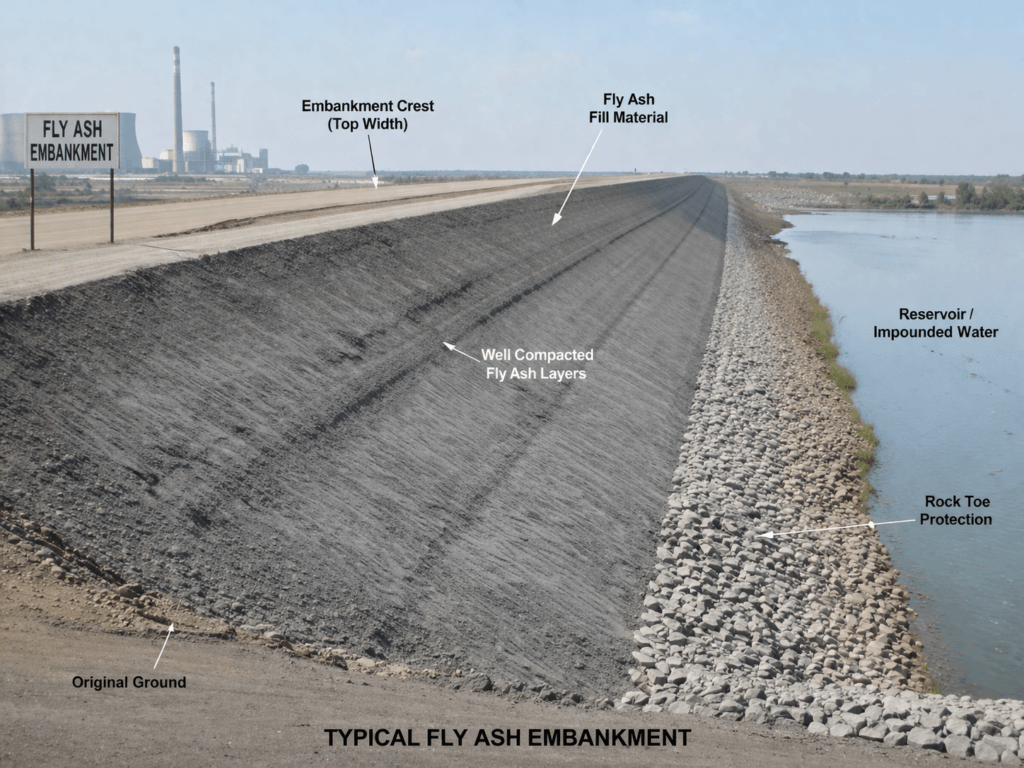
Embankment Construction Methodology with Quality Control | MoRTH Clause 305 Embankment Construction Methodology with Quality Control – MoRTH Clause 305 Scope of Work The work shall consist of construction of embankment with approved and specified materials obtained from approved borrow areas or suitable material obtained from roadway excavation and drain excavation and in accordance with clause 305 of MORTH specifications. Reference Standards MoRTH Specifications – Section 305 (5th Revision) IRC SP: 84 IS 2720 Series – Soil Testing Approved Project Drawings Manpower & Responsibilities Manpower & Responsibilities Construction Manager Engineer / Supervisor Land Surveyor Material Engineer Safety Supervisor Helpers Construction Manager He shall be overall responsible for the activity including: Planning and organizing resources required for execution in consultation with the Project Manager. Implementation of safety requirements during the work including utility services protection. Ensuring all relevant tests are conducted as per specification. Maintaining all QA/QC records as per contract requirements. Coordinating with the consultant engineer for obtaining necessary approvals for completed activities. Engineer / Supervisor Responsibilities include: Deployment of required resources at site as per planning. Execution of work as per approved drawings. Maintaining quality control as per specifications. Implementation of safety regulations at site. Obtaining approvals for completed works from consultant/authority. Land Surveyor Responsibilities include: Establishing reference points for alignment and levels. Ensuring correct setting out of works. Checking and recording levels of completed work. Coordinating with consultant staff for final approval of finished works. Material Engineer Responsibilities include: Implementation of quality procedures as per approved plan. Ensuring all materials meet specification requirements. Conducting required laboratory and field tests as per standards. Maintaining complete material testing records and reports. Safety Supervisor Responsibilities include: Ensuring safe execution of all site activities. Implementation of project safety plan and guidelines. Monitoring compliance of safety measures at site. Setting Out After completion of site clearance, the limits of embankment shall be marked by fixing pegs on both sides at regular intervals. The chainage boards and working bench mark shall be set outside the limits of construction areas. Material Selection & Borrow Area Testing Selection of Material and Borrow Areas Material The material used in embankment shall be soil, moorum, gravel, reclaimed material from pavement, fly ash, pond ash, a mixture of these or any other material approved by the AE. It shall be free of logs, stumps, roots, rubbish and any other material likely to deteriorate or affect the stability of the embankment. The material for embankment shall be obtained from the approved source with preference to the material becoming available from nearby roadway excavation or any other excavation under the contract. The material requirements shall be in accordance with Clause 305.2 of MORTH specifications. These materials shall be free from logs, stumps, roots, rubbish or any other ingredients likely to affect the stability of the embankment. The material that has LL less than 55%, PI less than 25%, and Free Swell Index less than 50% shall be used for embankment construction. The material which is having lab MDD 15.2 minimum as per IS: 2720 Part-8 shall be used in embankment filling. The sample from the borrow area shall be brought to the laboratory and tested for the above requirements. Clods and hard humps of earth will be broken to a maximum size of 75 mm for embankment. If the moisture content (NMC) is less than OMC, the water shall be added by sprinkling considering evaporation losses, so that at the time of compaction it is in the range of 1% above to 2% below the optimum moisture content. If NMC is more than OMC, the material can be allowed to dry by exposure to the sun. EMBANKMENT/STRUCTURE BACK FILLS The following type of material shall be considered un-suitable. Material from swamps, marshes and bogs. Peat, log, stump and perishable material. Soil classified as OL, OI, OH or Pt. in accordance with IS: 1498. Material susceptible to spontaneous combustion. Material in frozen condition. Clay having LL exceeding 70 and PI exceeding 45 for Embankment. Clay having LL exceeding 50 and PI exceeding 25 for Subgrade. Material with salts resulting in leaching in the embankment. Soils having free swelling index more than 50% shall not be used as filled material. Soil having acceptedbelow free swelling index (non-expensive soils) shall be used up to 500 mm below sub-grade/embankment top. Fill material having soluble Sulfate content exceeding 1.9 gm. of Sulfate per liter (As per BS: 1377 test 10) not to be deposited with 500 mm in contact with concrete structure or cement bound materials forming part of permanent work. Fill material having total Sulfate content exceeding 0.5% by mass. (Tested as per BS: 1377 test 9) shall not be deposited with 500 mm of metallic item forming part of Permanent Work. The maximum size of coarse material in earth mixture shall not exceed 75 mm for embankment fill and 50 mm for sub grade fill. Soil material shall satisfy density requirement as given in BELOW Density Requirements for Embankment & Subgrade Material Sl. No Type of Work Maximum Laboratory dry unit weight when tested as per IS: 2720 (Part 8) 1 Embankments up to 3.0 m high not subjected to extensive flooding. Not less than 15.2 KN/cum or 1.55 gm /cc. 2 Embankment exceeding 3.0 m ht. or Embankment of any height subject to long period of inundation. Not less than 16.0 KN/cum 1.631 gm/cc. or 1.6 gm/cc 3 Sub grade and earthen shoulder / backfill Not less than 17.5 KN/cum or 1.784 gm/cc Note: Materials used shall satisfy design CBR i.e. soaked CBR shall not be less than 12% and 10% as per design locations for Heavy weight fill material. This below is not applicable for light weight fill material. Compaction Requirement The Embankment /sub grade material shall be compacted in one or more layer as per contract. The compacted field density shall meet minimum density requirement as given in BELOW Compaction Requirements for Embankment & Sub grade Sl. No Type of work/material Relative Compaction % of max. Laboratories dry density as