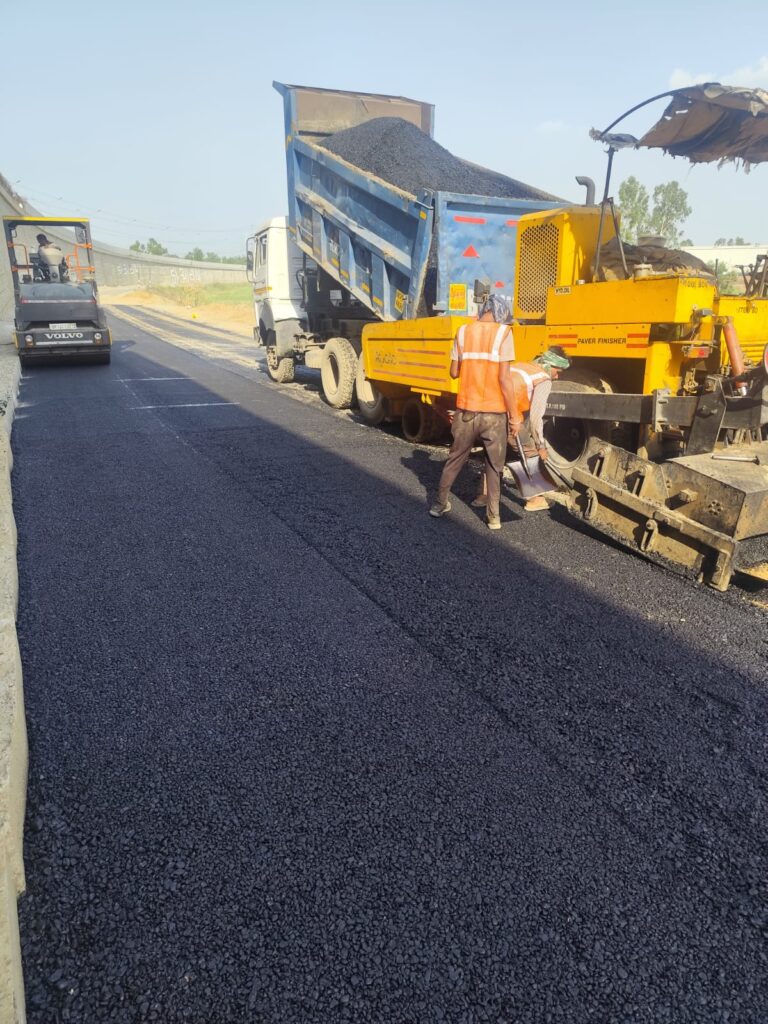
Bituminous Concrete (BC) – Profile Corrective Course Construction Methodology

Bituminous Concrete (BC) Profile Corrective Course – Construction Methodology | MoRTH Profile Corrective Course Using Bituminous Concrete (BC) – Construction Methodology Bituminous Concrete (BC) Profile Corrective Course is a thin, dense graded bituminous layer laid to correct minor surface undulations, rutting, shallow depressions and riding quality issues prior to or as part of the final wearing course. 1.0 Scope and Surface Preparation This work consists of providing a Profile Corrective Course using Bituminous Concrete of variable thickness, generally ranging from 30 mm to 50 mm, to restore the pavement profile as per approved longitudinal and cross levels. 1.1 Existing Bituminous Surface Repairs: Potholes, cracks, ravelled areas repaired as per MoRTH Clauses 3004.2 & 3004.3. Milling / Scarifying: Where required, shallow milling carried out to remove surface irregularities. Cleaning: Surface cleaned using mechanical broom and air compressor. Tack Coat: Uniform tack coat applied prior to BC laying. 1.2 Existing Granular Surface (If Applicable) Surface made firm, even and free from loose materials. Priming carried out as per MoRTH Clause 502. Tack coat applied after priming and curing. 1.3 Pre-Laying Level Checks Existing levels shall be checked jointly with Engineer’s representative and recorded to determine thickness and extent of profile correction. 2.0 Plant, Machinery & Equipment Sl. No. Equipment Quantity 1 Batch Type Hot Mix Plant (150–200 TPH) 01 2 Sensor Paver with Electronic Screed Control 01 3 Tandem Vibratory Roller 02 4 Pneumatic Tyred Roller 01 5 Bitumen Pressure Distributor 01 6 Mechanical Broom / Air Compressor 01 7 Tipping Trucks As required 3.0 Materials & Mix Design 3.1 Materials Coarse & fine aggregates conforming to MoRTH Table 500-18 Bitumen: VG-30 / VG-40 / Modified Bitumen (as per contract) Mineral Filler: Cement / Lime / Stone Dust Tack Coat: Rapid Setting Cationic Bitumen Emulsion 3.2 Job Mix Formula (JMF) BC mix design shall be carried out using the Marshall Method as per MoRTH Clause 509. Approved JMF shall specify grading, binder content, temperature limits and target density. 3.3 Hot Mix Plant Operation Bitumen temperature: 150–165°C Aggregate temperature: 150–170°C Mix discharge temperature: 140–165°C Uniform coating ensured with controlled mixing time 4.0 Laying & Compaction 4.1 Transportation of Mix BC mix transported in insulated, tarpaulin-covered trucks. Truck beds coated with approved release agent. Temperature at paver hopper: ≥135°C. 4.2 Tack Coat Application Application rate: 0.20–0.25 kg/m² on bituminous surface. Applied by calibrated mechanical sprayer. Laying commenced only after tack coat breaks. 4.3 Laying & Finishing Sensor wire fixed at 10 m intervals for level control. Minimum laying temperature: 130°C. Loose thickness allowance: approx. 20–25%. Manual finishing permitted in confined or irregular areas. 4.4 Compaction Initial rolling by tandem vibratory roller. Intermediate rolling by PTR. Final finish rolling by static tandem roller. Rolling continued till specified density achieved. Transverse joints cut full depth and edges painted with hot bitumen. 5.0 Quality Control & Traffic Management Core cutting after 24 hours for density verification. Marshall properties verified as per approved JMF. Surface regularity and levels checked as per Clause 902. Traffic opened minimum 24 hours after completion. Traffic diversion with barricades, cones and flagmen. Frequently Asked Questions – BC Profile Corrective Course Purpose of BC PCC? To correct minor profile defects and improve riding quality. Typical thickness? 30–50 mm. Where used? Rutting, shallow depressions, uneven surface. Material? Bituminous Concrete as per MoRTH Clause 509. Tack coat rate? 0.20–0.25 kg/m². Compaction? Tandem roller + PTR. Joint treatment? Full depth cut with hot bitumen painting. Traffic opening? After minimum 24 hours.

What is Bitumen? Grade, Types, Properties

Bitumen is a viscous, black, sticky, and highly cementitious substance derived from crude petroleum through a refining process. It is primarily composed of hydrocarbons and their derivatives. Often referred to as asphalt cement in North America, bitumen is best known for its use as the binding agent in asphalt concrete for road construction, paving, and roofing applications.
________________________________________

Absolute Vicosity Test

Absolute Viscosity

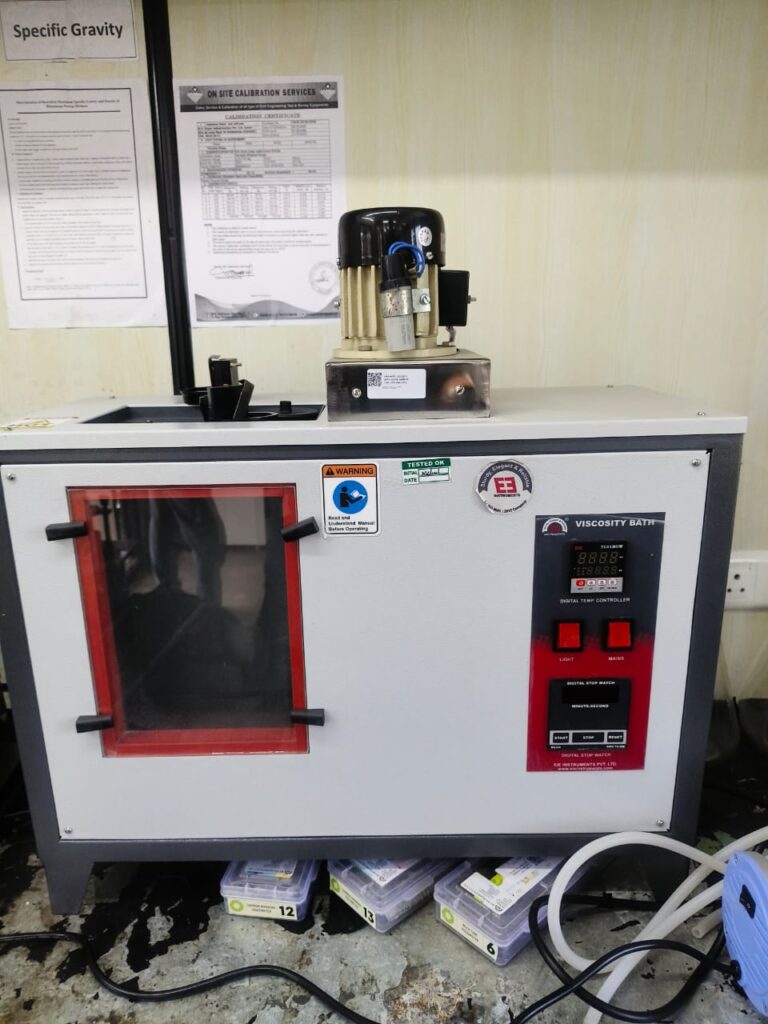
Absolute Viscosity Test of Bitumen – ASTM D2171 Procedure & Calculation Absolute Viscosity Test of Bitumen Using Cannon-Manning Vacuum Capillary Viscometer (ASTM D2171) The Absolute Viscosity Test of Bitumen is a critical laboratory procedure used to assess the flow characteristics of paving-grade bitumen under controlled temperature and vacuum conditions. This test is essential for highway engineers, laboratory technicians, and quality control professionals who need accurate and reproducible data on bitumen viscosity. Using a Cannon-Manning Vacuum Capillary Viscometer, the test measures the time it takes for a bitumen sample to flow through a capillary tube, which is then converted into absolute viscosity using a calibrated factor. Performing this test correctly ensures that the selected bitumen will perform effectively under traffic loads and varying climatic conditions. 1. OBJECTIVE The main goal of this test is to determine the absolute viscosity of bitumen at a standard temperature of 60 °C under a vacuum of 30 cm Hg. Viscosity measurement is critical for: Ensuring proper workability of asphalt during mixing and laying. Predicting rutting and deformation resistance of pavement. Verifying consistency and quality of paving-grade bitumen. Comparing bitumen from different suppliers. 2. THEORY Bitumen is a viscoelastic material, meaning its resistance to flow depends on temperature and load. The absolute viscosity represents its internal resistance to flow under laminar conditions. The Cannon-Manning Vacuum Capillary Viscometer determines this property by: Allowing bitumen to flow through a narrow capillary under vacuum. Recording the flow time between two calibrated marks. Multiplying the flow time with the viscometer’s calibration factor (K) to calculate viscosity in Poises. Using a vacuum helps remove air bubbles and ensures smooth laminar flow, which is essential for accurate results. The ASTM D2171 standard ensures consistency and repeatability in viscosity measurements across different laboratories and projects. 3. APPARATUS Constant Temperature Bath (water up to 100 °C or silicone oil up to 150 °C) with ±0.1 °C accuracy. Vacuum pump and manometer capable of maintaining 30 cm Hg with ±0.05 cm Hg accuracy. Cannon-Manning Vacuum Capillary Viscometer (Size 12 or 13 depending on bitumen grade). Stopwatch with 0.5-second accuracy. Viscometer stand for holding up to 6 tubes. Thermometer for monitoring sample and bath temperature. Glassware and safety equipment such as tongs, gloves, and goggles. Note: All apparatus should be clean, dry, and calibrated according to the manufacturer’s specifications to ensure accurate measurements. 4. PROCEDURE Sample Collection: Collect a representative bitumen sample (~50 g) in a clean container and stir gently to ensure homogeneity. Heating: Heat the sample to 135 ± 5.5 °C using a water or silicone oil bath. Avoid overheating to prevent oxidation of bitumen. Filling Viscometer: Carefully pour the heated bitumen into the viscometer up to the fill mark (Line E ±2 mm). Standing Period: Let the viscometer stand for 10 ± 2 minutes to allow trapped air bubbles to escape. Immersion in Bath: Place the viscometer in the constant temperature bath maintained at 60 °C. Ensure it is suspended and does not touch the bottom of the bath. Vacuum Application: Connect the viscometer to the vacuum pump and apply 30 cm Hg vacuum. Verify the reading on the manometer. Timing Flow: Start the stopwatch as the bitumen reaches Mark G and stop when it reaches Mark H. Record the flow time (T seconds). Repeat: Perform at least three measurements per sample and calculate the average flow time for accuracy. Tips for Accuracy: Avoid shaking the viscometer, maintain bath temperature ±0.1 °C, and ensure a stable vacuum during the test. 5. CALCULATION Formula for Absolute Viscosity Absolute Viscosity (Poises) = K × T K: Calibration factor of viscometer in Poises/sec (provided by the manufacturer). T: Flow time in seconds from Mark G to Mark H. Example: If T = 250 s and K = 12.5 Poises/sec, then Absolute Viscosity = 12.5 × 250 = 3125 Poises. 6. RESULTS The results should be reported as follows: Sample identification Bath temperature (60 °C) Vacuum applied (30 cm Hg) Flow time (T seconds) Calculated absolute viscosity (Poises) Observations (e.g., bubbles, irregular flow) Sample Temp (°C) Vacuum (cm Hg) Flow Time T (s) Absolute Viscosity (Poises) Bitumen A 60 30 250 3125 Bitumen B 60 30 200 2500 7. FACTORS AFFECTING VISCOSITY Temperature: Viscosity decreases with increasing temperature. Vacuum Accuracy: Inconsistent vacuum affects flow time. Air Bubbles: Entrapped air lowers measured viscosity. Viscometer Calibration: Must match the size and grade of bitumen. Bitumen Grade: Penetration grade and polymer-modified bitumen differ in viscosity. 8. TROUBLESHOOTING Problem Possible Cause Solution Erratic flow Air bubbles trapped in viscometer Let bitumen stand longer or reheat gently Slow flow Sample too viscous or too cold Ensure bath temperature is correct and bitumen is properly heated Vacuum drops Leaks in tubing or joints Inspect vacuum system and seal leaks Temperature fluctuates Faulty thermostat Use calibrated bath and monitor continuously Quick Reference: Absolute Viscosity Test (ASTM D2171) Standard: ASTM D2171 – Viscosity by Vacuum Capillary Viscometer Purpose: Measure flow resistance of bitumen at 60°C under vacuum Vacuum: 30 cm Hg (±0.05 cm Hg) Test Temperature: 60°C (accuracy ±0.1°C) Viscometer: Cannon-Manning (Size 12/13) Sample Heating: 135 ±5.5 °C before filling Flow Timing: Between Mark G → H Viscosity Formula: Absolute Viscosity = K × T Top FAQs – Absolute Viscosity Test of Bitumen (ASTM D2171) What is the Absolute Viscosity Test? It determines bitumen’s resistance to flow at 60°C using a vacuum capillary viscometer under 30 cm Hg vacuum, providing reliable QC data. Why is vacuum used? To remove air bubbles and ensure laminar flow, reducing measurement errors. Which viscometer is used? Cannon-Manning Vacuum Capillary Viscometer, typically Size 12 for paving grades. What is the test temperature? 60°C ±0.1°C to simulate typical bitumen service temperature. How is viscosity calculated? Viscosity = K × T, where K is the calibration factor and T is flow time in seconds. Minimum heating temperature? 135 ±5.5°C to ensure proper flow and eliminate lumps. Standing time after filling? 10 ±2 minutes to allow air bubbles to escape. Precision for timing? Stopwatch accurate to ±0.5 sec for reliable results. Typical viscosity values? 800–4000 Poises at 60°C for paving bitumen. Why 60°C? Reflects bitumen’s

Ductility Test

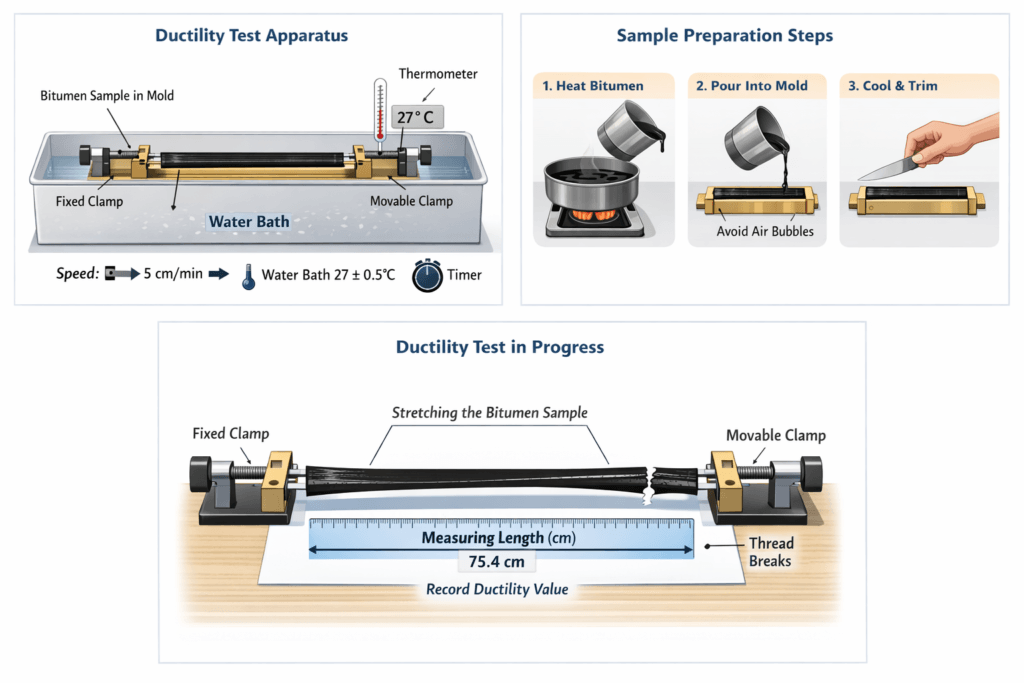
Ductility Test of Bitumen – Procedure, Apparatus & Limits (IS Method) Home › Bitumen Tests › Ductility Test Ductility Test of Bitumen – Complete Guide Learn the step-by-step procedure, apparatus, sample preparation, calculation, and result interpretation for ductility testing of bitumen, as per IS 1208 standard. Explore other bitumen testing guides for complete QA/QC in highway construction. Introduction The Ductility Test measures the ability of bitumen to deform under tensile stress without breaking. This property is crucial for highway construction, as it indicates flexibility of bituminous pavements and resistance to cracking under traffic loads and temperature variations. Objective To determine the ductility of bituminous material, which measures the distance a bitumen sample can stretch before breaking. Purpose of Ductility Test Assess tensile property and flexibility of bitumen. Ensure bitumen can withstand temperature variations without cracking. Determine suitability of bitumen for highway surfacing works. Applicable Standards IS 1208: Ductility of Bitumen – Standard Method Apparatus Required Ductility testing apparatus with movable clamp and water bath. Test mould (100 mm × 10 mm × 3 mm). Hot knife, thermometer, stopwatch. Water bath maintained at 27 ± 0.5°C. Sample Preparation Heat bitumen sample to a fluid state without overheating. Strain the molten bitumen through a 90-micron sieve to remove impurities. Pour into the standard test mould carefully to avoid air bubbles. Allow it to stand for 30–40 minutes, then place the mould in a water bath at 27°C for 30 minutes. Remove mould, level surface using a hot knife, then return to water bath for 85–95 minutes. Remove mould sides and attach clips to the ductility machine carefully without applying initial strain. Visual Stepwise Guide Stepwise illustration showing apparatus, sample preparation, and testing process for ductility of bitumen. Test Procedure Immerse the prepared sample in the water bath maintained at 27 ± 0.5°C. Attach the sample ends to the movable and fixed clamps of the ductility apparatus. Start the apparatus and allow the movable clamp to move at a speed of 5 cm/min (50 ± 2.5 mm/min). Ensure the sample remains immersed in water at a depth of at least 10 mm throughout the test. Record the distance (cm) at which the bitumen thread breaks. This distance is the ductility value. Repeat the test for three specimens and calculate the average. Observation & Calculation The ductility of bitumen is expressed in centimeters (cm). Formula: Ductility (cm) = Average length at which bitumen breaks Compare the result with IS 1208 recommended minimum values for the particular bitumen grade. Result Interpretation High ductility indicates good flexibility and resistance to cracking. Low ductility may indicate hard or aged bitumen unsuitable for flexible pavements. Typical values: 75–100 cm for penetration grade bitumen (VG-10, VG-20, VG-30). Limits (IS Requirements) A35 & S35 Grade: Minimum ductility = 50 cm at 27°C Other Grades: Minimum ductility = 75 cm at 27°C Common Mistakes Heating bitumen above recommended temperature (overheating reduces ductility). Air bubbles in sample causing early break. Improper water bath temperature control. Non-uniform sample thickness or trimming errors. Related Bitumen Tests Bitumen Penetration Test Learn IS 1203 & ASTM D5 procedure, apparatus, sample prep, and result interpretation. Softening Point Test Determine temperature at which bitumen softens, as per IS 1205 / ASTM D36. Absolute Viscosity Test Understand quality checks for bituminous materials under IS 1206 (Part 2). Bitumen Extraction Test To determine percentage of binder (bitumen) in a bituminous mix by cold solvent extraction using a centrifugal extractor (ASTM D2172) . Browse by Test Category Soil Tests Aggregate Tests Bitumen Tests Concrete Tests Frequently Asked Questions Why is ductility important in bitumen? Ductility shows how much the bitumen can stretch without breaking. Flexible bitumen reduces cracking in pavements under traffic and temperature changes. Learn about other bitumen tests here. What is the standard temperature for the test? The test is performed at 27 ± 0.5°C according to IS 1208. How many specimens should be tested? Three specimens should be tested and the average length recorded as the ductility value.

Bitumen Extraction test

bitumen extraction

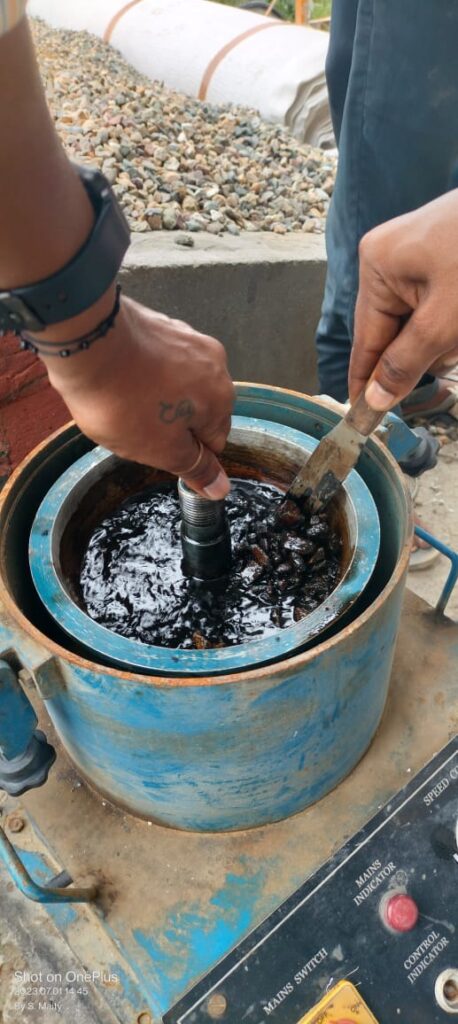
The Bitumen Extraction Test is a laboratory method used to determine the actual bitumen content present in a bituminous mix by separating the binder from aggregates using a suitable solvent. This test is essential for quality control, mix design verification, and compliance with MoRTH / IS:2720 (Part 2) and ASTM standards. Accurate bitumen content ensures proper pavement durability, strength, and resistance to deformation.

Profile Corrective Course DBM

Profile Corrective Course (DBM) Construction Methodology | MoRTH Profile Corrective Course (Dense Bituminous Macadam) – Construction Methodology Profile Corrective Course (PCC) using Dense Bituminous Macadam (DBM) is executed to correct pavement profile irregularities such as depressions, sags, uneven camber and surface undulations before laying the final overlay. 1.0 Scope and Surface Preparation The Profile Corrective Course is a bituminous layer of variable thickness (typically 50–100 mm) laid over an existing granular or bituminous surface to restore the correct longitudinal and cross profile as per approved drawings. 1.1 Existing Bituminous Surface Repairs: Potholes, cracks and distressed areas shall be repaired as per MoRTH Clauses 3004.2 & 3004.3. Scarifying: Where specified, existing bituminous layer shall be scarified without disturbing underlying layers. Base Preparation: Exposed surface reworked, compacted and primed if required as per Clause 502. Tack Coat: Bituminous emulsion applied uniformly before laying PCC DBM. 1.2 Existing Granular Surface Surface cleaned of loose material and dust. Priming carried out as per MoRTH Clause 502 before bituminous layer. Surface to be firm, dry and broom-cleaned. 1.3 Pre-Laying Checks Existing top levels shall be jointly checked and recorded before and after preparation to confirm thickness and profile correction. 2.0 Plant, Machinery & Equipment Sl. No. Equipment Quantity 1 Batch Type Hot Mix Plant (200 TPH) 01 2 Sensor Paver with Auto Screed Control 01 3 Pneumatic Tyred Roller 01 4 Tandem Vibratory Roller 02 5 Bitumen Sprayer 01 6 Hydraulic Broom / Air Compressor 01 7 Water Tanker 01 8 Tipping Trucks As required 3.0 Materials & Mix Production 3.1 Materials Coarse & fine aggregates from approved quarries Bitumen: VG-30 / VG-40 (IS:73) Tack Coat: Rapid setting bituminous emulsion 3.2 Job Mix Formula (JMF) JMF shall be prepared in the site laboratory using Marshall Method and approved by IE/PMC. The procedure is identical to DBM/BC mix design as per MoRTH Section 500. 3.3 Hot Mix Plant Operation Bitumen storage temperature: 150–165°C Aggregate drying temperature: 150–170°C Mixing carried out in controlled, dust-free environment Maximum mix temperature not exceeding 165°C 4.0 Laying & Compaction 4.1 Transportation of Mix Mix transported in covered tipping trucks. Truck beds coated with release agent. Mix temperature at dispatch: 155–165°C. 4.2 Tack Coat Application Rate of application: 0.25–0.30 kg/m² Applied by mechanical sprayer DBM laid only after tack coat breaks 4.3 Laying & Finishing Sensor wire fixed at 10 m interval for profile control Minimum laying temperature: 125°C Loose thickness allowance: approx. 25% Manual laying permitted in confined areas 4.4 Compaction Rolling by vibratory roller followed by PTR Rolling from lower edge to higher edge Compaction continued until specified density achieved Joints cut full depth and edges painted with hot bitumen 5.0 Quality Control & Traffic Management Core cutting after 24 hours for density verification Routine bitumen testing for each consignment Surface finish as per MoRTH Clause 902 Traffic opened minimum 24 hours after completion Traffic managed using cones, barricades and flagmen Frequently Asked Questions – PCC DBM What is PCC? A corrective bituminous layer to restore pavement profile. Typical thickness? 50–100 mm per layer. Where used? Depressions, sags, uneven camber. Material used? DBM with VG-30/VG-40 bitumen. Surface preparation? Repair, scarify, clean, prime/tack. Compaction? Vibratory roller + PTR. Joint treatment? Full-depth cut with hot bitumen coating. Traffic opening? After minimum 24 hours. 🏗️ Highway Construction Methodology Hub Standard construction methodologies for highway works as per MoRTH 5th Revision and IRC Specifications. ✅ Earthwork Methodology ✅ Clearing & Grubbing Methodology ➡️ ✅ Embankment Construction Methodology ➡️ ✅ Flyash Embankment Construction Methodology ➡️ ✅ Subgrade Construction Methodology ➡️ ✅ Granular Work Methodology ✅ Granular Sub-Base (GSB) Methodology ➡️ ✅ Wet Mix Macadam (WMM) Methodology ➡️ ✅ Bituminous Work Methodology ✅ Prime Coat Application Methodology ➡️ ✅ Tack Coat Application Methodology ➡️ ✅ Dense Bituminous Macadam (DBM) Methodology ➡️ ✅ Bituminous Concrete (BC) Methodology ➡️ ✅ Profile Corrective Course of DBM ➡️ ✅ Use of Waste Plastic in Bitumen ➡️ ✅ Use of Waste Plastic in Road Construction ➡️ ✅ Thermoplastic Road Marking Methodology ➡️ ✅ Concrete Methodology ✅ Dry Lean Concrete (DLC) Methodology ➡️ ✅ PQC Road Construction Methodology ➡️ ✅ Kerb Construction Methodology ➡️

Marshall Stability Test with Mould Casting

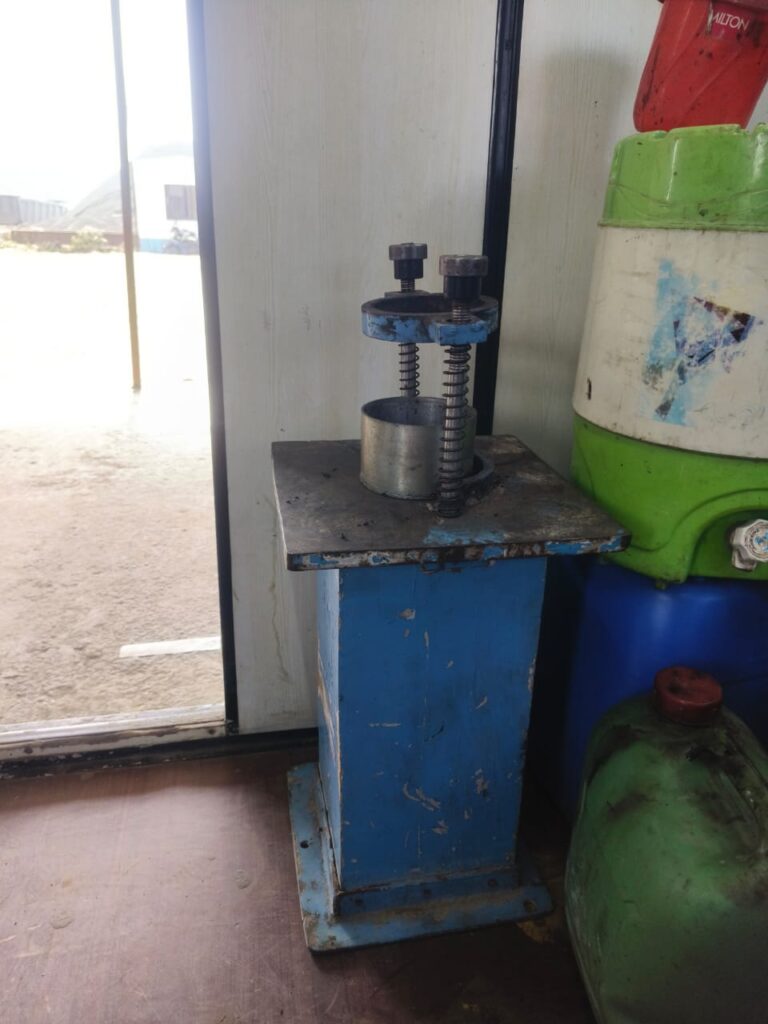
Marshall Mould apparatus pedestal

The Marshall Stability Test remains the backbone of bituminous mix evaluation under MoRTH guidelines. It provides vital information on:Strength (Stability), Deformation (Flow), Density, Air voids,VMA, VFB

Bituminous Concrete

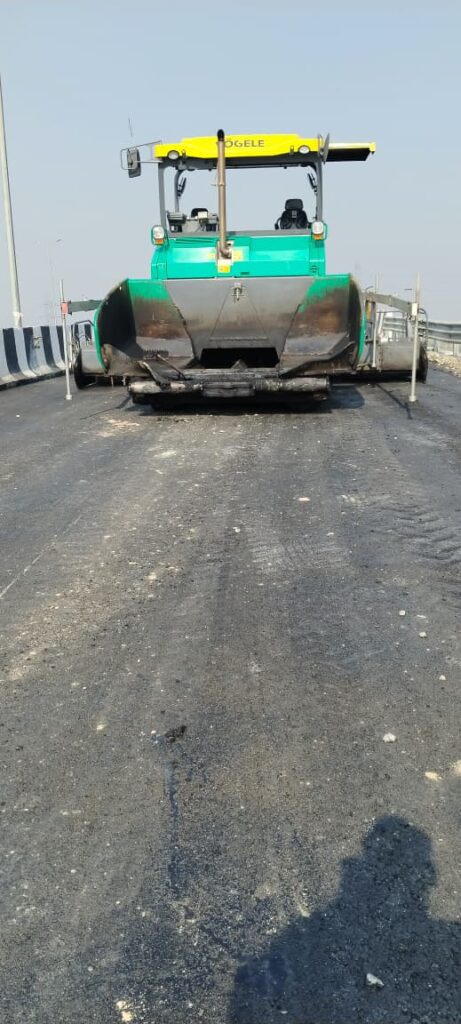
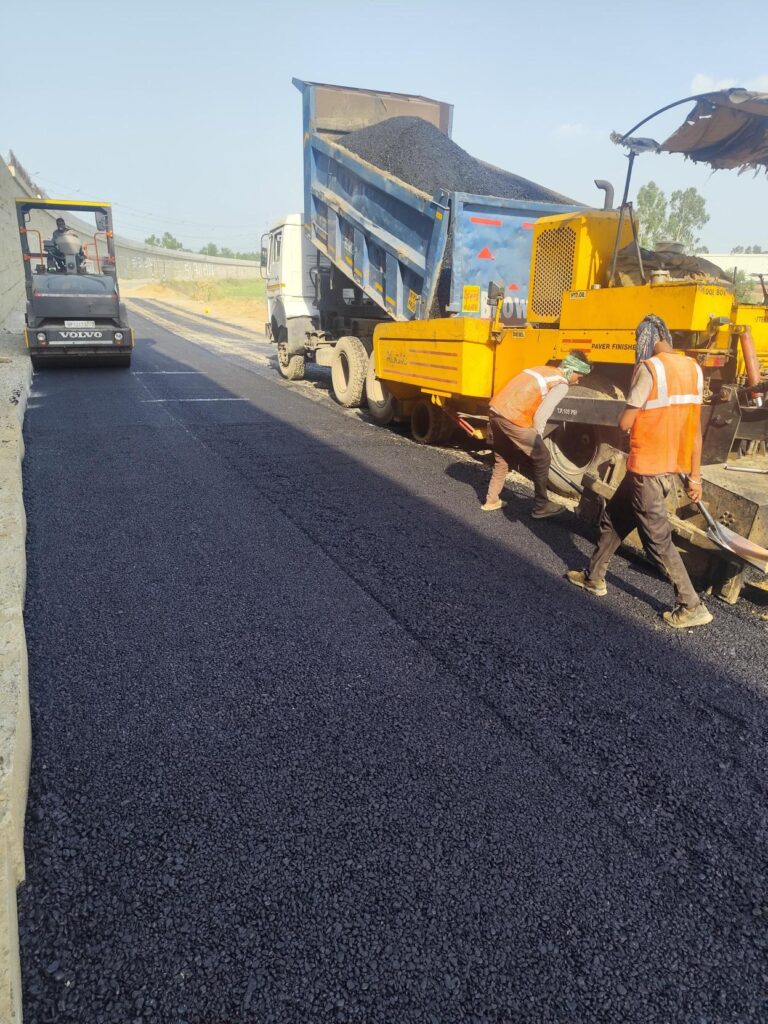
BC laying work

Top 9 Proven Steps for Bituminous Concrete (BC) | MoRTH Clause 507 Top 9 Proven Steps for Bituminous Concrete (BC) Construction Quick Summary: Bituminous Concrete (BC) is the final wearing course of flexible pavement laid in 30–50 mm thickness over DBM or bituminous base. Construction shall strictly follow MoRTH Clause 507, including approved mix design, controlled laying temperature, proper compaction and quality control tests. 1. Scope Methodology for laying of DBM in this project is detailed herein under. This method statement is based on parameters conforming to MoRTH, MS-2 Specifications. The construction of pavement layers on existing road involves the dismantling of existing bituminous layers, widening and strengthening of the existing road. This work covers preparation of surface, tack coat application, production of BC mix, transportation, laying, compaction, joint treatment and quality control testing in accordance with MoRTH Clause 507. 2. Reference Standards MoRTH Specifications – Clause 507 (5th Revision) IRC: SP: 84 – Manual of Specifications IS: 73, IS: 15462 – Bitumen IS: 2386 (All Parts) – Aggregates 3. Equipment Required Hot Mix Plant with automatic controls Self-propelled sensor paver with electronic, tamping/vibrating extendible screed (as per Clause 501.5) Tandem vibratory rollers Pneumatic Tyred Roller (PTR), 12–15 tonnes with minimum tyre pressure of 5.6 kg/cm² Bitumen pressure distributor/sprayer with accessories (as per Clause 502.4.1) Mechanical broom and air compressor for surface cleaning Core cutting machine for density testing Sufficient number of tippers for continuous and uninterrupted laying Materials & Job Mix Design Bituminous material of VG-40 grade shall confirm to the specifications of IS-73(2013). If modified binder is used then CRMB / PMB conforming to the requirement of CL.501.2.1, 507.2.1, IRC-SP-53-2010 and IS 15462-2004. Approved Aggregate and filler shall confirm two of MoRTH Cl.501.2 & Cl.507.2. Job Mix Formula (JMF): Job mix formula developed for be used in the works in witness of Authority Engineer, and shall give the following details: Source and location of all materials Proportions of all materials Binder type and percentage by weight of total mixture Coarse/Fine aggregate and mineral filler percentage Combined grading with definite sieve passing values Test results as per Table 500-11 Aggregate compliance with MoRTH Cl.501.2 & Cl.507.2 Mixing and compaction temperature Approval of JMF: Approval shall be based on witnessed testing by the Independent Engineer. Samples shall be tested in in-house QC lab. Any change in material source requires submission of new JMF for approval prior to execution. Plant Trials: After laboratory approval, plant trials shall be conducted to ensure uniform mix production. Permissible variations shall comply with Table 500-13 limits. Laying Trials: Laying trials shall be conducted on a minimum 100 sq.m area (non-project stretch) to verify laying and compaction as per Clause 501. Density shall be checked through core cutting after 24 hours. Upon approval, same methodology shall be adopted for actual work. Description Tack Coat The work shall consist of the application of a single coat of low viscosity liquid bituminous material to existing bituminous surface using a boom pressure sprayer at a speed of 45 Km/Hour. Laying Trials Once the plant trials have been successfully completed and approved, the laying trials are executed, to demonstrate that the proposed mix can be successfully laid, and compacted all in accordance with Clause 501. The laying trial shall be carried out on a suitable area which is not to form part of the works. The area of the laying trials shall be a minimum of 100 sq. m. of construction similar to that of the project road, and it shall be in all respects, particularly compaction, the same as the project construction, on which the bituminous material is to be laid. Information to AE is given of the proposed method for laying and compacting the material. The density of the finished paving layer shall be determined by taking cores, no sooner than 24 hours after laying. Once the laying trials have been approved, the same plant and methodology shall be applied to the laying of the material on the project. Compaction 1. Tandem Roller The finish rolling shall be done with 6 to 8 tonnes smooth wheel tandem rollers. Rolling shall continue until the specified compaction is achieved. 2. Pneumatic Tyre Roller Compaction shall also be carried out using a Pneumatic Tyre Roller of 12 to 15 tonnes weight with a tyre pressure of at least 0.56 MPa. 3. Rolling Required Passes Type of Pass Number of Passes Plain Passes 3 Low Vibrator Passes 2 Medium Vibrator Passes 2 PTR Passes 2 Procedure for Laying of Bituminous Concrete (BC) Preparation of base: The base on which BC Material is to be laid shall be prepared in accordance with Clauses 501. The surface shall be thoroughly swept clean by a mechanical broom, and the dust removed by compressed air. Prior to commencement of BC wearing course operation the underlying layer of previously laid DBM Base course is to be inspected and approved by the Authority Engineer. Guide lines to be furnished where applicable, i.e. edge of pavement, across side roads, median opening etc. The mix shall be prepared in approved plant and transported to laying site as per clause 501.3 and 501.4. When laying against transverse/longitudinal cold joints these to be cut vertically and painted with bitumen emulsion. Position paver with screed supports equivalent to required layer thickness plus roll down allowance (total approximate thickness 55mm) when starting new lane or with roll down thickness shims when pulling away from existing transverse cut joints. Paver screed width is to be pre-set to laying pattern widths prior to positioning. Layer thickness will be maintained 40mm (compacted) across the mat without sensor controls. All water spray bars and mats on steel wheel rollers to be checked by operators and fully working prior to commencement of lay down. Material to be tipped directly into paver hopper and screed box suitably filled to extremities prior to starting laydown, temperature of material being minimum of 160°C and maximum of 170°C. When pulling away from existing joints, care to be taken that sufficient material is