Table of Contents
ToggleAuthor: Kishor Kumar · Updated: February 2026 · Read time: ~8 minutes
The Soundness Test of Cement ensures that cement does not undergo excessive expansion after setting, which can cause cracks in concrete and structural failure. The Le Chatelier Method specifically measures expansion due to free lime (CaO) or magnesia content.
Cement paste is prepared using standard consistency water. Example ratio: 1 part cement : 0.78 parts water (by weight).
Formula:
Expansion (mm) = Final distance between arms – Original distance between arms
Record mean of two measurements if multiple moulds are tested for accuracy.
It checks cement expansion due to free lime or magnesia, ensuring dimensional stability.
IS 4031 (Part 3)
≤ 0.8 mm for Ordinary Portland Cement (OPC)
Using standard consistency water; example ratio: 1 part cement : 0.78 parts water by weight.
Excessive expansion indicates free lime; cement should be rejected or used with caution in structural work.
The Soundness Test of Cement – Le Chatelier Method ensures cement stability, prevents cracks, and guarantees compliance with IS 4031 and MoRTH specifications. Always perform this test for critical concrete and pavement works.
Written by: Kishor Kumar · Civil / Highway Engineer – QA/QC & Site Execution · Source: HighwayQualityTest.com
These laboratory tests are conducted sequentially for complete cement and concrete quality verification in highway, bridge, structure, and rigid pavement works as per IS 4031, IS 516, MoRTH Specifications, and NHAI Quality Assurance Protocols.
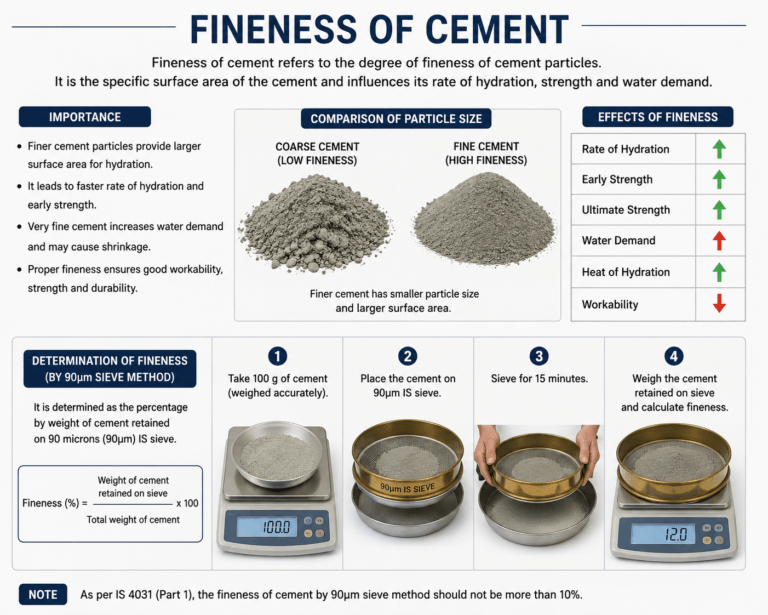
Sieve analysis and Blaine air permeability method for determining cement particle fineness.
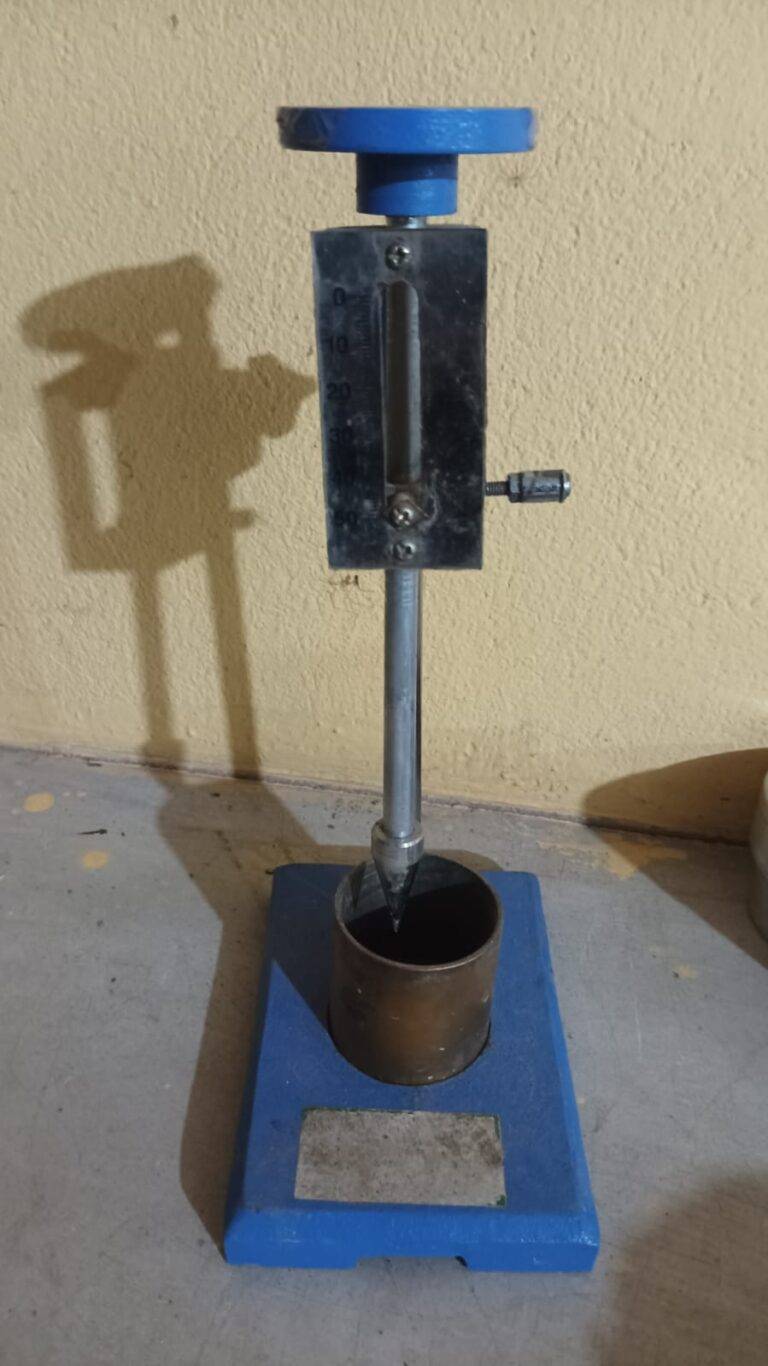
Determination of optimum water percentage using Vicat apparatus.
Measures the beginning of cement hardening using Vicat needle penetration.
Determines the complete hardening stage of cement paste.
Mortar cube crushing strength evaluation at different curing ages.
Concrete compressive strength testing for site quality control and mix validation.
These tests must be conducted in proper sequence to establish correlation between cement fineness, water demand, setting characteristics, and strength development during highway, bridge, and structural concrete works—especially under NHAI, MoRTH, and independent third-party QA/QC audits.
Prepare professional Soundness of Cement test reports in minutes using our ready-to-use Excel format with automatic calculations. Accurately determine the soundness of cement using the Le Chatelier Method and generate laboratory-ready reports while eliminating manual calculation errors.
✔ Secure Payment | ✔ Instant Download | ✔ Editable Excel
Engineering Precision. Digital Quality. Highway Excellence.
© 2026 HIGHWAY QUALITY TEST. All rights reserved.